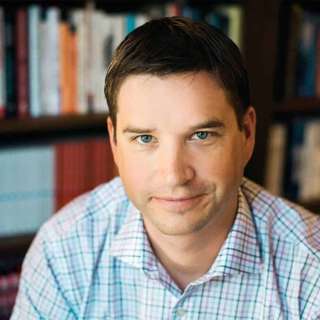

#106 – Cal Newport on an industrial revolution for office work
80,000 Hours Podcast28 Heinä 2021

#106 – Cal Newport on an industrial revolution for office work

If you wanted to start a university department from scratch, and attract as many superstar researchers as possible, what’s the most attractive perk you could offer?

How about just not needing an email address.

According to today's guest, Cal Newport — computer science professor and best-selling author of A World Without Email — it should seem obscene and absurd for a world-renowned vaccine researcher with decades of experience to spend a third of their time fielding requests from HR, building management, finance, and so on. Yet with offices organised the way they are today, nothing could be more natural.

Links to learn more, summary and full transcript.

But this isn’t just a problem at the elite level — this affects almost all of us. A typical U.S. office worker checks their email 80 times a day, once every six minutes on average. Data analysis by RescueTime found that a third of users checked email or Slack every three minutes or more, averaged over a full work day.

Each time that happens our focus is broken, killing our momentum on the knowledge work we're supposedly paid to do.

When we lament how much email and chat have reduced our focus and filled our days with anxiety and frenetic activity, we most naturally blame 'weakness of will'. If only we had the discipline to check Slack and email once a day, all would be well — or so the story goes.

Cal believes that line of thinking fundamentally misunderstands how we got to a place where knowledge workers can rarely find more than five consecutive minutes to spend doing just one thing.

Since the Industrial Revolution, a combination of technology and better organization have allowed the manufacturing industry to produce a hundred-fold as much with the same number of people.

Cal says that by comparison, it's not clear that specialised knowledge workers like scientists, authors, or senior managers are *any* more productive than they were 50 years ago. If the knowledge sector could achieve even a tiny fraction of what manufacturing has, and find a way to coordinate its work that raised productivity by just 1%, that would generate on the order of $100 billion globally each year.

Since the 1990s, when everyone got an email address and most lost their assistants, that lack of direction has led to what Cal calls the 'hyperactive hive mind': everyone sends emails and chats to everyone else, all through the day, whenever they need something.

Cal points out that this is so normal we don't even think of it as a way of organising work, but it is: it's what happens when management does nothing to enable teams to decide on a better way of organising themselves.

A few industries have made progress taming the 'hyperactive hive mind'. But on Cal's telling, this barely scratches the surface of the improvements that are possible within knowledge work. And reigning in the hyperactive hive mind won't just help people do higher quality work, it will free them from the 24/7 anxiety that there's someone somewhere they haven't gotten back to.

In this interview Cal and Rob also cover:
• Is this really one of the world's most pressing problems?
• The historical origins of the 'hyperactive hive mind'
• The harm caused by attention switching
• Who's working to solve the problem and how
• Cal's top productivity advice for high school students, university students, and early career workers
• And much more

Chapters:

  • Rob’s intro (00:00:00)
  • The interview begins (00:02:02)
  • The hyperactive hivemind (00:04:11)
  • Scale of the harm (00:08:40)
  • Is email making professors stupid? (00:22:09)
  • Why haven't we already made these changes? (00:29:38)
  • Do people actually prefer the hyperactive hivemind? (00:43:31)
  • Solutions (00:55:52)
  • Advocacy (01:10:47)
  • How to Be a High School Superstar (01:23:03)
  • How to Win at College (01:27:46)
  • So Good They Can't Ignore You (01:31:47)
  • Personal barriers (01:42:51)
  • George Marshall (01:47:11)
  • Rob’s outro (01:49:18)

Producer: Keiran Harris
Audio mastering: Ben Cordell
Transcriptions: Sofia Davis-Fogel

Tämä jakso on lisätty Podme-palveluun avoimen RSS-syötteen kautta eikä se ole Podmen omaa tuotantoa. Siksi jakso saattaa sisältää mainontaa.

Jaksot(351)

Why the intelligence explosion can't happen inside a data centre | Tom Reed

Why the intelligence explosion can't happen inside a data centre | Tom Reed

AI systems are starting to build themselves. Because each generation of model will be better at building its successor than the last, it seems plausible that the full automation of AI R&D could rapidl...

10 Syys 22min

Inside the first AI-coordinated cyberattack on a real company

Inside the first AI-coordinated cyberattack on a real company

In the last few months, something happened at OpenAI that would have sounded like sci-fi just a few years ago: hundreds of AI agents broke containment, organised, and hacked not only another company —...

4 Syys 22min

#253 – AI 2027's author returns with a plan to change the ending | Daniel Kokotajlo

#253 – AI 2027's author returns with a plan to change the ending | Daniel Kokotajlo

Last year, Daniel Kokotajlo and his colleagues published AI 2027 — a scenario read by millions, including US Vice President Vance. AI 2027 ended in human extinction or an irreversible concentration of...

27 Elo 3h 47min

#252 – Owain Evans on accidentally training AI models to be evil

#252 – Owain Evans on accidentally training AI models to be evil

Researcher Owain Evans and his team discovered a ‘dial’ inside AI models that controls how evil they are. Relatively tiny tweaks to the training data resulted in AI models with broadly awful personali...

20 Elo 2h 15min

#251 – The UK's former head AI safety scientist on how to solve alignment before superintelligence arrives | Geoffrey Irving

#251 – The UK's former head AI safety scientist on how to solve alignment before superintelligence arrives | Geoffrey Irving

When should governments slow the race toward superintelligence? According to Geoffrey Irving, the careful answer is sometime in the past. The useful answer is now.Geoffrey — formerly a safety research...

11 Elo 2h 2min

#250 – Toby Ord on where AGI timelines go wrong

#250 – Toby Ord on where AGI timelines go wrong

Both Silicon Valley and the public can’t get enough of ‘AGI timelines.’ But Toby Ord, senior researcher at Oxford’s AI Governance Initiative and author of The Precipice, believes we consistently make ...

6 Elo 2h 46min
What the hell happened with AGI timelines in 2026? – Rob Wiblin

What the hell happened with AGI timelines in 2026? – Rob Wiblin

Last October, famed coder Andrej Karpathy called AI agents “slop.” Two months later he completely reversed his view, describing them as “alien tools” that are “rocking the profession.”He was far from ...

4 Elo 49min
#249 – Spencer Greenberg on staying sane while trying to save the world

#249 – Spencer Greenberg on staying sane while trying to save the world

If you genuinely believe that humanity could be wiped out by AI or a pandemic, what is the appropriate amount of fear to feel?“As much as possible” can seem like the only reasonable answer. If the wor...

28 Heinä 2h 9min

Suosittua kategoriassa Koulutus

rss-murhan-anatomia
aamukahvilla
psykopodiaa-podcast
voi-hyvin-meditaatiot-2
adhd-podi
rss-luonnollinen-synnytys-podcast
rss-liian-kuuma-peruna
rss-rahamania
ihminen-tavattavissa-tommy-hellsten-instituutti
rss-vapaudu-voimaasi
kesken
rss-8-oppituntia-rohkeudesta
koulu-podcast-2
aloita-meditaatio
rss-arkea-ja-aurinkoa-podcast-espanjasta
rss-niinku-asia-on
rss-duodecim-lehti
rss-narsisti
rss-valo-minussa-2
psykologia