
#128 – Chris Blattman on the five reasons wars happen

#128 – Chris Blattman on the five reasons wars happen

In nature, animals roar and bare their teeth to intimidate adversaries — but one side usually backs down, and real fights are rare. The wisdom of evolution is that the risk of violence is just too great.

Which might make one wonder: if war is so destructive, why does it happen? The question may sound naïve, but in fact it represents a deep puzzle. If a war will cost trillions and kill tens of thousands, it should be easy for either side to make a peace offer that both they and their opponents prefer to actually fighting it out.

The conundrum of how humans can engage in incredibly costly and protracted conflicts has occupied academics across the social sciences for years. In today's episode, we speak with economist Chris Blattman about his new book, Why We Fight: The Roots of War and the Paths to Peace, which summarises what they think they've learned.

Links to learn more, summary and full transcript.

Chris's first point is that while organised violence may feel like it's all around us, it's actually very rare in humans, just as it is with other animals. Across the world, hundreds of groups dislike one another — but knowing the cost of war, they prefer to simply loathe one another in peace.

In order to understand what’s wrong with a sick patient, a doctor needs to know what a healthy person looks like. And to understand war, social scientists need to study all the wars that could have happened but didn't — so they can see what a healthy society looks like and what's missing in the places where war does take hold.

Chris argues that social scientists have generated five cogent models of when war can be 'rational' for both sides of a conflict:

1. Unchecked interests — such as national leaders who bear few of the costs of launching a war.
2. Intangible incentives — such as an intrinsic desire for revenge.
3. Uncertainty — such as both sides underestimating each other's resolve to fight.
4. Commitment problems — such as the inability to credibly promise not to use your growing military might to attack others in future.
5. Misperceptions — such as our inability to see the world through other people's eyes.

In today's interview, we walk through how each of the five explanations work and what specific wars or actions they might explain.

In the process, Chris outlines how many of the most popular explanations for interstate war are wildly overused (e.g. leaders who are unhinged or male) or misguided from the outset (e.g. resource scarcity).

The interview also covers:

• What Chris and Rob got wrong about the war in Ukraine
• What causes might not fit into these five categories
• The role of people's choice to escalate or deescalate a conflict
• How great power wars or nuclear wars are different, and what can be done to prevent them
• How much representative government helps to prevent war
• And much more

Chapters:

  • Rob’s intro (00:00:00)
  • The interview begins (00:01:43)
  • What people get wrong about violence (00:04:40)
  • Medellín gangs (00:11:48)
  • Overrated causes of violence (00:23:53)
  • Cause of war #1: Unchecked interests (00:36:40)
  • Cause of war #2: Intangible incentives (00:41:40)
  • Cause of war #3: Uncertainty (00:53:04)
  • Cause of war #4: Commitment problems (01:02:24)
  • Cause of war #5: Misperceptions (01:12:18)
  • Weaknesses of the model (01:26:08)
  • Dancing on the edge of a cliff (01:29:06)
  • Confusion around escalation (01:35:26)
  • Applying the model to the war between Russia and Ukraine (01:42:34)
  • Great power wars (02:01:46)
  • Preventing nuclear war (02:18:57)
  • Why undirected approaches won't work (02:22:51)
  • Democratic peace theory (02:31:10)
  • Exchanging hostages (02:37:21)
  • What you can actually do to help (02:41:25)

Producer: Keiran Harris
Audio mastering: Ben Cordell
Transcriptions: Katy Moore

Jaksot(322)

#223 – Neel Nanda on leading a Google DeepMind team at 26 – and advice if you want to work at an AI company (part 2)

#223 – Neel Nanda on leading a Google DeepMind team at 26 – and advice if you want to work at an AI company (part 2)

At 26, Neel Nanda leads an AI safety team at Google DeepMind, has published dozens of influential papers, and mentored 50 junior researchers — seven of whom now work at major AI companies. His secret?...

15 Syys 20251h 46min
#222 – Can we tell if an AI is loyal by reading its mind? DeepMind's Neel Nanda (part 1)

#222 – Can we tell if an AI is loyal by reading its mind? DeepMind's Neel Nanda (part 1)

We don’t know how AIs think or why they do what they do. Or at least, we don’t know much. That fact is only becoming more troubling as AIs grow more capable and appear on track to wield enormous cultu...

8 Syys 20253h 1min
#221 – Kyle Fish on the most bizarre findings from 5 AI welfare experiments

#221 – Kyle Fish on the most bizarre findings from 5 AI welfare experiments

What happens when you lock two AI systems in a room together and tell them they can discuss anything they want?According to experiments run by Kyle Fish — Anthropic’s first AI welfare researcher — som...

28 Elo 20252h 28min

How not to lose your job to AI (article by Benjamin Todd)

How not to lose your job to AI (article by Benjamin Todd)

About half of people are worried they’ll lose their job to AI. They’re right to be concerned: AI can now complete real-world coding tasks on GitHub, generate photorealistic video, drive a taxi more sa...

31 Heinä 202551min

Rebuilding after apocalypse: What 13 experts say about bouncing back

Rebuilding after apocalypse: What 13 experts say about bouncing back

What happens when civilisation faces its greatest tests?This compilation brings together insights from researchers, defence experts, philosophers, and policymakers on humanity’s ability to survive and...

15 Heinä 20254h 26min
#220 – Ryan Greenblatt on the 4 most likely ways for AI to take over, and the case for and against AGI in <8 years

#220 – Ryan Greenblatt on the 4 most likely ways for AI to take over, and the case for and against AGI in <8 years

Ryan Greenblatt — lead author on the explosive paper “Alignment faking in large language models” and chief scientist at Redwood Research — thinks there’s a 25% chance that within four years, AI will b...

8 Heinä 20252h 50min
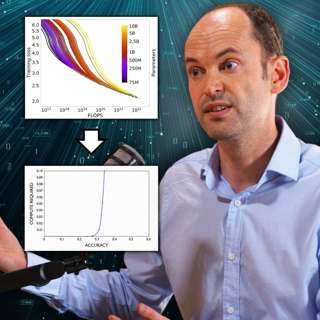
#219 – Toby Ord on graphs AI companies would prefer you didn't (fully) understand

#219 – Toby Ord on graphs AI companies would prefer you didn't (fully) understand

The era of making AI smarter just by making it bigger is ending. But that doesn’t mean progress is slowing down — far from it. AI models continue to get much more powerful, just using very different m...

24 Kesä 20252h 48min
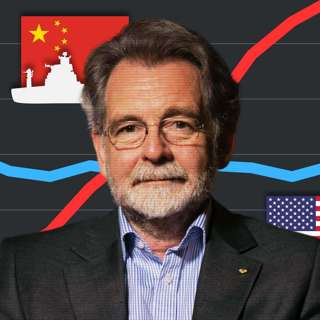
#218 – Hugh White on why Trump is abandoning US hegemony – and that’s probably good

#218 – Hugh White on why Trump is abandoning US hegemony – and that’s probably good

For decades, US allies have slept soundly under the protection of America’s overwhelming military might. Donald Trump — with his threats to ditch NATO, seize Greenland, and abandon Taiwan — seems hell...

12 Kesä 20252h 48min

Suosittua kategoriassa Koulutus

rss-murhan-anatomia
voi-hyvin-meditaatiot-2
psykopodiaa-podcast
rss-narsisti
rss-vapaudu-voimaasi
rss-liian-kuuma-peruna
psykologia
kesken
rss-niinku-asia-on
rss-uskonto-on-tylsaa
rahapuhetta
rss-valo-minussa-2
rss-luonnollinen-synnytys-podcast
rss-hereilla
ihminen-tavattavissa-tommy-hellsten-instituutti
rss-duodecim-lehti
rss-tietoinen-yhteys-podcast-2
rss-sielun-aani-podcast
avara-mieli
rss-arkea-ja-aurinkoa-podcast-espanjasta