

#128 – Chris Blattman on the five reasons wars happen

#128 – Chris Blattman on the five reasons wars happen

In nature, animals roar and bare their teeth to intimidate adversaries — but one side usually backs down, and real fights are rare. The wisdom of evolution is that the risk of violence is just too great.

Which might make one wonder: if war is so destructive, why does it happen? The question may sound naïve, but in fact it represents a deep puzzle. If a war will cost trillions and kill tens of thousands, it should be easy for either side to make a peace offer that both they and their opponents prefer to actually fighting it out.

The conundrum of how humans can engage in incredibly costly and protracted conflicts has occupied academics across the social sciences for years. In today's episode, we speak with economist Chris Blattman about his new book, Why We Fight: The Roots of War and the Paths to Peace, which summarises what they think they've learned.

Links to learn more, summary and full transcript.

Chris's first point is that while organised violence may feel like it's all around us, it's actually very rare in humans, just as it is with other animals. Across the world, hundreds of groups dislike one another — but knowing the cost of war, they prefer to simply loathe one another in peace.

In order to understand what’s wrong with a sick patient, a doctor needs to know what a healthy person looks like. And to understand war, social scientists need to study all the wars that could have happened but didn't — so they can see what a healthy society looks like and what's missing in the places where war does take hold.

Chris argues that social scientists have generated five cogent models of when war can be 'rational' for both sides of a conflict:

1. Unchecked interests — such as national leaders who bear few of the costs of launching a war.
2. Intangible incentives — such as an intrinsic desire for revenge.
3. Uncertainty — such as both sides underestimating each other's resolve to fight.
4. Commitment problems — such as the inability to credibly promise not to use your growing military might to attack others in future.
5. Misperceptions — such as our inability to see the world through other people's eyes.

In today's interview, we walk through how each of the five explanations work and what specific wars or actions they might explain.

In the process, Chris outlines how many of the most popular explanations for interstate war are wildly overused (e.g. leaders who are unhinged or male) or misguided from the outset (e.g. resource scarcity).

The interview also covers:

• What Chris and Rob got wrong about the war in Ukraine
• What causes might not fit into these five categories
• The role of people's choice to escalate or deescalate a conflict
• How great power wars or nuclear wars are different, and what can be done to prevent them
• How much representative government helps to prevent war
• And much more

Chapters:

  • Rob’s intro (00:00:00)
  • The interview begins (00:01:43)
  • What people get wrong about violence (00:04:40)
  • Medellín gangs (00:11:48)
  • Overrated causes of violence (00:23:53)
  • Cause of war #1: Unchecked interests (00:36:40)
  • Cause of war #2: Intangible incentives (00:41:40)
  • Cause of war #3: Uncertainty (00:53:04)
  • Cause of war #4: Commitment problems (01:02:24)
  • Cause of war #5: Misperceptions (01:12:18)
  • Weaknesses of the model (01:26:08)
  • Dancing on the edge of a cliff (01:29:06)
  • Confusion around escalation (01:35:26)
  • Applying the model to the war between Russia and Ukraine (01:42:34)
  • Great power wars (02:01:46)
  • Preventing nuclear war (02:18:57)
  • Why undirected approaches won't work (02:22:51)
  • Democratic peace theory (02:31:10)
  • Exchanging hostages (02:37:21)
  • What you can actually do to help (02:41:25)

Producer: Keiran Harris
Audio mastering: Ben Cordell
Transcriptions: Katy Moore

Jaksot(322)

Rob & Luisa chat kids, the 2016 fertility crash, and how the 50s invented parenting that makes us miserable

Rob & Luisa chat kids, the 2016 fertility crash, and how the 50s invented parenting that makes us miserable

Global fertility rates aren’t just falling: the rate of decline is accelerating. From 2006 to 2016, fertility dropped gradually, but since 2016 the rate of decline has increased 4.5-fold. In many weal...

25 Marras 20251h 59min

#228 – Eileen Yam on how we're completely out of touch with what the public thinks about AI

#228 – Eileen Yam on how we're completely out of touch with what the public thinks about AI

If you work in AI, you probably think it’s going to boost productivity, create wealth, advance science, and improve your life. If you’re a member of the American public, you probably strongly disagree...

20 Marras 20251h 43min

OpenAI: The nonprofit refuses to be killed (with Tyler Whitmer)

OpenAI: The nonprofit refuses to be killed (with Tyler Whitmer)

Last December, the OpenAI business put forward a plan to completely sideline its nonprofit board. But two state attorneys general have now blocked that effort and kept that board very much alive and k...

11 Marras 20251h 56min
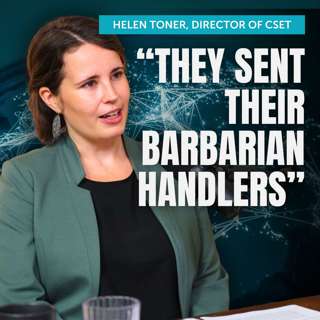
#227 – Helen Toner on the geopolitics of AGI in China and the Middle East

#227 – Helen Toner on the geopolitics of AGI in China and the Middle East

With the US racing to develop AGI and superintelligence ahead of China, you might expect the two countries to be negotiating how they’ll deploy AI, including in the military, without coming to blows. ...

5 Marras 20252h 20min

#226 – Holden Karnofsky on unexploited opportunities to make AI safer — and all his AGI takes

#226 – Holden Karnofsky on unexploited opportunities to make AI safer — and all his AGI takes

For years, working on AI safety usually meant theorising about the ‘alignment problem’ or trying to convince other people to give a damn. If you could find any way to help, the work was frustrating an...

30 Loka 20254h 30min

#225 – Daniel Kokotajlo on what a hyperspeed robot economy might look like

#225 – Daniel Kokotajlo on what a hyperspeed robot economy might look like

When Daniel Kokotajlo talks to security experts at major AI labs, they tell him something chilling: “Of course we’re probably penetrated by the CCP already, and if they really wanted something, they c...

27 Loka 20252h 12min
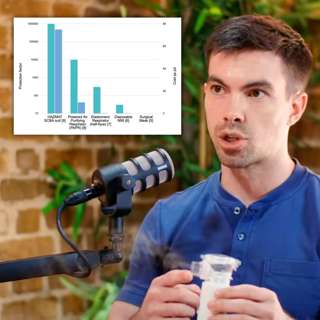
#224 – There's a cheap and low-tech way to save humanity from any engineered disease | Andrew Snyder-Beattie

#224 – There's a cheap and low-tech way to save humanity from any engineered disease | Andrew Snyder-Beattie

Conventional wisdom is that safeguarding humanity from the worst biological risks — microbes optimised to kill as many as possible — is difficult bordering on impossible, making bioweapons humanity’s ...

2 Loka 20252h 31min

Inside the Biden admin’s AI policy approach | Jake Sullivan, Biden’s NSA | via The Cognitive Revolution

Inside the Biden admin’s AI policy approach | Jake Sullivan, Biden’s NSA | via The Cognitive Revolution

Jake Sullivan was the US National Security Advisor from 2021-2025. He joined our friends on The Cognitive Revolution podcast in August to discuss AI as a critical national security issue. We thought i...

26 Syys 20251h 5min

Suosittua kategoriassa Koulutus

rss-murhan-anatomia
voi-hyvin-meditaatiot-2
psykopodiaa-podcast
rss-narsisti
rss-vapaudu-voimaasi
rss-liian-kuuma-peruna
psykologia
kesken
rss-niinku-asia-on
rss-uskonto-on-tylsaa
rahapuhetta
rss-valo-minussa-2
rss-luonnollinen-synnytys-podcast
rss-hereilla
ihminen-tavattavissa-tommy-hellsten-instituutti
rss-duodecim-lehti
rss-tietoinen-yhteys-podcast-2
rss-sielun-aani-podcast
avara-mieli
rss-arkea-ja-aurinkoa-podcast-espanjasta