#130 – Will MacAskill on balancing frugality with ambition, whether you need longtermism, & mental health under pressure

#130 – Will MacAskill on balancing frugality with ambition, whether you need longtermism, & mental health under pressure

Imagine you lead a nonprofit that operates on a shoestring budget. Staff are paid minimum wage, lunch is bread and hummus, and you're all bunched up on a few tables in a basement office.

But over a few years, your cause attracts some major new donors. Your funding jumps a thousandfold, from $100,000 a year to $100,000,000 a year. You're the same group of people committed to making sacrifices for the cause — but these days, rather than cutting costs, the right thing to do seems to be to spend serious money and get things done ASAP.

You suddenly have the opportunity to make more progress than ever before, but as well as excitement about this, you have worries about the impacts that large amounts of funding can have.

This is roughly the situation faced by today's guest Will MacAskill — University of Oxford philosopher, author of the forthcoming book What We Owe The Future, and founding figure in the effective altruism movement.

Links to learn more, summary and full transcript.

Years ago, Will pledged to give away more than 50% of his income over his life, and was already donating 10% back when he was a student with next to no income. Since then, the coalition he founded has been super successful at attracting the interest of donors who collectively want to give away billions in the way Will and his colleagues were proposing.

While surely a huge success, it brings with it risks that he's never had to consider before:

• Will and his colleagues might try to spend a lot of money trying to get more things done more quickly — but actually just waste it.
• Being seen as profligate could strike onlookers as selfish and disreputable.
• Folks might start pretending to agree with their agenda just to get grants.
• People working on nearby issues that are less flush with funding may end up resentful.
• People might lose their focus on helping others as they get seduced by the prospect of earning a nice living.
• Mediocre projects might find it too easy to get funding, even when the people involved would be better off radically changing their strategy, or shutting down and launching something else entirely.

But all these 'risks of commission' have to be weighed against 'risk of omission': the failure to achieve all you could have if you'd been truly ambitious.

People looking askance at you for paying high salaries to attract the staff you want is unpleasant.

But failing to prevent the next pandemic because you didn't have the necessary medical experts on your grantmaking team is worse than unpleasant — it's a true disaster. Yet few will complain, because they'll never know what might have been if you'd only set frugality aside.

Will aims to strike a sensible balance between these competing errors, which he has taken to calling judicious ambition. In today's episode, Rob and Will discuss the above as well as:

• Will humanity likely converge on good values as we get more educated and invest more in moral philosophy — or are the things we care about actually quite arbitrary and contingent?
• Why are so many nonfiction books full of factual errors?
• How does Will avoid anxiety and depression with more responsibility on his shoulders than ever?
• What does Will disagree with his colleagues on?
• Should we focus on existential risks more or less the same way, whether we care about future generations or not?
• Are potatoes one of the most important technologies ever developed?
• And plenty more.

Chapters:

  • Rob’s intro (00:00:00)
  • The interview begins (00:02:41)
  • What We Owe The Future preview (00:09:23)
  • Longtermism vs. x-risk (00:25:39)
  • How is Will doing? (00:33:16)
  • Having a life outside of work (00:46:45)
  • Underappreciated people in the effective altruism community (00:52:48)
  • A culture of ambition within effective altruism (00:59:50)
  • Massively scalable projects (01:11:40)
  • Downsides and risks from the increase in funding (01:14:13)
  • Barriers to ambition (01:28:47)
  • The Future Fund (01:38:04)
  • Patient philanthropy (01:52:50)
  • Will’s disagreements with Sam Bankman-Fried and Nick Beckstead (01:56:42)
  • Astronomical risks of suffering (s-risks) (02:00:02)
  • Will’s future plans (02:02:41)
  • What is it with Will and potatoes? (02:08:40)

Producer: Keiran Harris
Audio mastering: Ben Cordell
Transcriptions: Katy Moore

Jaksot(320)

OpenAI: The nonprofit refuses to be killed (with Tyler Whitmer)

OpenAI: The nonprofit refuses to be killed (with Tyler Whitmer)

Last December, the OpenAI business put forward a plan to completely sideline its nonprofit board. But two state attorneys general have now blocked that effort and kept that board very much alive and k...

11 Marras 20251h 56min
#227 – Helen Toner on the geopolitics of AGI in China and the Middle East

#227 – Helen Toner on the geopolitics of AGI in China and the Middle East

With the US racing to develop AGI and superintelligence ahead of China, you might expect the two countries to be negotiating how they’ll deploy AI, including in the military, without coming to blows. ...

5 Marras 20252h 20min

#226 – Holden Karnofsky on unexploited opportunities to make AI safer — and all his AGI takes

#226 – Holden Karnofsky on unexploited opportunities to make AI safer — and all his AGI takes

For years, working on AI safety usually meant theorising about the ‘alignment problem’ or trying to convince other people to give a damn. If you could find any way to help, the work was frustrating an...

30 Loka 20254h 30min
#225 – Daniel Kokotajlo on what a hyperspeed robot economy might look like

#225 – Daniel Kokotajlo on what a hyperspeed robot economy might look like

When Daniel Kokotajlo talks to security experts at major AI labs, they tell him something chilling: “Of course we’re probably penetrated by the CCP already, and if they really wanted something, they c...

27 Loka 20252h 12min
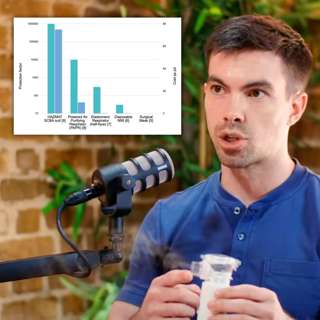
#224 – There's a cheap and low-tech way to save humanity from any engineered disease | Andrew Snyder-Beattie

#224 – There's a cheap and low-tech way to save humanity from any engineered disease | Andrew Snyder-Beattie

Conventional wisdom is that safeguarding humanity from the worst biological risks — microbes optimised to kill as many as possible — is difficult bordering on impossible, making bioweapons humanity’s ...

2 Loka 20252h 31min
Inside the Biden admin’s AI policy approach | Jake Sullivan, Biden’s NSA | via The Cognitive Revolution

Inside the Biden admin’s AI policy approach | Jake Sullivan, Biden’s NSA | via The Cognitive Revolution

Jake Sullivan was the US National Security Advisor from 2021-2025. He joined our friends on The Cognitive Revolution podcast in August to discuss AI as a critical national security issue. We thought i...

26 Syys 20251h 5min
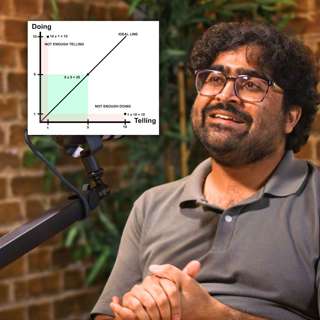
#223 – Neel Nanda on leading a Google DeepMind team at 26 – and advice if you want to work at an AI company (part 2)

#223 – Neel Nanda on leading a Google DeepMind team at 26 – and advice if you want to work at an AI company (part 2)

At 26, Neel Nanda leads an AI safety team at Google DeepMind, has published dozens of influential papers, and mentored 50 junior researchers — seven of whom now work at major AI companies. His secret?...

15 Syys 20251h 46min
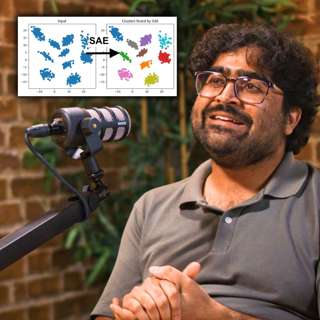
#222 – Can we tell if an AI is loyal by reading its mind? DeepMind's Neel Nanda (part 1)

#222 – Can we tell if an AI is loyal by reading its mind? DeepMind's Neel Nanda (part 1)

We don’t know how AIs think or why they do what they do. Or at least, we don’t know much. That fact is only becoming more troubling as AIs grow more capable and appear on track to wield enormous cultu...

8 Syys 20253h 1min

Suosittua kategoriassa Koulutus

rss-murhan-anatomia
psykopodiaa-podcast
rss-narsisti
voi-hyvin-meditaatiot-2
aamukahvilla
rss-vapaudu-voimaasi
rss-niinku-asia-on
psykologia
rss-liian-kuuma-peruna
adhd-podi
kesken
dear-ladies
leveli
rss-duodecim-lehti
rss-koira-haudattuna
rss-luonnollinen-synnytys-podcast
rahapuhetta
aloita-meditaatio
ihminen-tavattavissa-tommy-hellsten-instituutti
rss-ai-mita-siskopodcast