#131 – Lewis Dartnell on getting humanity to bounce back faster in a post-apocalyptic world

#131 – Lewis Dartnell on getting humanity to bounce back faster in a post-apocalyptic world

“We’re leaving these 16 contestants on an island with nothing but what they can scavenge from an abandoned factory and apartment block. Over the next 365 days, they’ll try to rebuild as much of civilisation as they can — from glass, to lenses, to microscopes. This is: The Knowledge!”

If you were a contestant on such a TV show, you'd love to have a guide to how basic things you currently take for granted are done — how to grow potatoes, fire bricks, turn wood to charcoal, find acids and alkalis, and so on.

Today’s guest Lewis Dartnell has gone as far compiling this information as anyone has with his bestselling book The Knowledge: How to Rebuild Civilization in the Aftermath of a Cataclysm.

Links to learn more, summary and full transcript.

But in the aftermath of a nuclear war or incredibly deadly pandemic that kills most people, many of the ways we do things today will be impossible — and even some of the things people did in the past, like collect coal from the surface of the Earth, will be impossible the second time around.

As Lewis points out, there’s “no point telling this band of survivors how to make something ultra-efficient or ultra-useful or ultra-capable if it's just too damned complicated to build in the first place. You have to start small and then level up, pull yourself up by your own bootstraps.”

So it might sound good to tell people to build solar panels — they’re a wonderful way of generating electricity. But the photovoltaic cells we use today need pure silicon, and nanoscale manufacturing — essentially the same technology as microchips used in a computer — so actually making solar panels would be incredibly difficult.

Instead, you’d want to tell our group of budding engineers to use more appropriate technologies like solar concentrators that use nothing more than mirrors — which turn out to be relatively easy to make.

A disaster that unravels the complex way we produce goods in the modern world is all too possible. Which raises the question: why not set dozens of people to plan out exactly what any survivors really ought to do if they need to support themselves and rebuild civilisation? Such a guide could then be translated and distributed all around the world.

The goal would be to provide the best information to speed up each of the many steps that would take survivors from rubbing sticks together in the wilderness to adjusting a thermostat in their comfy apartments.

This is clearly not a trivial task. Lewis's own book (at 300 pages) only scratched the surface of the most important knowledge humanity has accumulated, relegating all of mathematics to a single footnote.

And the ideal guide would offer pretty different advice depending on the scenario. Are survivors dealing with a radioactive ice age following a nuclear war? Or is it an eerily intact but near-empty post-pandemic world with mountains of goods to scavenge from the husks of cities?

As a brand-new parent, Lewis couldn’t do one of our classic three- or four-hour episodes — so this is an unusually snappy one-hour interview, where Rob and Lewis are joined by Luisa Rodriguez to continue the conversation from her episode of the show last year.

Chapters:

  • Rob’s intro (00:00:00)
  • The interview begins (00:00:59)
  • The biggest impediments to bouncing back (00:03:18)
  • Can we do a serious version of The Knowledge? (00:14:58)
  • Recovering without much coal or oil (00:29:56)
  • Most valuable pro-resilience adjustments we can make today (00:40:23)
  • Feeding the Earth in disasters (00:47:45)
  • The reality of humans trying to actually do this (00:53:54)
  • Most exciting recent findings in astrobiology (01:01:00)
  • Rob’s outro (01:03:37)

Producer: Keiran Harris
Audio mastering: Ben Cordell
Transcriptions: Katy Moore

Jaksot(321)

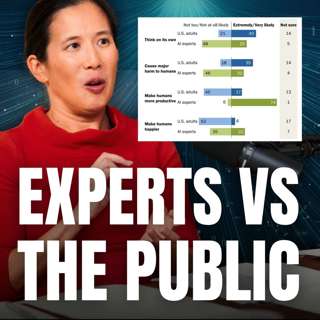
#228 – Eileen Yam on how we're completely out of touch with what the public thinks about AI

#228 – Eileen Yam on how we're completely out of touch with what the public thinks about AI

If you work in AI, you probably think it’s going to boost productivity, create wealth, advance science, and improve your life. If you’re a member of the American public, you probably strongly disagree...

20 Marras 20251h 43min
OpenAI: The nonprofit refuses to be killed (with Tyler Whitmer)

OpenAI: The nonprofit refuses to be killed (with Tyler Whitmer)

Last December, the OpenAI business put forward a plan to completely sideline its nonprofit board. But two state attorneys general have now blocked that effort and kept that board very much alive and k...

11 Marras 20251h 56min
#227 – Helen Toner on the geopolitics of AGI in China and the Middle East

#227 – Helen Toner on the geopolitics of AGI in China and the Middle East

With the US racing to develop AGI and superintelligence ahead of China, you might expect the two countries to be negotiating how they’ll deploy AI, including in the military, without coming to blows. ...

5 Marras 20252h 20min

#226 – Holden Karnofsky on unexploited opportunities to make AI safer — and all his AGI takes

#226 – Holden Karnofsky on unexploited opportunities to make AI safer — and all his AGI takes

For years, working on AI safety usually meant theorising about the ‘alignment problem’ or trying to convince other people to give a damn. If you could find any way to help, the work was frustrating an...

30 Loka 20254h 30min
#225 – Daniel Kokotajlo on what a hyperspeed robot economy might look like

#225 – Daniel Kokotajlo on what a hyperspeed robot economy might look like

When Daniel Kokotajlo talks to security experts at major AI labs, they tell him something chilling: “Of course we’re probably penetrated by the CCP already, and if they really wanted something, they c...

27 Loka 20252h 12min
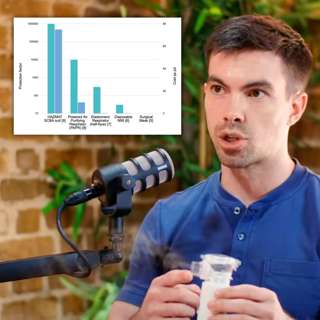
#224 – There's a cheap and low-tech way to save humanity from any engineered disease | Andrew Snyder-Beattie

#224 – There's a cheap and low-tech way to save humanity from any engineered disease | Andrew Snyder-Beattie

Conventional wisdom is that safeguarding humanity from the worst biological risks — microbes optimised to kill as many as possible — is difficult bordering on impossible, making bioweapons humanity’s ...

2 Loka 20252h 31min
Inside the Biden admin’s AI policy approach | Jake Sullivan, Biden’s NSA | via The Cognitive Revolution

Inside the Biden admin’s AI policy approach | Jake Sullivan, Biden’s NSA | via The Cognitive Revolution

Jake Sullivan was the US National Security Advisor from 2021-2025. He joined our friends on The Cognitive Revolution podcast in August to discuss AI as a critical national security issue. We thought i...

26 Syys 20251h 5min
#223 – Neel Nanda on leading a Google DeepMind team at 26 – and advice if you want to work at an AI company (part 2)

#223 – Neel Nanda on leading a Google DeepMind team at 26 – and advice if you want to work at an AI company (part 2)

At 26, Neel Nanda leads an AI safety team at Google DeepMind, has published dozens of influential papers, and mentored 50 junior researchers — seven of whom now work at major AI companies. His secret?...

15 Syys 20251h 46min

Suosittua kategoriassa Koulutus

rss-murhan-anatomia
voi-hyvin-meditaatiot-2
rss-narsisti
psykopodiaa-podcast
rss-liian-kuuma-peruna
rss-vapaudu-voimaasi
psykologia
rss-valo-minussa-2
rss-hereilla
rss-luonnollinen-synnytys-podcast
kesken
rss-niinku-asia-on
rss-tietoinen-yhteys-podcast-2
ihminen-tavattavissa-tommy-hellsten-instituutti
rss-uskonto-on-tylsaa
rss-duodecim-lehti
rss-sielun-aani-podcast
avara-mieli
aloita-meditaatio
esa-saarinen-filosofia-ja-systeemiajattelu