#131 – Lewis Dartnell on getting humanity to bounce back faster in a post-apocalyptic world

#131 – Lewis Dartnell on getting humanity to bounce back faster in a post-apocalyptic world

“We’re leaving these 16 contestants on an island with nothing but what they can scavenge from an abandoned factory and apartment block. Over the next 365 days, they’ll try to rebuild as much of civilisation as they can — from glass, to lenses, to microscopes. This is: The Knowledge!”

If you were a contestant on such a TV show, you'd love to have a guide to how basic things you currently take for granted are done — how to grow potatoes, fire bricks, turn wood to charcoal, find acids and alkalis, and so on.

Today’s guest Lewis Dartnell has gone as far compiling this information as anyone has with his bestselling book The Knowledge: How to Rebuild Civilization in the Aftermath of a Cataclysm.

Links to learn more, summary and full transcript.

But in the aftermath of a nuclear war or incredibly deadly pandemic that kills most people, many of the ways we do things today will be impossible — and even some of the things people did in the past, like collect coal from the surface of the Earth, will be impossible the second time around.

As Lewis points out, there’s “no point telling this band of survivors how to make something ultra-efficient or ultra-useful or ultra-capable if it's just too damned complicated to build in the first place. You have to start small and then level up, pull yourself up by your own bootstraps.”

So it might sound good to tell people to build solar panels — they’re a wonderful way of generating electricity. But the photovoltaic cells we use today need pure silicon, and nanoscale manufacturing — essentially the same technology as microchips used in a computer — so actually making solar panels would be incredibly difficult.

Instead, you’d want to tell our group of budding engineers to use more appropriate technologies like solar concentrators that use nothing more than mirrors — which turn out to be relatively easy to make.

A disaster that unravels the complex way we produce goods in the modern world is all too possible. Which raises the question: why not set dozens of people to plan out exactly what any survivors really ought to do if they need to support themselves and rebuild civilisation? Such a guide could then be translated and distributed all around the world.

The goal would be to provide the best information to speed up each of the many steps that would take survivors from rubbing sticks together in the wilderness to adjusting a thermostat in their comfy apartments.

This is clearly not a trivial task. Lewis's own book (at 300 pages) only scratched the surface of the most important knowledge humanity has accumulated, relegating all of mathematics to a single footnote.

And the ideal guide would offer pretty different advice depending on the scenario. Are survivors dealing with a radioactive ice age following a nuclear war? Or is it an eerily intact but near-empty post-pandemic world with mountains of goods to scavenge from the husks of cities?

As a brand-new parent, Lewis couldn’t do one of our classic three- or four-hour episodes — so this is an unusually snappy one-hour interview, where Rob and Lewis are joined by Luisa Rodriguez to continue the conversation from her episode of the show last year.

Chapters:

  • Rob’s intro (00:00:00)
  • The interview begins (00:00:59)
  • The biggest impediments to bouncing back (00:03:18)
  • Can we do a serious version of The Knowledge? (00:14:58)
  • Recovering without much coal or oil (00:29:56)
  • Most valuable pro-resilience adjustments we can make today (00:40:23)
  • Feeding the Earth in disasters (00:47:45)
  • The reality of humans trying to actually do this (00:53:54)
  • Most exciting recent findings in astrobiology (01:01:00)
  • Rob’s outro (01:03:37)

Producer: Keiran Harris
Audio mastering: Ben Cordell
Transcriptions: Katy Moore

Jaksot(322)

How much does a vote matter? (Article)

How much does a vote matter? (Article)

If you care about social impact, is voting important? In this piece, Rob investigates the two key things that determine the impact of your vote:The chances of your vote changing an election’s outcome....

28 Loka 202432min
#205 – Sébastien Moro on the most insane things fish can do

#205 – Sébastien Moro on the most insane things fish can do

"You have a tank split in two parts: if the fish gets in the compartment with a red circle, it will receive food, and food will be delivered in the other tank as well. If the fish takes the blue trian...

23 Loka 20243h 11min
#204 – Nate Silver on making sense of SBF, and his biggest critiques of effective altruism

#204 – Nate Silver on making sense of SBF, and his biggest critiques of effective altruism

Rob Wiblin speaks with FiveThirtyEight election forecaster and author Nate Silver about his new book: On the Edge: The Art of Risking Everything.Links to learn more, highlights, video, and full transc...

16 Loka 20241h 57min
#203 – Peter Godfrey-Smith on interfering with wild nature, accepting death, and the origin of complex civilisation

#203 – Peter Godfrey-Smith on interfering with wild nature, accepting death, and the origin of complex civilisation

"In the human case, it would be mistaken to give a kind of hour-by-hour accounting. You know, 'I had +4 level of experience for this hour, then I had -2 for the next hour, and then I had -1' — and you...

3 Loka 20241h 25min
Luisa and Keiran on free will, and the consequences of never feeling enduring guilt or shame

Luisa and Keiran on free will, and the consequences of never feeling enduring guilt or shame

In this episode from our second show, 80k After Hours, Luisa Rodriguez and Keiran Harris chat about the consequences of letting go of enduring guilt, shame, anger, and pride.Links to learn more, highl...

27 Syys 20241h 36min
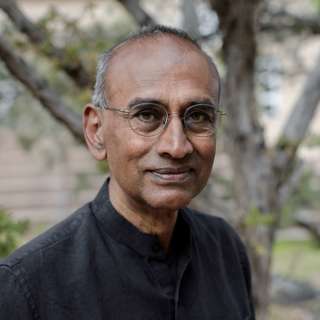
#202 – Venki Ramakrishnan on the cutting edge of anti-ageing science

#202 – Venki Ramakrishnan on the cutting edge of anti-ageing science

"For every far-out idea that turns out to be true, there were probably hundreds that were simply crackpot ideas. In general, [science] advances building on the knowledge we have, and seeing what the n...

19 Syys 20242h 20min
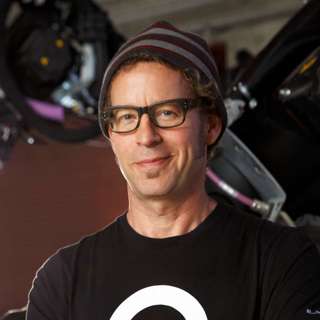
#201 – Ken Goldberg on why your robot butler isn’t here yet

#201 – Ken Goldberg on why your robot butler isn’t here yet

"Perception is quite difficult with cameras: even if you have a stereo camera, you still can’t really build a map of where everything is in space. It’s just very difficult. And I know that sounds surp...

13 Syys 20242h 1min
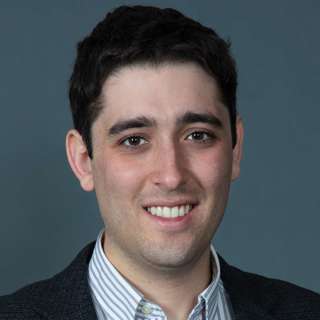
#200 – Ezra Karger on what superforecasters and experts think about existential risks

#200 – Ezra Karger on what superforecasters and experts think about existential risks

"It’s very hard to find examples where people say, 'I’m starting from this point. I’m starting from this belief.' So we wanted to make that very legible to people. We wanted to say, 'Experts think thi...

4 Syys 20242h 49min

Suosittua kategoriassa Koulutus

rss-murhan-anatomia
voi-hyvin-meditaatiot-2
rss-narsisti
psykopodiaa-podcast
rss-liian-kuuma-peruna
rss-vapaudu-voimaasi
psykologia
kesken
rss-niinku-asia-on
rss-luonnollinen-synnytys-podcast
rss-hereilla
ihminen-tavattavissa-tommy-hellsten-instituutti
rss-valo-minussa-2
rss-tietoinen-yhteys-podcast-2
rss-uskonto-on-tylsaa
rss-duodecim-lehti
rss-sielun-aani-podcast
aloita-meditaatio
esa-saarinen-filosofia-ja-systeemiajattelu
rss-arkea-ja-aurinkoa-podcast-espanjasta