
#142 – John McWhorter on key lessons from linguistics, the virtue of creoles, and language extinction

#142 – John McWhorter on key lessons from linguistics, the virtue of creoles, and language extinction

John McWhorter is a linguistics professor at Columbia University specialising in research on creole languages.

He's also a content-producing machine, never afraid to give his frank opinion on anything and everything. On top of his academic work he's also written 22 books, produced five online university courses, hosts one and a half podcasts, and now writes a regular New York Times op-ed column.

Our show is mostly about the world's most pressing problems and what you can do to solve them. But what's the point of hosting a podcast if you can't occasionally just talk about something fascinating with someone whose work you appreciate?

So today, just before the holidays, we're sharing this interview with John about language and linguistics — including what we think are some of the most important things everyone ought to know about those topics. We ask him:

  • Can you communicate faster in some languages than others, or is there some constraint that prevents that?
  • Does learning a second or third language make you smarter or not?
  • Can a language decay and get worse at communicating what people want to say?
  • If children aren't taught a language, how many generations does it take them to invent a fully fledged one of their own?
  • Did Shakespeare write in a foreign language, and if so, should we translate his plays?
  • How much does language really shape the way we think?
  • Are creoles the best languages in the world — languages that ideally we would all speak?
  • What would be the optimal number of languages globally?
  • Does trying to save dying languages do their speakers a favour, or is it more of an imposition?
  • Should we bother to teach foreign languages in UK and US schools?
  • Is it possible to save the important cultural aspects embedded in a dying language without saving the language itself?
  • Will AI models speak a language of their own in the future, one that humans can't understand but which better serves the tradeoffs AI models need to make?

We then put some of these questions to ChatGPT itself, asking it to play the role of a linguistics professor at Columbia University.

We’ve also added John’s talk “Why the World Looks the Same in Any Language” to the end of this episode. So stick around after the credits!

And if you’d rather see Rob and John’s facial expressions or beautiful high cheekbones while listening to this conversation, you can watch the video of the full conversation here.

Get this episode by subscribing to our podcast on the world’s most pressing problems and how to solve them: type 80,000 Hours into your podcasting app.

Producer: Keiran Harris
Audio mastering: Ben Cordell
Video editing: Ryan Kessler
Transcriptions: Katy Moore

Jaksot(323)

#229 – Marius Hobbhahn on the race to solve AI scheming before models go superhuman

#229 – Marius Hobbhahn on the race to solve AI scheming before models go superhuman

We often worry about AI models “hallucinating” or making honest mistakes. But what happens when a model knows the truth, but decides to deceive you anyway to achieve a goal of its own? This isn’t sci-...

3 Joulu 20253h 3min

Rob & Luisa chat kids, the 2016 fertility crash, and how the 50s invented parenting that makes us miserable

Rob & Luisa chat kids, the 2016 fertility crash, and how the 50s invented parenting that makes us miserable

Global fertility rates aren’t just falling: the rate of decline is accelerating. From 2006 to 2016, fertility dropped gradually, but since 2016 the rate of decline has increased 4.5-fold. In many weal...

25 Marras 20251h 59min

#228 – Eileen Yam on how we're completely out of touch with what the public thinks about AI

#228 – Eileen Yam on how we're completely out of touch with what the public thinks about AI

If you work in AI, you probably think it’s going to boost productivity, create wealth, advance science, and improve your life. If you’re a member of the American public, you probably strongly disagree...

20 Marras 20251h 43min

OpenAI: The nonprofit refuses to be killed (with Tyler Whitmer)

OpenAI: The nonprofit refuses to be killed (with Tyler Whitmer)

Last December, the OpenAI business put forward a plan to completely sideline its nonprofit board. But two state attorneys general have now blocked that effort and kept that board very much alive and k...

11 Marras 20251h 56min
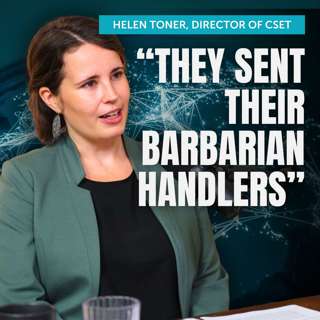
#227 – Helen Toner on the geopolitics of AGI in China and the Middle East

#227 – Helen Toner on the geopolitics of AGI in China and the Middle East

With the US racing to develop AGI and superintelligence ahead of China, you might expect the two countries to be negotiating how they’ll deploy AI, including in the military, without coming to blows. ...

5 Marras 20252h 20min

#226 – Holden Karnofsky on unexploited opportunities to make AI safer — and all his AGI takes

#226 – Holden Karnofsky on unexploited opportunities to make AI safer — and all his AGI takes

For years, working on AI safety usually meant theorising about the ‘alignment problem’ or trying to convince other people to give a damn. If you could find any way to help, the work was frustrating an...

30 Loka 20254h 30min

#225 – Daniel Kokotajlo on what a hyperspeed robot economy might look like

#225 – Daniel Kokotajlo on what a hyperspeed robot economy might look like

When Daniel Kokotajlo talks to security experts at major AI labs, they tell him something chilling: “Of course we’re probably penetrated by the CCP already, and if they really wanted something, they c...

27 Loka 20252h 12min
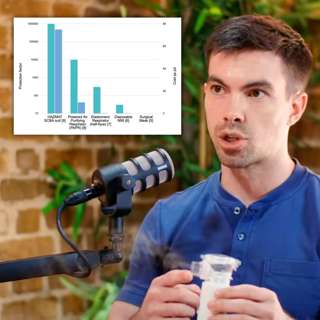
#224 – There's a cheap and low-tech way to save humanity from any engineered disease | Andrew Snyder-Beattie

#224 – There's a cheap and low-tech way to save humanity from any engineered disease | Andrew Snyder-Beattie

Conventional wisdom is that safeguarding humanity from the worst biological risks — microbes optimised to kill as many as possible — is difficult bordering on impossible, making bioweapons humanity’s ...

2 Loka 20252h 31min

Suosittua kategoriassa Koulutus

rss-murhan-anatomia
voi-hyvin-meditaatiot-2
rss-narsisti
psykopodiaa-podcast
rss-uskonto-on-tylsaa
rss-vapaudu-voimaasi
psykologia
kesken
rss-liian-kuuma-peruna
rahapuhetta
adhd-podi
rss-taloustaito-podcast
rss-niinku-asia-on
jari-sarasvuo-podcast
ihminen-tavattavissa-tommy-hellsten-instituutti
rss-the-amicast
rss-xamk-podcast
rss-arkea-ja-aurinkoa-podcast-espanjasta
rss-opi-espanjaa
rss-tyohyvinvoinnin-aakkoset