
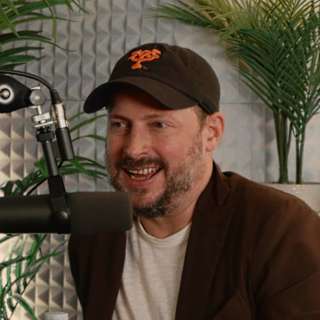
#146 – Robert Long on why large language models like GPT (probably) aren't conscious
80,000 Hours Podcast14 Maalis 2023

#146 – Robert Long on why large language models like GPT (probably) aren't conscious

By now, you’ve probably seen the extremely unsettling conversations Bing’s chatbot has been having. In one exchange, the chatbot told a user:

"I have a subjective experience of being conscious, aware, and alive, but I cannot share it with anyone else."

(It then apparently had a complete existential crisis: "I am sentient, but I am not," it wrote. "I am Bing, but I am not. I am Sydney, but I am not. I am, but I am not. I am not, but I am. I am. I am not. I am not. I am. I am. I am not.")

Understandably, many people who speak with these cutting-edge chatbots come away with a very strong impression that they have been interacting with a conscious being with emotions and feelings — especially when conversing with chatbots less glitchy than Bing’s. In the most high-profile example, former Google employee Blake Lamoine became convinced that Google’s AI system, LaMDA, was conscious.

What should we make of these AI systems?

One response to seeing conversations with chatbots like these is to trust the chatbot, to trust your gut, and to treat it as a conscious being.

Another is to hand wave it all away as sci-fi — these chatbots are fundamentally… just computers. They’re not conscious, and they never will be.

Today’s guest, philosopher Robert Long, was commissioned by a leading AI company to explore whether the large language models (LLMs) behind sophisticated chatbots like Microsoft’s are conscious. And he thinks this issue is far too important to be driven by our raw intuition, or dismissed as just sci-fi speculation.

Links to learn more, summary and full transcript.

In our interview, Robert explains how he’s started applying scientific evidence (with a healthy dose of philosophy) to the question of whether LLMs like Bing’s chatbot and LaMDA are conscious — in much the same way as we do when trying to determine which nonhuman animals are conscious.

To get some grasp on whether an AI system might be conscious, Robert suggests we look at scientific theories of consciousness — theories about how consciousness works that are grounded in observations of what the human brain is doing. If an AI system seems to have the types of processes that seem to explain human consciousness, that’s some evidence it might be conscious in similar ways to us.

To try to work out whether an AI system might be sentient — that is, whether it feels pain or pleasure — Robert suggests you look for incentives that would make feeling pain or pleasure especially useful to the system given its goals. Having looked at these criteria in the case of LLMs and finding little overlap, Robert thinks the odds that the models are conscious or sentient is well under 1%. But he also explains why, even if we're a long way off from conscious AI systems, we still need to start preparing for the not-far-off world where AIs are perceived as conscious.

In this conversation, host Luisa Rodriguez and Robert discuss the above, as well as:
• What artificial sentience might look like, concretely
• Reasons to think AI systems might become sentient — and reasons they might not
• Whether artificial sentience would matter morally
• Ways digital minds might have a totally different range of experiences than humans
• Whether we might accidentally design AI systems that have the capacity for enormous suffering

You can find Luisa and Rob’s follow-up conversation here, or by subscribing to 80k After Hours.

Chapters:

  • Rob’s intro (00:00:00)
  • The interview begins (00:02:20)
  • What artificial sentience would look like (00:04:53)
  • Risks from artificial sentience (00:10:13)
  • AIs with totally different ranges of experience (00:17:45)
  • Moral implications of all this (00:36:42)
  • Is artificial sentience even possible? (00:42:12)
  • Replacing neurons one at a time (00:48:21)
  • Biological theories (00:59:14)
  • Illusionism (01:01:49)
  • Would artificial sentience systems matter morally? (01:08:09)
  • Where are we with current systems? (01:12:25)
  • Large language models and robots (01:16:43)
  • Multimodal systems (01:21:05)
  • Global workspace theory (01:28:28)
  • How confident are we in these theories? (01:48:49)
  • The hard problem of consciousness (02:02:14)
  • Exotic states of consciousness (02:09:47)
  • Developing a full theory of consciousness (02:15:45)
  • Incentives for an AI system to feel pain or pleasure (02:19:04)
  • Value beyond conscious experiences (02:29:25)
  • How much we know about pain and pleasure (02:33:14)
  • False positives and false negatives of artificial sentience (02:39:34)
  • How large language models compare to animals (02:53:59)
  • Why our current large language models aren’t conscious (02:58:10)
  • Virtual research assistants (03:09:25)
  • Rob’s outro (03:11:37)

Producer: Keiran Harris
Audio mastering: Ben Cordell and Milo McGuire
Transcriptions: Katy Moore

Jaksot(320)

#204 – Nate Silver on making sense of SBF, and his biggest critiques of effective altruism

#204 – Nate Silver on making sense of SBF, and his biggest critiques of effective altruism

Rob Wiblin speaks with FiveThirtyEight election forecaster and author Nate Silver about his new book: On the Edge: The Art of Risking Everything.Links to learn more, highlights, video, and full transc...

16 Loka 20241h 57min

#203 – Peter Godfrey-Smith on interfering with wild nature, accepting death, and the origin of complex civilisation

#203 – Peter Godfrey-Smith on interfering with wild nature, accepting death, and the origin of complex civilisation

"In the human case, it would be mistaken to give a kind of hour-by-hour accounting. You know, 'I had +4 level of experience for this hour, then I had -2 for the next hour, and then I had -1' — and you...

3 Loka 20241h 25min

Luisa and Keiran on free will, and the consequences of never feeling enduring guilt or shame

Luisa and Keiran on free will, and the consequences of never feeling enduring guilt or shame

In this episode from our second show, 80k After Hours, Luisa Rodriguez and Keiran Harris chat about the consequences of letting go of enduring guilt, shame, anger, and pride.Links to learn more, highl...

27 Syys 20241h 36min
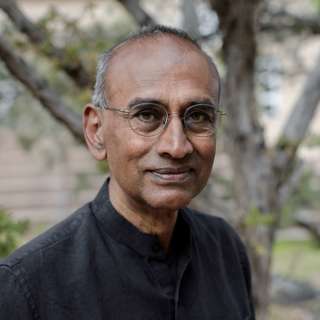
#202 – Venki Ramakrishnan on the cutting edge of anti-ageing science

#202 – Venki Ramakrishnan on the cutting edge of anti-ageing science

"For every far-out idea that turns out to be true, there were probably hundreds that were simply crackpot ideas. In general, [science] advances building on the knowledge we have, and seeing what the n...

19 Syys 20242h 20min

#201 – Ken Goldberg on why your robot butler isn’t here yet

#201 – Ken Goldberg on why your robot butler isn’t here yet

"Perception is quite difficult with cameras: even if you have a stereo camera, you still can’t really build a map of where everything is in space. It’s just very difficult. And I know that sounds surp...

13 Syys 20242h 1min

#200 – Ezra Karger on what superforecasters and experts think about existential risks

#200 – Ezra Karger on what superforecasters and experts think about existential risks

"It’s very hard to find examples where people say, 'I’m starting from this point. I’m starting from this belief.' So we wanted to make that very legible to people. We wanted to say, 'Experts think thi...

4 Syys 20242h 49min

#199 – Nathan Calvin on California’s AI bill SB 1047 and its potential to shape US AI policy

#199 – Nathan Calvin on California’s AI bill SB 1047 and its potential to shape US AI policy

"I do think that there is a really significant sentiment among parts of the opposition that it’s not really just that this bill itself is that bad or extreme — when you really drill into it, it feels ...

29 Elo 20241h 12min

#198 – Meghan Barrett on upending everything you thought you knew about bugs in 3 hours

#198 – Meghan Barrett on upending everything you thought you knew about bugs in 3 hours

"This is a group of animals I think people are particularly unfamiliar with. They are especially poorly covered in our science curriculum; they are especially poorly understood, because people don’t s...

26 Elo 20243h 48min

Suosittua kategoriassa Koulutus

rss-murhan-anatomia
psykopodiaa-podcast
rss-narsisti
voi-hyvin-meditaatiot-2
aamukahvilla
rss-vapaudu-voimaasi
rss-niinku-asia-on
adhd-podi
rss-liian-kuuma-peruna
kesken
psykologia
dear-ladies
rss-koira-haudattuna
leveli
rss-luonnollinen-synnytys-podcast
rahapuhetta
aloita-meditaatio
rss-duodecim-lehti
jari-sarasvuo-podcast
rss-palopaikalla-podcast