
#148 – Johannes Ackva on unfashionable climate interventions that work, and fashionable ones that don't

#148 – Johannes Ackva on unfashionable climate interventions that work, and fashionable ones that don't

If you want to work to tackle climate change, you should try to reduce expected carbon emissions by as much as possible, right? Strangely, no.

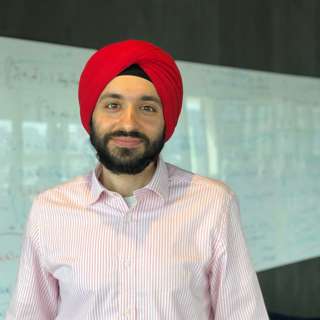
Today's guest, Johannes Ackva — the climate research lead at Founders Pledge, where he advises major philanthropists on their giving — thinks the best strategy is actually pretty different, and one few are adopting.

In reality you don't want to reduce emissions for its own sake, but because emissions will translate into temperature increases, which will cause harm to people and the environment.

Links to learn more, summary and full transcript.

Crucially, the relationship between emissions and harm goes up faster than linearly. As Johannes explains, humanity can handle small deviations from the temperatures we're familiar with, but adjustment gets harder the larger and faster the increase, making the damage done by each additional degree of warming much greater than the damage done by the previous one.

In short: we're uncertain what the future holds and really need to avoid the worst-case scenarios. This means that avoiding an additional tonne of carbon being emitted in a hypothetical future in which emissions have been high is much more important than avoiding a tonne of carbon in a low-carbon world.

That may be, but concretely, how should that affect our behaviour? Well, the future scenarios in which emissions are highest are all ones in which clean energy tech that can make a big difference — wind, solar, and electric cars — don't succeed nearly as much as we are currently hoping and expecting. For some reason or another, they must have hit a roadblock and we continued to burn a lot of fossil fuels.

In such an imaginable future scenario, we can ask what we would wish we had funded now. How could we today buy insurance against the possible disaster that renewables don't work out?

Basically, in that case we will wish that we had pursued a portfolio of other energy technologies that could have complemented renewables or succeeded where they failed, such as hot rock geothermal, modular nuclear reactors, or carbon capture and storage.

If you're optimistic about renewables, as Johannes is, then that's all the more reason to relax about scenarios where they work as planned, and focus one's efforts on the possibility that they don't.

And Johannes notes that the most useful thing someone can do today to reduce global emissions in the future is to cause some clean energy technology to exist where it otherwise wouldn't, or cause it to become cheaper more quickly. If you can do that, then you can indirectly affect the behaviour of people all around the world for decades or centuries to come.

In today's extensive interview, host Rob Wiblin and Johannes discuss the above considerations, as well as:

• Retooling newly built coal plants in the developing world
• Specific clean energy technologies like geothermal and nuclear fusion
• Possible biases among environmentalists and climate philanthropists
• How climate change compares to other risks to humanity
• In what kinds of scenarios future emissions would be highest
• In what regions climate philanthropy is most concentrated and whether that makes sense
• Attempts to decarbonise aviation, shipping, and industrial processes
• The impact of funding advocacy vs science vs deployment
• Lessons for climate change focused careers
• And plenty more

Get this episode by subscribing to our podcast on the world’s most pressing problems and how to solve them: type ‘80,000 Hours’ into your podcasting app. Or read the transcript below.

Producer: Keiran Harris
Audio mastering: Ryan Kessler
Transcriptions: Katy Moore

Jaksot(324)

Have we helped you have a bigger social impact? Our annual survey, plus other ways we can help you.

Have we helped you have a bigger social impact? Our annual survey, plus other ways we can help you.

1. Fill out our annual impact survey here. 2. Find a great vacancy on our job board. 3. Learn about our key ideas, and get links to our top articles. 4. Join our newsletter for an email about what's n...

16 Syys 20193min

#63 – Vitalik Buterin on better ways to fund public goods, blockchain's failures, & effective giving

#63 – Vitalik Buterin on better ways to fund public goods, blockchain's failures, & effective giving

Historically, progress in the field of cryptography has had major consequences. It has changed the course of major wars, made it possible to do business on the internet, and enabled private communicat...

3 Syys 20193h 18min
#62 – Paul Christiano on messaging the future, increasing compute, & how CO2 impacts your brain

#62 – Paul Christiano on messaging the future, increasing compute, & how CO2 impacts your brain

Imagine that – one day – humanity dies out. At some point, many millions of years later, intelligent life might well evolve again. Is there any message we could leave that would reliably help them out...

5 Elo 20192h 11min

#61 - Helen Toner on emerging technology, national security, and China

#61 - Helen Toner on emerging technology, national security, and China

From 1870 to 1950, the introduction of electricity transformed life in the US and UK, as people gained access to lighting, radio and a wide range of household appliances for the first time. Electricit...

17 Heinä 20191h 54min
#60 - Phil Tetlock on why accurate forecasting matters for everything, and how you can do it better

#60 - Phil Tetlock on why accurate forecasting matters for everything, and how you can do it better

Have you ever been infuriated by a doctor's unwillingness to give you an honest, probabilistic estimate about what to expect? Or a lawyer who won't tell you the chances you'll win your case? Their beh...

28 Kesä 20192h 11min
#59 – Cass Sunstein on how change happens, and why it's so often abrupt & unpredictable

#59 – Cass Sunstein on how change happens, and why it's so often abrupt & unpredictable

It can often feel hopeless to be an activist seeking social change on an obscure issue where most people seem opposed or at best indifferent to you. But according to a new book by Professor Cass Sunst...

17 Kesä 20191h 43min
#58 – Pushmeet Kohli of DeepMind on designing robust & reliable AI systems and how to succeed in AI

#58 – Pushmeet Kohli of DeepMind on designing robust & reliable AI systems and how to succeed in AI

When you're building a bridge, responsibility for making sure it won't fall over isn't handed over to a few 'bridge not falling down engineers'. Making sure a bridge is safe to use and remains standin...

3 Kesä 20191h 30min

Rob Wiblin on human nature, new technology, and living a happy, healthy & ethical life

Rob Wiblin on human nature, new technology, and living a happy, healthy & ethical life

This is a cross-post of some interviews Rob did recently on two other podcasts — Mission Daily (from 2m) and The Good Life (from 1h13m). Some of the content will be familiar to regular listeners — bu...

13 Touko 20192h 18min

Suosittua kategoriassa Koulutus

rss-murhan-anatomia
voi-hyvin-meditaatiot-2
rss-narsisti
psykopodiaa-podcast
adhd-podi
rss-vapaudu-voimaasi
rss-niinku-asia-on
psykologia
rss-duodecim-lehti
rss-valo-minussa-2
aamukahvilla
rss-uskonto-on-tylsaa
kesken
koulu-podcast-2
rss-liian-kuuma-peruna
rahapuhetta
jari-sarasvuo-podcast
filocast-filosofian-perusteet
rss-turun-yliopisto
rss-opi-espanjaa