#148 – Johannes Ackva on unfashionable climate interventions that work, and fashionable ones that don't

#148 – Johannes Ackva on unfashionable climate interventions that work, and fashionable ones that don't

If you want to work to tackle climate change, you should try to reduce expected carbon emissions by as much as possible, right? Strangely, no.

Today's guest, Johannes Ackva — the climate research lead at Founders Pledge, where he advises major philanthropists on their giving — thinks the best strategy is actually pretty different, and one few are adopting.

In reality you don't want to reduce emissions for its own sake, but because emissions will translate into temperature increases, which will cause harm to people and the environment.

Links to learn more, summary and full transcript.

Crucially, the relationship between emissions and harm goes up faster than linearly. As Johannes explains, humanity can handle small deviations from the temperatures we're familiar with, but adjustment gets harder the larger and faster the increase, making the damage done by each additional degree of warming much greater than the damage done by the previous one.

In short: we're uncertain what the future holds and really need to avoid the worst-case scenarios. This means that avoiding an additional tonne of carbon being emitted in a hypothetical future in which emissions have been high is much more important than avoiding a tonne of carbon in a low-carbon world.

That may be, but concretely, how should that affect our behaviour? Well, the future scenarios in which emissions are highest are all ones in which clean energy tech that can make a big difference — wind, solar, and electric cars — don't succeed nearly as much as we are currently hoping and expecting. For some reason or another, they must have hit a roadblock and we continued to burn a lot of fossil fuels.

In such an imaginable future scenario, we can ask what we would wish we had funded now. How could we today buy insurance against the possible disaster that renewables don't work out?

Basically, in that case we will wish that we had pursued a portfolio of other energy technologies that could have complemented renewables or succeeded where they failed, such as hot rock geothermal, modular nuclear reactors, or carbon capture and storage.

If you're optimistic about renewables, as Johannes is, then that's all the more reason to relax about scenarios where they work as planned, and focus one's efforts on the possibility that they don't.

And Johannes notes that the most useful thing someone can do today to reduce global emissions in the future is to cause some clean energy technology to exist where it otherwise wouldn't, or cause it to become cheaper more quickly. If you can do that, then you can indirectly affect the behaviour of people all around the world for decades or centuries to come.

In today's extensive interview, host Rob Wiblin and Johannes discuss the above considerations, as well as:

• Retooling newly built coal plants in the developing world
• Specific clean energy technologies like geothermal and nuclear fusion
• Possible biases among environmentalists and climate philanthropists
• How climate change compares to other risks to humanity
• In what kinds of scenarios future emissions would be highest
• In what regions climate philanthropy is most concentrated and whether that makes sense
• Attempts to decarbonise aviation, shipping, and industrial processes
• The impact of funding advocacy vs science vs deployment
• Lessons for climate change focused careers
• And plenty more

Get this episode by subscribing to our podcast on the world’s most pressing problems and how to solve them: type ‘80,000 Hours’ into your podcasting app. Or read the transcript below.

Producer: Keiran Harris
Audio mastering: Ryan Kessler
Transcriptions: Katy Moore

Jaksot(324)

#44 Classic episode - Paul Christiano on finding real solutions to the AI alignment problem

#44 Classic episode - Paul Christiano on finding real solutions to the AI alignment problem

Rebroadcast: this episode was originally released in October 2018. Paul Christiano is one of the smartest people I know. After our first session produced such great material, we decided to do a seco...

15 Tammi 20203h 51min
#33 Classic episode - Anders Sandberg on cryonics, solar flares, and the annual odds of nuclear war

#33 Classic episode - Anders Sandberg on cryonics, solar flares, and the annual odds of nuclear war

Rebroadcast: this episode was originally released in May 2018. Joseph Stalin had a life-extension program dedicated to making himself immortal. What if he had succeeded? According to Bryan Caplan ...

8 Tammi 20201h 25min

#17 Classic episode - Will MacAskill on moral uncertainty, utilitarianism & how to avoid being a moral monster

#17 Classic episode - Will MacAskill on moral uncertainty, utilitarianism & how to avoid being a moral monster

Rebroadcast: this episode was originally released in January 2018. Immanuel Kant is a profoundly influential figure in modern philosophy, and was one of the earliest proponents for universal democracy...

31 Joulu 20191h 52min
#67 – David Chalmers on the nature and ethics of consciousness

#67 – David Chalmers on the nature and ethics of consciousness

What is it like to be you right now? You're seeing this text on the screen, smelling the coffee next to you, and feeling the warmth of the cup. There’s a lot going on in your head — your conscious exp...

16 Joulu 20194h 41min
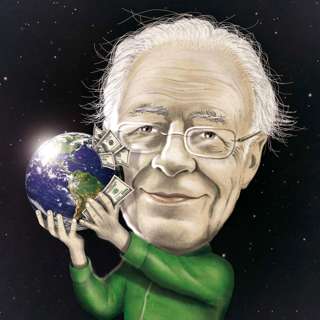
#66 – Peter Singer on being provocative, effective altruism, & how his moral views have changed

#66 – Peter Singer on being provocative, effective altruism, & how his moral views have changed

In 1989, the professor of moral philosophy Peter Singer was all over the news for his inflammatory opinions about abortion. But the controversy stemmed from Practical Ethics — a book he’d actually rel...

5 Joulu 20192h 1min
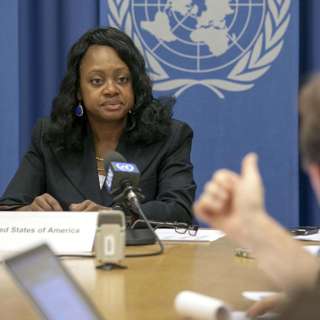
#65 – Ambassador Bonnie Jenkins on 8 years pursuing WMD arms control, & diversity in diplomacy

#65 – Ambassador Bonnie Jenkins on 8 years pursuing WMD arms control, & diversity in diplomacy

"…it started when the Soviet Union fell apart and there was a real desire to ensure security of nuclear materials and pathogens, and that scientists with [WMD-related] knowledge could get paid so that...

19 Marras 20191h 40min
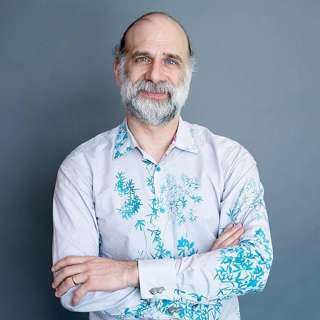
#64 – Bruce Schneier on how insecure electronic voting could break the United States — and surveillance without tyranny

#64 – Bruce Schneier on how insecure electronic voting could break the United States — and surveillance without tyranny

November 3 2020, 10:32PM: CNN, NBC, and FOX report that Donald Trump has narrowly won Florida, and with it, re-election.  November 3 2020, 11:46PM: The NY Times and Wall Street Journal report that so...

25 Loka 20192h 11min
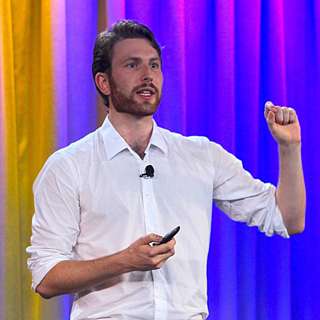
Rob Wiblin on plastic straws, nicotine, doping, & whether changing the long-term is really possible

Rob Wiblin on plastic straws, nicotine, doping, & whether changing the long-term is really possible

Today's episode is a compilation of interviews I recently recorded for two other shows, Love Your Work and The Neoliberal Podcast.  If you've listened to absolutely everything on this podcast feed, y...

25 Syys 20193h 14min

Suosittua kategoriassa Koulutus

rss-murhan-anatomia
voi-hyvin-meditaatiot-2
rss-narsisti
psykopodiaa-podcast
rss-niinku-asia-on
rss-vapaudu-voimaasi
adhd-podi
psykologia
rss-duodecim-lehti
rss-rahamania
rss-valo-minussa-2
kesken
rss-uskonto-on-tylsaa
aamukahvilla
koulu-podcast-2
rss-liian-kuuma-peruna
rss-koira-haudattuna
avara-mieli
rss-turun-yliopisto
rss-arkea-ja-aurinkoa-podcast-espanjasta