

#153 – Elie Hassenfeld on 2 big picture critiques of GiveWell's approach, and 6 lessons from their recent work

#153 – Elie Hassenfeld on 2 big picture critiques of GiveWell's approach, and 6 lessons from their recent work

GiveWell is one of the world's best-known charity evaluators, with the goal of "searching for the charities that save or improve lives the most per dollar." It mostly recommends projects that help the world's poorest people avoid easily prevented diseases, like intestinal worms or vitamin A deficiency.

But should GiveWell, as some critics argue, take a totally different approach to its search, focusing instead on directly increasing subjective wellbeing, or alternatively, raising economic growth?

Today's guest — cofounder and CEO of GiveWell, Elie Hassenfeld — is proud of how much GiveWell has grown in the last five years. Its 'money moved' has quadrupled to around $600 million a year.

Its research team has also more than doubled, enabling them to investigate a far broader range of interventions that could plausibly help people an enormous amount for each dollar spent. That work has led GiveWell to support dozens of new organisations, such as Kangaroo Mother Care, MiracleFeet, and Dispensers for Safe Water.

But some other researchers focused on figuring out the best ways to help the world's poorest people say GiveWell shouldn't just do more of the same thing, but rather ought to look at the problem differently.

Links to learn more, summary and full transcript.

Currently, GiveWell uses a range of metrics to track the impact of the organisations it considers recommending — such as 'lives saved,' 'household incomes doubled,' and for health improvements, the 'quality-adjusted life year.'

The Happier Lives Institute (HLI) has argued that instead, GiveWell should try to cash out the impact of all interventions in terms of improvements in subjective wellbeing. This philosophy has led HLI to be more sceptical of interventions that have been demonstrated to improve health, but whose impact on wellbeing has not been measured, and to give a high priority to improving lives relative to extending them.

An alternative high-level critique is that really all that matters in the long run is getting the economies of poor countries to grow. On this view, GiveWell should focus on figuring out what causes some countries to experience explosive economic growth while others fail to, or even go backwards. Even modest improvements in the chances of such a 'growth miracle' will likely offer a bigger bang-for-buck than funding the incremental delivery of deworming tablets or vitamin A supplements, or anything else.

Elie sees where both of these critiques are coming from, and notes that they've influenced GiveWell's work in some ways. But as he explains, he thinks they underestimate the practical difficulty of successfully pulling off either approach and finding better opportunities than what GiveWell funds today.

In today's in-depth conversation, Elie and host Rob Wiblin cover the above, as well as:

  • Why GiveWell flipped from not recommending chlorine dispensers as an intervention for safe drinking water to spending tens of millions of dollars on them
  • What transferable lessons GiveWell learned from investigating different kinds of interventions
  • Why the best treatment for premature babies in low-resource settings may involve less rather than more medicine.
  • Severe malnourishment among children and what can be done about it.
  • How to deal with hidden and non-obvious costs of a programme
  • Some cheap early treatments that can prevent kids from developing lifelong disabilities
  • The various roles GiveWell is currently hiring for, and what's distinctive about their organisational culture
  • And much more.

Chapters:

  • Rob’s intro (00:00:00)
  • The interview begins (00:03:14)
  • GiveWell over the last couple of years (00:04:33)
  • Dispensers for Safe Water (00:11:52)
  • Syphilis diagnosis for pregnant women via technical assistance (00:30:39)
  • Kangaroo Mother Care (00:48:47)
  • Multiples of cash (01:01:20)
  • Hidden costs (01:05:41)
  • MiracleFeet (01:09:45)
  • Serious malnourishment among young children (01:22:46)
  • Vitamin A deficiency and supplementation (01:40:42)
  • The subjective wellbeing approach in contrast with GiveWell's approach (01:46:31)
  • The value of saving a life when that life is going to be very difficult (02:09:09)
  • Whether economic policy is what really matters overwhelmingly (02:20:00)
  • Careers at GiveWell (02:39:10)
  • Donations (02:48:58)
  • Parenthood (02:50:29)
  • Rob’s outro (02:55:05)

Producer: Keiran Harris

Audio mastering: Simon Monsour and Ben Cordell

Transcriptions: Katy Moore

Jaksot(326)

#21 - Holden Karnofsky on times philanthropy transformed the world & Open Phil’s plan to do the same

#21 - Holden Karnofsky on times philanthropy transformed the world & Open Phil’s plan to do the same

The Green Revolution averted mass famine during the 20th century. The contraceptive pill gave women unprecedented freedom in planning their own lives. Both are widely recognised as scientific breakthr...

27 Helmi 20182h 35min
#20 - Bruce Friedrich on inventing outstanding meat substitutes to end speciesism & factory farming

#20 - Bruce Friedrich on inventing outstanding meat substitutes to end speciesism & factory farming

Before the US Civil War, it was easier for the North to morally oppose slavery. Why? Because unlike the South they weren’t profiting much from its existence. The fight for abolition was partly won bec...

19 Helmi 20181h 18min
#19 - Samantha Pitts-Kiefer on working next to the White House trying to prevent nuclear war

#19 - Samantha Pitts-Kiefer on working next to the White House trying to prevent nuclear war

Rogue elements within a state’s security forces enrich dozens of kilograms of uranium. It’s then assembled into a crude nuclear bomb. The bomb is transported on a civilian aircraft to Washington D.C, ...

14 Helmi 20181h 4min
#18 - Ofir Reich on using data science to end poverty & the spurious action-inaction distinction

#18 - Ofir Reich on using data science to end poverty & the spurious action-inaction distinction

Ofir Reich started out doing math in the military, before spending 8 years in tech startups - but then made a sharp turn to become a data scientist focussed on helping the global poor. At UC Berkeley...

31 Tammi 20181h 18min

#17 - Will MacAskill on moral uncertainty, utilitarianism & how to avoid being a moral monster

#17 - Will MacAskill on moral uncertainty, utilitarianism & how to avoid being a moral monster

Immanuel Kant is a profoundly influential figure in modern philosophy, and was one of the earliest proponents for universal democracy and international cooperation. He also thought that women have no ...

19 Tammi 20181h 52min

#16 - Michelle Hutchinson on global priorities research & shaping the ideas of intellectuals

#16 - Michelle Hutchinson on global priorities research & shaping the ideas of intellectuals

In the 40s and 50s neoliberalism was a fringe movement within economics. But by the 80s it had become a dominant school of thought in public policy, and achieved major policy changes across the Englis...

22 Joulu 201755min
#15 - Phil Tetlock on how chimps beat Berkeley undergrads and when it’s wise to defer to the wise

#15 - Phil Tetlock on how chimps beat Berkeley undergrads and when it’s wise to defer to the wise

Prof Philip Tetlock is a social science legend. Over forty years he has researched whose predictions we can trust, whose we can’t and why - and developed methods that allow all of us to be better at p...

20 Marras 20171h 24min
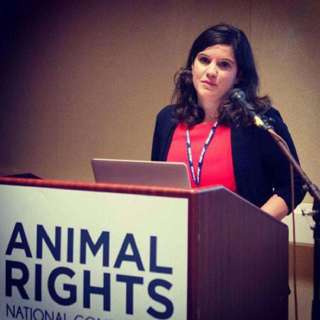
#14 - Sharon Nunez & Jose Valle on going undercover to expose animal abuse

#14 - Sharon Nunez & Jose Valle on going undercover to expose animal abuse

What if you knew that ducks were being killed with pitchforks? Rabbits dumped alive into containers? Or pigs being strangled with forklifts? Would you be willing to go undercover to expose the crime? ...

13 Marras 20171h 25min

Suosittua kategoriassa Koulutus

rss-murhan-anatomia
voi-hyvin-meditaatiot-2
psykopodiaa-podcast
rss-narsisti
adhd-podi
rahapuhetta
rss-rahamania
kesken
psykologia
rss-liian-kuuma-peruna
rss-eron-alkemiaa
rss-arkea-ja-aurinkoa-podcast-espanjasta
rss-niinku-asia-on
rss-luonnollinen-synnytys-podcast
rss-vapaudu-voimaasi
ihminen-tavattavissa-tommy-hellsten-instituutti
rss-duodecim-lehti
rss-finnish-daily-dialogues
esa-saarinen-filosofia-ja-systeemiajattelu
rss-tietoinen-yhteys-podcast-2