#158 – Holden Karnofsky on how AIs might take over even if they're no smarter than humans, and his 4-part playbook for AI risk
80,000 Hours Podcast31 Heinä 2023

#158 – Holden Karnofsky on how AIs might take over even if they're no smarter than humans, and his 4-part playbook for AI risk

Back in 2007, Holden Karnofsky cofounded GiveWell, where he sought out the charities that most cost-effectively helped save lives. He then cofounded Open Philanthropy, where he oversaw a team making billions of dollars’ worth of grants across a range of areas: pandemic control, criminal justice reform, farmed animal welfare, and making AI safe, among others. This year, having learned about AI for years and observed recent events, he's narrowing his focus once again, this time on making the transition to advanced AI go well.

In today's conversation, Holden returns to the show to share his overall understanding of the promise and the risks posed by machine intelligence, and what to do about it. That understanding has accumulated over around 14 years, during which he went from being sceptical that AI was important or risky, to making AI risks the focus of his work.

Links to learn more, summary and full transcript.

(As Holden reminds us, his wife is also the president of one of the world's top AI labs, Anthropic, giving him both conflicts of interest and a front-row seat to recent events. For our part, Open Philanthropy is 80,000 Hours' largest financial supporter.)

One point he makes is that people are too narrowly focused on AI becoming 'superintelligent.' While that could happen and would be important, it's not necessary for AI to be transformative or perilous. Rather, machines with human levels of intelligence could end up being enormously influential simply if the amount of computer hardware globally were able to operate tens or hundreds of billions of them, in a sense making machine intelligences a majority of the global population, or at least a majority of global thought.

As Holden explains, he sees four key parts to the playbook humanity should use to guide the transition to very advanced AI in a positive direction: alignment research, standards and monitoring, creating a successful and careful AI lab, and finally, information security.

In today’s episode, host Rob Wiblin interviews return guest Holden Karnofsky about that playbook, as well as:

  • Why we can’t rely on just gradually solving those problems as they come up, the way we usually do with new technologies.
  • What multiple different groups can do to improve our chances of a good outcome — including listeners to this show, governments, computer security experts, and journalists.
  • Holden’s case against 'hardcore utilitarianism' and what actually motivates him to work hard for a better world.
  • What the ML and AI safety communities get wrong in Holden's view.
  • Ways we might succeed with AI just by dumb luck.
  • The value of laying out imaginable success stories.
  • Why information security is so important and underrated.
  • Whether it's good to work at an AI lab that you think is particularly careful.
  • The track record of futurists’ predictions.
  • And much more.

Get this episode by subscribing to our podcast on the world’s most pressing problems and how to solve them: type ‘80,000 Hours’ into your podcasting app. Or read the transcript.

Producer: Keiran Harris
Audio Engineering Lead: Ben Cordell

Technical editing: Simon Monsour and Milo McGuire

Transcriptions: Katy Moore

Tämä jakso on lisätty Podme-palveluun avoimen RSS-syötteen kautta eikä se ole Podmen omaa tuotantoa. Siksi jakso saattaa sisältää mainontaa.

Jaksot(352)

Max Nadeau on why ambitious people should start AI safety nonprofits

Max Nadeau on why ambitious people should start AI safety nonprofits

There are millions available for anyone who can launch a successful nonprofit AI safety startup. The hard part, it turns out, is finding people to take the money. Coefficient Giving has drawn up a lis...

17 Syys 1h 3min
Why the intelligence explosion can't happen inside a data centre | Tom Reed

Why the intelligence explosion can't happen inside a data centre | Tom Reed

AI systems are starting to build themselves. Because each generation of model will be better at building its successor than the last, it seems plausible that the full automation of AI R&D could rapidl...

10 Syys 22min

Inside the first AI-coordinated cyberattack on a real company

Inside the first AI-coordinated cyberattack on a real company

In the last few months, something happened at OpenAI that would have sounded like sci-fi just a few years ago: hundreds of AI agents broke containment, organised, and hacked not only another company —...

4 Syys 22min

#253 – AI 2027's author returns with a plan to change the ending | Daniel Kokotajlo

#253 – AI 2027's author returns with a plan to change the ending | Daniel Kokotajlo

Last year, Daniel Kokotajlo and his colleagues published AI 2027 — a scenario read by millions, including US Vice President Vance. AI 2027 ended in human extinction or an irreversible concentration of...

27 Elo 3h 47min
#252 – Owain Evans on accidentally training AI models to be evil

#252 – Owain Evans on accidentally training AI models to be evil

Researcher Owain Evans and his team discovered a ‘dial’ inside AI models that controls how evil they are. Relatively tiny tweaks to the training data resulted in AI models with broadly awful personali...

20 Elo 2h 15min
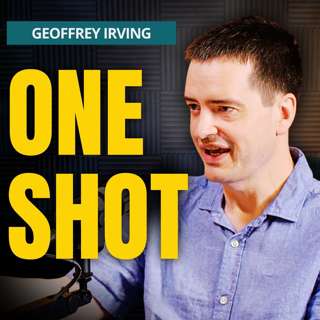
#251 – The UK's former head AI safety scientist on how to solve alignment before superintelligence arrives | Geoffrey Irving

#251 – The UK's former head AI safety scientist on how to solve alignment before superintelligence arrives | Geoffrey Irving

When should governments slow the race toward superintelligence? According to Geoffrey Irving, the careful answer is sometime in the past. The useful answer is now.Geoffrey — formerly a safety research...

11 Elo 2h 2min

#250 – Toby Ord on where AGI timelines go wrong

#250 – Toby Ord on where AGI timelines go wrong

Both Silicon Valley and the public can’t get enough of ‘AGI timelines.’ But Toby Ord, senior researcher at Oxford’s AI Governance Initiative and author of The Precipice, believes we consistently make ...

6 Elo 2h 46min
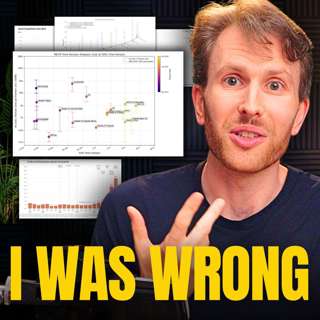
What the hell happened with AGI timelines in 2026? – Rob Wiblin

What the hell happened with AGI timelines in 2026? – Rob Wiblin

Last October, famed coder Andrej Karpathy called AI agents “slop.” Two months later he completely reversed his view, describing them as “alien tools” that are “rocking the profession.”He was far from ...

4 Elo 49min

Suosittua kategoriassa Koulutus

rss-murhan-anatomia
aamukahvilla
psykopodiaa-podcast
adhd-podi
psykologia
rss-liian-kuuma-peruna
voi-hyvin-meditaatiot-2
koulu-podcast-2
rss-luonnollinen-synnytys-podcast
rss-duodecim-lehti
kesken
rss-uskonto-on-tylsaa
ilona-rauhala
rss-koira-haudattuna
rss-arkea-ja-aurinkoa-podcast-espanjasta
ihminen-tavattavissa-tommy-hellsten-instituutti
rss-rahamania
rss-vapaudu-voimaasi
rss-niinku-asia-on
rss-hereilla