#162 – Mustafa Suleyman on getting Washington and Silicon Valley to tame AI

#162 – Mustafa Suleyman on getting Washington and Silicon Valley to tame AI

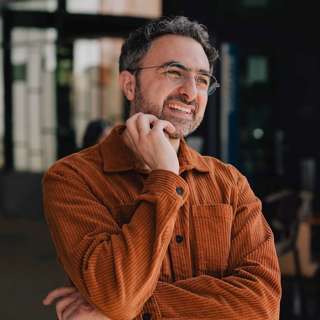
Mustafa Suleyman was part of the trio that founded DeepMind, and his new AI project is building one of the world's largest supercomputers to train a large language model on 10–100x the compute used to train ChatGPT.

But far from the stereotype of the incorrigibly optimistic tech founder, Mustafa is deeply worried about the future, for reasons he lays out in his new book The Coming Wave: Technology, Power, and the 21st Century's Greatest Dilemma (coauthored with Michael Bhaskar). The future could be really good, but only if we grab the bull by the horns and solve the new problems technology is throwing at us.

Links to learn more, summary and full transcript.

On Mustafa's telling, AI and biotechnology will soon be a huge aid to criminals and terrorists, empowering small groups to cause harm on previously unimaginable scales. Democratic countries have learned to walk a 'narrow path' between chaos on the one hand and authoritarianism on the other, avoiding the downsides that come from both extreme openness and extreme closure. AI could easily destabilise that present equilibrium, throwing us off dangerously in either direction. And ultimately, within our lifetimes humans may not need to work to live any more -- or indeed, even have the option to do so.

And those are just three of the challenges confronting us. In Mustafa's view, 'misaligned' AI that goes rogue and pursues its own agenda won't be an issue for the next few years, and it isn't a problem for the current style of large language models. But he thinks that at some point -- in eight, ten, or twelve years -- it will become an entirely legitimate concern, and says that we need to be planning ahead.

In The Coming Wave, Mustafa lays out a 10-part agenda for 'containment' -- that is to say, for limiting the negative and unforeseen consequences of emerging technologies:

1. Developing an Apollo programme for technical AI safety
2. Instituting capability audits for AI models
3. Buying time by exploiting hardware choke points
4. Getting critics involved in directly engineering AI models
5. Getting AI labs to be guided by motives other than profit
6. Radically increasing governments’ understanding of AI and their capabilities to sensibly regulate it
7. Creating international treaties to prevent proliferation of the most dangerous AI capabilities
8. Building a self-critical culture in AI labs of openly accepting when the status quo isn't working
9. Creating a mass public movement that understands AI and can demand the necessary controls
10. Not relying too much on delay, but instead seeking to move into a new somewhat-stable equilibria

As Mustafa put it, "AI is a technology with almost every use case imaginable" and that will demand that, in time, we rethink everything.

Rob and Mustafa discuss the above, as well as:

  • Whether we should be open sourcing AI models
  • Whether Mustafa's policy views are consistent with his timelines for transformative AI
  • How people with very different views on these issues get along at AI labs
  • The failed efforts (so far) to get a wider range of people involved in these decisions
  • Whether it's dangerous for Mustafa's new company to be training far larger models than GPT-4
  • Whether we'll be blown away by AI progress over the next year
  • What mandatory regulations government should be imposing on AI labs right now
  • Appropriate priorities for the UK's upcoming AI safety summit

Get this episode by subscribing to our podcast on the world’s most pressing problems and how to solve them: type ‘80,000 Hours’ into your podcasting app. Or read the transcript.

Producer and editor: Keiran Harris
Audio Engineering Lead: Ben Cordell
Technical editing: Milo McGuire
Transcriptions: Katy Moore

Jaksot(326)

#170 – Santosh Harish on how air pollution is responsible for ~12% of global deaths — and how to get that number down

#170 – Santosh Harish on how air pollution is responsible for ~12% of global deaths — and how to get that number down

"One [outrageous example of air pollution] is municipal waste burning that happens in many cities in the Global South. Basically, this is waste that gets collected from people's homes, and instead of ...

1 Marras 20232h 57min
#169 – Paul Niehaus on whether cash transfers cause economic growth, and keeping theft to acceptable levels

#169 – Paul Niehaus on whether cash transfers cause economic growth, and keeping theft to acceptable levels

"One of our earliest supporters and a dear friend of mine, Mark Lampert, once said to me, “The way I think about it is, imagine that this money were already in the hands of people living in poverty. I...

26 Loka 20231h 47min
#168 – Ian Morris on whether deep history says we're heading for an intelligence explosion

#168 – Ian Morris on whether deep history says we're heading for an intelligence explosion

"If we carry on looking at these industrialised economies, not thinking about what it is they're actually doing and what the potential of this is, you can make an argument that, yes, rates of growth a...

23 Loka 20232h 43min

#167 – Seren Kell on the research gaps holding back alternative proteins from mass adoption

#167 – Seren Kell on the research gaps holding back alternative proteins from mass adoption

"There have been literally thousands of years of breeding and living with animals to optimise these kinds of problems. But because we're just so early on with alternative proteins and there's so much ...

18 Loka 20231h 54min

#166 – Tantum Collins on what he’s learned as an AI policy insider at the White House, DeepMind and elsewhere

#166 – Tantum Collins on what he’s learned as an AI policy insider at the White House, DeepMind and elsewhere

"If you and I and 100 other people were on the first ship that was going to go settle Mars, and were going to build a human civilisation, and we have to decide what that government looks like, and we ...

12 Loka 20233h 8min
#165 – Anders Sandberg on war in space, whether civilisations age, and the best things possible in our universe

#165 – Anders Sandberg on war in space, whether civilisations age, and the best things possible in our universe

"Now, the really interesting question is: How much is there an attacker-versus-defender advantage in this kind of advanced future? Right now, if somebody's sitting on Mars and you're going to war agai...

6 Loka 20232h 48min
#164 – Kevin Esvelt on cults that want to kill everyone, stealth vs wildfire pandemics, and how he felt inventing gene drives

#164 – Kevin Esvelt on cults that want to kill everyone, stealth vs wildfire pandemics, and how he felt inventing gene drives

"Imagine a fast-spreading respiratory HIV. It sweeps around the world. Almost nobody has symptoms. Nobody notices until years later, when the first people who are infected begin to succumb. They might...

2 Loka 20233h 3min
Great power conflict (Article)

Great power conflict (Article)

Today’s release is a reading of our Great power conflict problem profile, written and narrated by Stephen Clare.If you want to check out the links, footnotes and figures in today’s article, you can fi...

22 Syys 20231h 19min

Suosittua kategoriassa Koulutus

rss-murhan-anatomia
voi-hyvin-meditaatiot-2
psykopodiaa-podcast
rss-narsisti
adhd-podi
rahapuhetta
rss-rahamania
kesken
psykologia
rss-liian-kuuma-peruna
rss-eron-alkemiaa
rss-arkea-ja-aurinkoa-podcast-espanjasta
rss-niinku-asia-on
rss-luonnollinen-synnytys-podcast
rss-vapaudu-voimaasi
ihminen-tavattavissa-tommy-hellsten-instituutti
rss-duodecim-lehti
rss-finnish-daily-dialogues
esa-saarinen-filosofia-ja-systeemiajattelu
rss-tietoinen-yhteys-podcast-2