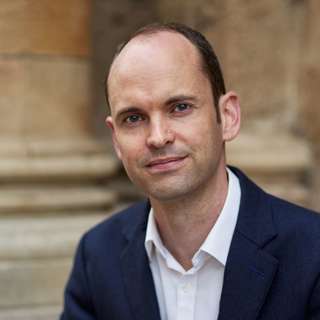

#163 – Toby Ord on the perils of maximising the good that you do

#163 – Toby Ord on the perils of maximising the good that you do

Effective altruism is associated with the slogan "do the most good." On one level, this has to be unobjectionable: What could be bad about helping people more and more?

But in today's interview, Toby Ord — moral philosopher at the University of Oxford and one of the founding figures of effective altruism — lays out three reasons to be cautious about the idea of maximising the good that you do. He suggests that rather than “doing the most good that we can,” perhaps we should be happy with a more modest and manageable goal: “doing most of the good that we can.”

Links to learn more, summary and full transcript.

Toby was inspired to revisit these ideas by the possibility that Sam Bankman-Fried, who stands accused of committing severe fraud as CEO of the cryptocurrency exchange FTX, was motivated to break the law by a desire to give away as much money as possible to worthy causes.

Toby's top reason not to fully maximise is the following: if the goal you're aiming at is subtly wrong or incomplete, then going all the way towards maximising it will usually cause you to start doing some very harmful things.

This result can be shown mathematically, but can also be made intuitive, and may explain why we feel instinctively wary of going “all-in” on any idea, or goal, or way of living — even something as benign as helping other people as much as possible.

Toby gives the example of someone pursuing a career as a professional swimmer. Initially, as our swimmer takes their training and performance more seriously, they adjust their diet, hire a better trainer, and pay more attention to their technique. While swimming is the main focus of their life, they feel fit and healthy and also enjoy other aspects of their life as well — family, friends, and personal projects.

But if they decide to increase their commitment further and really go all-in on their swimming career, holding back nothing back, then this picture can radically change. Their effort was already substantial, so how can they shave those final few seconds off their racing time? The only remaining options are those which were so costly they were loath to consider them before.

To eke out those final gains — and go from 80% effort to 100% — our swimmer must sacrifice other hobbies, deprioritise their relationships, neglect their career, ignore food preferences, accept a higher risk of injury, and maybe even consider using steroids.

Now, if maximising one's speed at swimming really were the only goal they ought to be pursuing, there'd be no problem with this. But if it's the wrong goal, or only one of many things they should be aiming for, then the outcome is disastrous. In going from 80% to 100% effort, their swimming speed was only increased by a tiny amount, while everything else they were accomplishing dropped off a cliff.

The bottom line is simple: a dash of moderation makes you much more robust to uncertainty and error.

As Toby notes, this is similar to the observation that a sufficiently capable superintelligent AI, given any one goal, would ruin the world if it maximised it to the exclusion of everything else. And it follows a similar pattern to performance falling off a cliff when a statistical model is 'overfit' to its data.

In the full interview, Toby also explains the “moral trade” argument against pursuing narrow goals at the expense of everything else, and how consequentialism changes if you judge not just outcomes or acts, but everything according to its impacts on the world.

Toby and Rob also discuss:

  • The rise and fall of FTX and some of its impacts
  • What Toby hoped effective altruism would and wouldn't become when he helped to get it off the ground
  • What utilitarianism has going for it, and what's wrong with it in Toby's view
  • How to mathematically model the importance of personal integrity
  • Which AI labs Toby thinks have been acting more responsibly than others
  • How having a young child affects Toby’s feelings about AI risk
  • Whether infinities present a fundamental problem for any theory of ethics that aspire to be fully impartial
  • How Toby ended up being the source of the highest quality images of the Earth from space

Get this episode by subscribing to our podcast on the world’s most pressing problems and how to solve them: type ‘80,000 Hours’ into your podcasting app. Or read the transcript.

Producer and editor: Keiran Harris
Audio Engineering Lead: Ben Cordell
Technical editing: Simon Monsour
Transcriptions: Katy Moore

Tämä jakso on lisätty Podme-palveluun avoimen RSS-syötteen kautta eikä se ole Podmen omaa tuotantoa. Siksi jakso saattaa sisältää mainontaa.

Jaksot(334)

#132 Classic episode – Nova DasSarma on why information security may be critical to the safe development of AI systems

#132 Classic episode – Nova DasSarma on why information security may be critical to the safe development of AI systems

If a business has spent $100 million developing a product, it’s a fair bet that they don’t want it stolen in two seconds and uploaded to the web where anyone can use it for free.This problem exists in...

31 Tammi 20252h 41min

#138 Classic episode – Sharon Hewitt Rawlette on why pleasure and pain are the only things that intrinsically matter

#138 Classic episode – Sharon Hewitt Rawlette on why pleasure and pain are the only things that intrinsically matter

What in the world is intrinsically good — good in itself even if it has no other effects? Over the millennia, people have offered many answers: joy, justice, equality, accomplishment, loving god, wisd...

22 Tammi 20252h 25min
#134 Classic episode – Ian Morris on what big-picture history teaches us

#134 Classic episode – Ian Morris on what big-picture history teaches us

Wind back 1,000 years and the moral landscape looks very different to today. Most farming societies thought slavery was natural and unobjectionable, premarital sex was an abomination, women should obe...

15 Tammi 20253h 40min

#140 Classic episode – Bear Braumoeller on the case that war isn’t in decline

#140 Classic episode – Bear Braumoeller on the case that war isn’t in decline

Is war in long-term decline? Steven Pinker's The Better Angels of Our Nature brought this previously obscure academic question to the centre of public debate, and pointed to rates of death in war to a...

8 Tammi 20252h 48min

2024 Highlightapalooza! (The best of The 80,000 Hours Podcast this year)

2024 Highlightapalooza! (The best of The 80,000 Hours Podcast this year)

"A shameless recycling of existing content to drive additional audience engagement on the cheap… or the single best, most valuable, and most insight-dense episode we put out in the entire year, depend...

27 Joulu 20242h 50min

#211 – Sam Bowman on why housing still isn't fixed and what would actually work

#211 – Sam Bowman on why housing still isn't fixed and what would actually work

Rich countries seem to find it harder and harder to do anything that creates some losers. People who don’t want houses, offices, power stations, trains, subway stations (or whatever) built in their ar...

19 Joulu 20243h 25min

#210 – Cameron Meyer Shorb on dismantling the myth that we can’t do anything to help wild animals

#210 – Cameron Meyer Shorb on dismantling the myth that we can’t do anything to help wild animals

"I really don’t want to give the impression that I think it is easy to make predictable, controlled, safe interventions in wild systems where there are many species interacting. I don’t think it’s eas...

29 Marras 20243h 21min

#209 – Rose Chan Loui on OpenAI’s gambit to ditch its nonprofit

#209 – Rose Chan Loui on OpenAI’s gambit to ditch its nonprofit

One OpenAI critic calls it “the theft of at least the millennium and quite possibly all of human history.” Are they right?Back in 2015 OpenAI was but a humble nonprofit. That nonprofit started a for-p...

27 Marras 20241h 22min

Suosittua kategoriassa Koulutus

rss-murhan-anatomia
psykopodiaa-podcast
voi-hyvin-meditaatiot-2
adhd-podi
rss-niinku-asia-on
rss-rahamania
psykologia
rss-hereilla
rss-arkea-ja-aurinkoa-podcast-espanjasta
taytta-tavaraa
rahapuhetta
kesken
rss-valo-minussa-2
rss-tietoinen-yhteys-podcast-2
kehossa
dear-ladies
rss-duodecim-lehti
rss-koira-haudattuna
rss-narsisti
rss-tyohyvinvoinnin-aakkoset