#170 – Santosh Harish on how air pollution is responsible for ~12% of global deaths — and how to get that number down

#170 – Santosh Harish on how air pollution is responsible for ~12% of global deaths — and how to get that number down

"One [outrageous example of air pollution] is municipal waste burning that happens in many cities in the Global South. Basically, this is waste that gets collected from people's homes, and instead of being transported to a waste management facility or a landfill or something, gets burned at some point, because that's the fastest way to dispose of it — which really points to poor delivery of public services. But this is ubiquitous in virtually every small- or even medium-sized city. It happens in larger cities too, in this part of the world.

"That's something that truly annoys me, because it feels like the kind of thing that ought to be fairly easily managed, but it happens a lot. It happens because people presumably don't think that it's particularly harmful. I don't think it saves a tonne of money for the municipal corporations and other local government that are meant to manage it. I find it particularly annoying simply because it happens so often; it's something that you're able to smell in so many different parts of these cities." — Santosh Harish

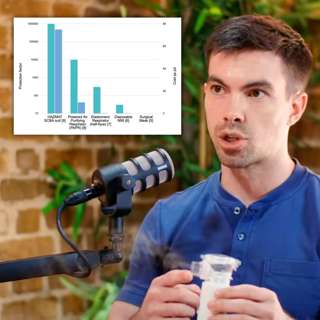
In today’s episode, host Rob Wiblin interviews Santosh Harish — leader of Open Philanthropy’s grantmaking in South Asian air quality — about the scale of the harm caused by air pollution.

Links to learn more, summary, and full transcript.

They cover:

  • How bad air pollution is for our health and life expectancy
  • The different kinds of harm that particulate pollution causes
  • The strength of the evidence that it damages our brain function and reduces our productivity
  • Whether it was a mistake to switch our attention to climate change and away from air pollution
  • Whether most listeners to this show should have an air purifier running in their house right now
  • Where air pollution in India is worst and why, and whether it's going up or down
  • Where most air pollution comes from
  • The policy blunders that led to many sources of air pollution in India being effectively unregulated
  • Why indoor air pollution packs an enormous punch
  • The politics of air pollution in India
  • How India ended up spending a lot of money on outdoor air purifiers
  • The challenges faced by foreign philanthropists in India
  • Why Santosh has made the grants he has so far
  • And plenty more

Chapters:

  • Cold open (00:00:00)
  • Rob's intro (00:01:07)
  • How bad is air pollution? (00:03:41)
  • Quantifying the scale of the damage (00:15:47)
  • Effects on cognitive performance and mood (00:24:19)
  • How do we really know the harms are as big as is claimed? (00:27:05)
  • Misconceptions about air pollution (00:36:56)
  • Why don’t environmental advocacy groups focus on air pollution? (00:42:22)
  • How listeners should approach air pollution in their own lives (00:46:58)
  • How bad is air pollution in India in particular (00:54:23)
  • The trend in India over the last few decades (01:12:33)
  • Why aren’t people able to fix these problems? (01:24:17)
  • Household waste burning (01:35:06)
  • Vehicle emissions (01:42:10)
  • The role that courts have played in air pollution regulation in India (01:50:09)
  • Industrial emissions (01:57:10)
  • The political economy of air pollution in northern India (02:02:14)
  • Can philanthropists drive policy change? (02:13:42)
  • Santosh’s grants (02:29:45)
  • Examples of other countries that have managed to greatly reduce air pollution (02:45:44)
  • Career advice for listeners in India (02:51:11)

Producer and editor: Keiran Harris
Audio Engineering Lead: Ben Cordell
Technical editing: Simon Monsour and Milo McGuire
Transcriptions: Katy Moore

Jaksot(321)

#222 – Can we tell if an AI is loyal by reading its mind? DeepMind's Neel Nanda (part 1)

#222 – Can we tell if an AI is loyal by reading its mind? DeepMind's Neel Nanda (part 1)

We don’t know how AIs think or why they do what they do. Or at least, we don’t know much. That fact is only becoming more troubling as AIs grow more capable and appear on track to wield enormous cultu...

8 Syys 20253h 1min

#221 – Kyle Fish on the most bizarre findings from 5 AI welfare experiments

#221 – Kyle Fish on the most bizarre findings from 5 AI welfare experiments

What happens when you lock two AI systems in a room together and tell them they can discuss anything they want?According to experiments run by Kyle Fish — Anthropic’s first AI welfare researcher — som...

28 Elo 20252h 28min

How not to lose your job to AI (article by Benjamin Todd)

How not to lose your job to AI (article by Benjamin Todd)

About half of people are worried they’ll lose their job to AI. They’re right to be concerned: AI can now complete real-world coding tasks on GitHub, generate photorealistic video, drive a taxi more sa...

31 Heinä 202551min

Rebuilding after apocalypse: What 13 experts say about bouncing back

Rebuilding after apocalypse: What 13 experts say about bouncing back

What happens when civilisation faces its greatest tests?This compilation brings together insights from researchers, defence experts, philosophers, and policymakers on humanity’s ability to survive and...

15 Heinä 20254h 26min

#220 – Ryan Greenblatt on the 4 most likely ways for AI to take over, and the case for and against AGI in <8 years

#220 – Ryan Greenblatt on the 4 most likely ways for AI to take over, and the case for and against AGI in <8 years

Ryan Greenblatt — lead author on the explosive paper “Alignment faking in large language models” and chief scientist at Redwood Research — thinks there’s a 25% chance that within four years, AI will b...

8 Heinä 20252h 50min

#219 – Toby Ord on graphs AI companies would prefer you didn't (fully) understand

#219 – Toby Ord on graphs AI companies would prefer you didn't (fully) understand

The era of making AI smarter just by making it bigger is ending. But that doesn’t mean progress is slowing down — far from it. AI models continue to get much more powerful, just using very different m...

24 Kesä 20252h 48min

#218 – Hugh White on why Trump is abandoning US hegemony – and that’s probably good

#218 – Hugh White on why Trump is abandoning US hegemony – and that’s probably good

For decades, US allies have slept soundly under the protection of America’s overwhelming military might. Donald Trump — with his threats to ditch NATO, seize Greenland, and abandon Taiwan — seems hell...

12 Kesä 20252h 48min

#217 – Beth Barnes on the most important graph in AI right now — and the 7-month rule that governs its progress

#217 – Beth Barnes on the most important graph in AI right now — and the 7-month rule that governs its progress

AI models today have a 50% chance of successfully completing a task that would take an expert human one hour. Seven months ago, that number was roughly 30 minutes — and seven months before that, 15 mi...

2 Kesä 20253h 47min

Suosittua kategoriassa Koulutus

rss-murhan-anatomia
rss-narsisti
psykopodiaa-podcast
voi-hyvin-meditaatiot-2
rss-liian-kuuma-peruna
rss-vapaudu-voimaasi
rss-hereilla
rss-valo-minussa-2
rss-uskonto-on-tylsaa
psykologia
kesken
dear-ladies
rss-luonnollinen-synnytys-podcast
rahapuhetta
rss-niinku-asia-on
ihminen-tavattavissa-tommy-hellsten-instituutti
leveli
rss-duodecim-lehti
rss-tietoinen-yhteys-podcast-2
rss-arkea-ja-aurinkoa-podcast-espanjasta