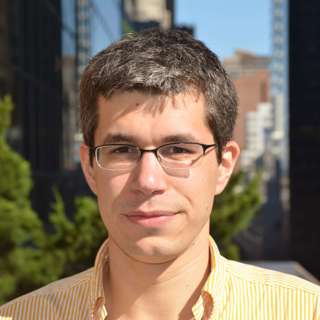

#180 – Hugo Mercier on why gullibility and misinformation are overrated

#180 – Hugo Mercier on why gullibility and misinformation are overrated

The World Economic Forum’s global risks survey of 1,400 experts, policymakers, and industry leaders ranked misinformation and disinformation as the number one global risk over the next two years — ranking it ahead of war, environmental problems, and other threats from AI.

And the discussion around misinformation and disinformation has shifted to focus on how generative AI or a future super-persuasive AI might change the game and make it extremely hard to figure out what was going on in the world — or alternatively, extremely easy to mislead people into believing convenient lies.

But this week’s guest, cognitive scientist Hugo Mercier, has a very different view on how people form beliefs and figure out who to trust — one in which misinformation really is barely a problem today, and is unlikely to be a problem anytime soon. As he explains in his book Not Born Yesterday, Hugo believes we seriously underrate the perceptiveness and judgement of ordinary people.

Links to learn more, summary, and full transcript.

In this interview, host Rob Wiblin and Hugo discuss:

  • How our reasoning mechanisms evolved to facilitate beneficial communication, not blind gullibility.
  • How Hugo makes sense of our apparent gullibility in many cases — like falling for financial scams, astrology, or bogus medical treatments, and voting for policies that aren’t actually beneficial for us.
  • Rob and Hugo’s ideas about whether AI might make misinformation radically worse, and which mass persuasion approaches we should be most worried about.
  • Why Hugo thinks our intuitions about who to trust are generally quite sound, even in today’s complex information environment.
  • The distinction between intuitive beliefs that guide our actions versus reflective beliefs that don’t.
  • Why fake news and conspiracy theories actually have less impact than most people assume.
  • False beliefs that have persisted across cultures and generations — like bloodletting and vaccine hesitancy — and theories about why.
  • And plenty more.

Chapters:

  • The view that humans are really gullible (00:04:26)
  • The evolutionary argument against humans being gullible (00:07:46)
  • Open vigilance (00:18:56)
  • Intuitive and reflective beliefs (00:32:25)
  • How people decide who to trust (00:41:15)
  • Redefining beliefs (00:51:57)
  • Bloodletting (01:00:38)
  • Vaccine hesitancy and creationism (01:06:38)
  • False beliefs without skin in the game (01:12:36)
  • One consistent weakness in human judgement (01:22:57)
  • Trying to explain harmful financial decisions (01:27:15)
  • Astrology (01:40:40)
  • Medical treatments that don’t work (01:45:47)
  • Generative AI, LLMs, and persuasion (01:54:50)
  • Ways AI could improve the information environment (02:29:59)

Producer and editor: Keiran Harris
Audio Engineering Lead: Ben Cordell
Technical editing: Simon Monsour and Milo McGuire
Transcriptions: Katy Moore

Jaksot(321)

#228 – Eileen Yam on how we're completely out of touch with what the public thinks about AI

#228 – Eileen Yam on how we're completely out of touch with what the public thinks about AI

If you work in AI, you probably think it’s going to boost productivity, create wealth, advance science, and improve your life. If you’re a member of the American public, you probably strongly disagree...

20 Marras 20251h 43min
OpenAI: The nonprofit refuses to be killed (with Tyler Whitmer)

OpenAI: The nonprofit refuses to be killed (with Tyler Whitmer)

Last December, the OpenAI business put forward a plan to completely sideline its nonprofit board. But two state attorneys general have now blocked that effort and kept that board very much alive and k...

11 Marras 20251h 56min
#227 – Helen Toner on the geopolitics of AGI in China and the Middle East

#227 – Helen Toner on the geopolitics of AGI in China and the Middle East

With the US racing to develop AGI and superintelligence ahead of China, you might expect the two countries to be negotiating how they’ll deploy AI, including in the military, without coming to blows. ...

5 Marras 20252h 20min

#226 – Holden Karnofsky on unexploited opportunities to make AI safer — and all his AGI takes

#226 – Holden Karnofsky on unexploited opportunities to make AI safer — and all his AGI takes

For years, working on AI safety usually meant theorising about the ‘alignment problem’ or trying to convince other people to give a damn. If you could find any way to help, the work was frustrating an...

30 Loka 20254h 30min

#225 – Daniel Kokotajlo on what a hyperspeed robot economy might look like

#225 – Daniel Kokotajlo on what a hyperspeed robot economy might look like

When Daniel Kokotajlo talks to security experts at major AI labs, they tell him something chilling: “Of course we’re probably penetrated by the CCP already, and if they really wanted something, they c...

27 Loka 20252h 12min

#224 – There's a cheap and low-tech way to save humanity from any engineered disease | Andrew Snyder-Beattie

#224 – There's a cheap and low-tech way to save humanity from any engineered disease | Andrew Snyder-Beattie

Conventional wisdom is that safeguarding humanity from the worst biological risks — microbes optimised to kill as many as possible — is difficult bordering on impossible, making bioweapons humanity’s ...

2 Loka 20252h 31min

Inside the Biden admin’s AI policy approach | Jake Sullivan, Biden’s NSA | via The Cognitive Revolution

Inside the Biden admin’s AI policy approach | Jake Sullivan, Biden’s NSA | via The Cognitive Revolution

Jake Sullivan was the US National Security Advisor from 2021-2025. He joined our friends on The Cognitive Revolution podcast in August to discuss AI as a critical national security issue. We thought i...

26 Syys 20251h 5min

#223 – Neel Nanda on leading a Google DeepMind team at 26 – and advice if you want to work at an AI company (part 2)

#223 – Neel Nanda on leading a Google DeepMind team at 26 – and advice if you want to work at an AI company (part 2)

At 26, Neel Nanda leads an AI safety team at Google DeepMind, has published dozens of influential papers, and mentored 50 junior researchers — seven of whom now work at major AI companies. His secret?...

15 Syys 20251h 46min

Suosittua kategoriassa Koulutus

rss-murhan-anatomia
psykopodiaa-podcast
voi-hyvin-meditaatiot-2
rss-narsisti
rss-liian-kuuma-peruna
rss-vapaudu-voimaasi
dear-ladies
aamukahvilla
psykologia
leveli
kesken
ihminen-tavattavissa-tommy-hellsten-instituutti
rss-uskonto-on-tylsaa
rss-duodecim-lehti
rss-valo-minussa-2
rahapuhetta
adhd-podi
rss-tietoinen-yhteys-podcast-2
rss-hereilla
rss-xamk-podcast