
#197 – Nick Joseph on whether Anthropic's AI safety policy is up to the task

#197 – Nick Joseph on whether Anthropic's AI safety policy is up to the task

The three biggest AI companies — Anthropic, OpenAI, and DeepMind — have now all released policies designed to make their AI models less likely to go rogue or cause catastrophic damage as they approach, and eventually exceed, human capabilities. Are they good enough?

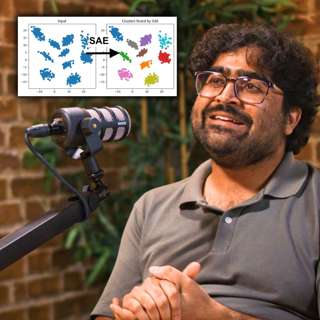
That’s what host Rob Wiblin tries to hash out in this interview (recorded May 30) with Nick Joseph — one of the original cofounders of Anthropic, its current head of training, and a big fan of Anthropic’s “responsible scaling policy” (or “RSP”). Anthropic is the most safety focused of the AI companies, known for a culture that treats the risks of its work as deadly serious.

Links to learn more, highlights, video, and full transcript.

As Nick explains, these scaling policies commit companies to dig into what new dangerous things a model can do — after it’s trained, but before it’s in wide use. The companies then promise to put in place safeguards they think are sufficient to tackle those capabilities before availability is extended further. For instance, if a model could significantly help design a deadly bioweapon, then its weights need to be properly secured so they can’t be stolen by terrorists interested in using it that way.

As capabilities grow further — for example, if testing shows that a model could exfiltrate itself and spread autonomously in the wild — then new measures would need to be put in place to make that impossible, or demonstrate that such a goal can never arise.

Nick points out what he sees as the biggest virtues of the RSP approach, and then Rob pushes him on some of the best objections he’s found to RSPs being up to the task of keeping AI safe and beneficial. The two also discuss whether it's essential to eventually hand over operation of responsible scaling policies to external auditors or regulatory bodies, if those policies are going to be able to hold up against the intense commercial pressures that might end up arrayed against them.

In addition to all of that, Nick and Rob talk about:

  • What Nick thinks are the current bottlenecks in AI progress: people and time (rather than data or compute).
  • What it’s like working in AI safety research at the leading edge, and whether pushing forward capabilities (even in the name of safety) is a good idea.
  • What it’s like working at Anthropic, and how to get the skills needed to help with the safe development of AI.

And as a reminder, if you want to let us know your reaction to this interview, or send any other feedback, our inbox is always open at podcast@80000hours.org.

Chapters:

  • Cold open (00:00:00)
  • Rob’s intro (00:01:00)
  • The interview begins (00:03:44)
  • Scaling laws (00:04:12)
  • Bottlenecks to further progress in making AIs helpful (00:08:36)
  • Anthropic’s responsible scaling policies (00:14:21)
  • Pros and cons of the RSP approach for AI safety (00:34:09)
  • Alternatives to RSPs (00:46:44)
  • Is an internal audit really the best approach? (00:51:56)
  • Making promises about things that are currently technically impossible (01:07:54)
  • Nick’s biggest reservations about the RSP approach (01:16:05)
  • Communicating “acceptable” risk (01:19:27)
  • Should Anthropic’s RSP have wider safety buffers? (01:26:13)
  • Other impacts on society and future work on RSPs (01:34:01)
  • Working at Anthropic (01:36:28)
  • Engineering vs research (01:41:04)
  • AI safety roles at Anthropic (01:48:31)
  • Should concerned people be willing to take capabilities roles? (01:58:20)
  • Recent safety work at Anthropic (02:10:05)
  • Anthropic culture (02:14:35)
  • Overrated and underrated AI applications (02:22:06)
  • Rob’s outro (02:26:36)

Producer and editor: Keiran Harris
Audio engineering by Ben Cordell, Milo McGuire, Simon Monsour, and Dominic Armstrong
Video engineering: Simon Monsour
Transcriptions: Katy Moore

Jaksot(320)

Don’t believe OpenAI’s “nonprofit” spin (emergency pod with Tyler Whitmer)

Don’t believe OpenAI’s “nonprofit” spin (emergency pod with Tyler Whitmer)

OpenAI’s recent announcement that its nonprofit would “retain control” of its for-profit business sounds reassuring. But this seemingly major concession, celebrated by so many, is in itself largely me...

15 Touko 20251h 12min

The case for and against AGI by 2030 (article by Benjamin Todd)

The case for and against AGI by 2030 (article by Benjamin Todd)

More and more people have been saying that we might have AGI (artificial general intelligence) before 2030. Is that really plausible? This article by Benjamin Todd looks into the cases for and against...

12 Touko 20251h

Emergency pod: Did OpenAI give up, or is this just a new trap? (with Rose Chan Loui)

Emergency pod: Did OpenAI give up, or is this just a new trap? (with Rose Chan Loui)

When attorneys general intervene in corporate affairs, it usually means something has gone seriously wrong. In OpenAI’s case, it appears to have forced a dramatic reversal of the company’s plans to si...

8 Touko 20251h 2min

#216 – Ian Dunt on why governments in Britain and elsewhere can't get anything done – and how to fix it

#216 – Ian Dunt on why governments in Britain and elsewhere can't get anything done – and how to fix it

When you have a system where ministers almost never understand their portfolios, civil servants change jobs every few months, and MPs don't grasp parliamentary procedure even after decades in office —...

2 Touko 20253h 14min

Serendipity, weird bets, & cold emails that actually work: Career advice from 16 former guests

Serendipity, weird bets, & cold emails that actually work: Career advice from 16 former guests

How do you navigate a career path when the future of work is uncertain? How important is mentorship versus immediate impact? Is it better to focus on your strengths or on the world’s most pressing pro...

24 Huhti 20252h 18min

#215 – Tom Davidson on how AI-enabled coups could allow a tiny group to seize power

#215 – Tom Davidson on how AI-enabled coups could allow a tiny group to seize power

Throughout history, technological revolutions have fundamentally shifted the balance of power in society. The Industrial Revolution created conditions where democracies could flourish for the first ti...

16 Huhti 20253h 22min

Guilt, imposter syndrome & doing good: 16 past guests share their mental health journeys

Guilt, imposter syndrome & doing good: 16 past guests share their mental health journeys

"We are aiming for a place where we can decouple the scorecard from our worthiness. It’s of course the case that in trying to optimise the good, we will always be falling short. The question is how mu...

11 Huhti 20251h 47min

#214 – Buck Shlegeris on controlling AI that wants to take over – so we can use it anyway

#214 – Buck Shlegeris on controlling AI that wants to take over – so we can use it anyway

Most AI safety conversations centre on alignment: ensuring AI systems share our values and goals. But despite progress, we’re unlikely to know we’ve solved the problem before the arrival of human-leve...

4 Huhti 20252h 16min

Suosittua kategoriassa Koulutus

rss-murhan-anatomia
psykopodiaa-podcast
rss-narsisti
voi-hyvin-meditaatiot-2
aamukahvilla
rss-niinku-asia-on
rss-liian-kuuma-peruna
adhd-podi
psykologia
kesken
rss-vapaudu-voimaasi
rss-valo-minussa-2
dear-ladies
rss-koira-haudattuna
jari-sarasvuo-podcast
esa-saarinen-filosofia-ja-systeemiajattelu
leveli
rss-duodecim-lehti
rss-luonnollinen-synnytys-podcast
rss-ihana-elamani