029: Live Session (Mark) — Introduction & Testing Phase (Part 1)

029: Live Session (Mark) — Introduction & Testing Phase (Part 1)

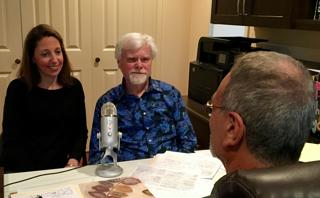
This is the first in a series of podcasts that will feature live therapy. As you listen, you'll have the opportunity to peak behind closed doors to see how TEAM-CBT actually works in a real-world setting, and not role playing.

The patient is a physician named Mark who has been haunted for decades by a problem with his oldest son, and he feels like a failure as a father. Although the facts of your life are likely to be very different, you might understand what it's like to feel like a failure, or to tell yourself that you're defective, or simply not good enough.

The two co-therapists include David and his highly-esteemed colleague, Dr. Jill Levitt. We have broken the session down into a number of podcasts that will include excerpts from the session along with commentaries on the thought patterns of these two master therapists as the session unfolds.

Part 1—T = Testing

As the session begins, David and Jill review of Mark's scores on the Brief Mood Survey (BMS), which he completed just before the session began. The scores indicate that Mark is only feeling mildly depressed, anxious, and angry, but is extremely dissatisfied with his relationship with his son.

Click here to view Mark's initial Brief Mood Survey.

At the end of the session, David and Jill will ask Mark to complete the BMS again. By comparing his patient's scores at the start and end of the session, they will be able to see exactly how effective, or ineffective, the session was. Mark will also rate David and Jill on Empathy, Helpfulness, and several other important dimensions.

Testing at the start and end of every therapy session is one of the new and unique components of TEAM therapy. The testing can revolutionize psychotherapy, because therapists can fine-tune their therapeutic strategies based on the scores, and make critical important changes if the session was not particularly helpful. However, the assessment instruments are extremely sensitive and pick up the smallest therapeutic errors. This can be quite threatening to therapists who don't want to be held accountable.

Jaksot(512)

031: Live Session (Mark) — Agenda Setting Phase (Part 3)

031: Live Session (Mark) — Agenda Setting Phase (Part 3)

In the early days of my career, I (Dr. Burns) would have assumed that Mark definitely wanted to change--after all, he'd been in a lot of pain for a long time, and he came to the session because he wan...

10 Huhti 201731min

030: Live Session (Mark) — Empathy Phase (Part 2)

030: Live Session (Mark) — Empathy Phase (Part 2)

After reviewing Mark's scores on the Brief Mood Survey, the Empathy phase of the session unfolds. During this phase of the session, David and Jill will not try to help, rescue, or save Mark. They will...

3 Huhti 201747min
028: Scared Stiff — The Motivational Model (Part 6)

028: Scared Stiff — The Motivational Model (Part 6)

The key is bringing the patient's subconscious resistance to conscious awareness, and melting it away with paradoxical techniques. This is absolutely critical if you are hoping to see a complete elimi...

20 Maalis 201746min

027: Scared Stiff — The Hidden Emotion Model (Part 5)

027: Scared Stiff — The Hidden Emotion Model (Part 5)

David reminds us about the differences between healthy fear and unhealthy, neurotic anxiety, or an anxiety "disorder" like a phobia, or OCD, and so forth. He explains that negative thoughts, and not e...

13 Maalis 201726min

026: Scared Stiff — The Exposure Model (Part 4)

026: Scared Stiff — The Exposure Model (Part 4)

We begin by describing the three different deaths of the ego that are required for recovery from depression, anxiety, or a relationship conflict, respectively. For depression recovery often results fr...

6 Maalis 201744min

025: Ask David — How do you handle a patient you don't like (or who bores you)?

025: Ask David — How do you handle a patient you don't like (or who bores you)?

David answers these questions: How do you deal with a patient (or friend) who is boring? How do you deal with a patient (or friend) you don't like? How do you get patients to do their psychotherapy ho...

27 Helmi 201737min

024: Scared Stiff — The Cognitive Model (Part 3)

024: Scared Stiff — The Cognitive Model (Part 3)

The cognitive model of anxiety is based on three powerful ideas: Anxiety always results from negative thought (NTs) that involve the prediction of danger. For example, if you have public speaking anx...

20 Helmi 201751min

Suosittua kategoriassa Koulutus

rss-murhan-anatomia
voi-hyvin-meditaatiot-2
rss-narsisti
psykopodiaa-podcast
rss-vapaudu-voimaasi
rss-niinku-asia-on
psykologia
rss-liian-kuuma-peruna
rss-duodecim-lehti
rss-uskonto-on-tylsaa
rss-valo-minussa-2
adhd-podi
aamukahvilla
kesken
koulu-podcast-2
adhd-tyylilla
jari-sarasvuo-podcast
rss-turun-yliopisto
rss-luonnollinen-synnytys-podcast
rss-laiska-joogi