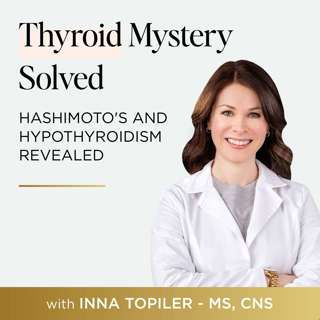
041 Demystifying Annual Check-ups & Why They Fall Short

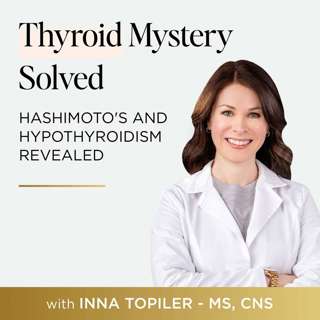
041 Demystifying Annual Check-ups & Why They Fall Short

The Investigation

Annual check-ups are supposed to confirm your health or raise flags on potential issues. But, could they be a false sense of security? I’ve had so many clients come in with a ‘clean bill of health’ from their doctor that doesn’t match how they feel. Today, we’re going to investigate why so many annual check-ups fall short.

Insufficient Blood Tests

Are you getting the right blood tests with your annual check-up to truly determine if your healthy? It depends on your doctor. What tests are run is up to each individual doctor. I find that, unless you are seeing an integrative doctor, chances are good that your blood work is very basic. An integrative doctor will ensure that the blood work includes specific markers to get a complete picture of what’s going on in the body.

How Health Mysteries Start

So often, clients dealing with a health mystery tell me that they’ve had an annual physical and that the blood work came back totally normal. Without more comprehensive blood testing, they presume that nothing is wrong and as a result, doctors may dismiss complaints or rule out issues prematurely. When we presume that things are ‘normal’ it can be very hard to dig deeper to find out what is really going on. And remember, imbalances often start months and years before symptoms appear and a disease is actually found. So, imagine if getting the right blood tests could mean that you catch things before they can turn into a health mystery!

Avoid Becoming a Health Mystery

The number one way to avoid developing a health mystery is to use your annual check-up as an opportunity to do more comprehensive testing. What does this look like? Ask your doctor to do more than just the basics. You need to be specific, otherwise, you might still fall into a false sense of security about your health.

Normal is Too Broad

Another way that issues can slip through the cracks is when our results come back inside the ‘normal’ range. The normal range is not the same as the optimal range and can vary depending on where you live. If you want optimal health, you have to compare your results to the ‘optimal’ range and not the normal range.

What Blood Tests Should be in an Annual Physical

Most routine physicals will include a complete blood count (CBC), a metabolic panel (looks at your glucose, liver and kidney markers), and a lipid panel (cholesterol and triglycerides). This is typically not enough.

Here is what tests you should have done and the optimal ranges to look for:

  • Vitamin D
    • Check both 25 hydroxy and 125 hydroxy, ideally but if you just get one test, ask your doctor for the 25 OH.
    • The typical ‘normal’ lab range for vitamin D is 30-100. Optimally, we want to be somewhere between 50-60 and if you have an autoimmune disease some say even closer to 70.
  • Thyroid (listen to Episode 27 for more on this!)
    • Most doctors won’t check this in a routine physical and if they do, it’s just a TSH test.
    • You should test TSH, Total T4, Total T3, Free T4, Free T3, Reverse T3 and Thyroid antibodies.
    • Check the PDF Download for optimal ranges of each of these
  • Iron
    • While the CBC includes a marker called hemoglobin but it is typically not enough to truly evaluate iron levels
    • Ask for Total Iron, TIBC, Iron Saturation and Ferritin (which is the storage of iron).
  • Inflammation
    • Inflammation is what often leads to disease and very few doctors test for it in an annual physical.
    • Ask for a test that looks a marker called HsCRP (high sensitivity c reactive protein). Ideally, this number should be below 1 even though the labs range may allow or up to 5.
    • Also test ESR. Normal ranges is below 15 but optimal range is below 5.
    • High Homocysteine levels can lead to inflammation and is a risk factor for cardiovascular disease. It is rarely checked. Most lab ranges show 0-15 as normal. Ideally, homocysteine should be between 7 and 8.
  • B12
    • Normal ranges from 200 to 1100 but ideally, you want to be above 600.
  • Hemoglobin a1c (if you’ve had elevated glucose or you have a family history of diabetes)
    • Most tests are a one-time check of glucose but the a1c looks at average levels over 3 months.
    • Ideal levels are 5.6 or below. Between 5.7 and 6 indicates a higher risk for diabetes. 6-6.3 is considered pre-diabetes. Above 6.3 is diabetes
  • ANA (anti nuclear antibodies) (if you suspect, have any history, or family history of autoimmunity)
    • This general marker does not represent a specific autoimmune disease, having an elevated ANA can be indicative of some autoimmunity.
    • If this is elevated, more investigation is warranted.
  • Histamine determination whole blood (done at Labcorp only, Test # 081315)
    • Learn more about this, the MTHFR gene, and methylation by listening to episode 34
    • The optimal range for this marker is 40-70

Redefining the Basic Tests

Most doctors will run the basics, including a CBC, Metabolic and Lipid Panels. Here are the key things to look for:

  • CBC
    • Look at the white blood cells. The lab range is wide but an ideal white blood cell count is between about 5 and 9.
    • A low white blood cell count can mean there is some kind of underlying infection.
    • Look at thewhite blood cell differential, too. This shows the percentages of the different types of white blood cells. If your lymphocytes are elevated (and you’re not sick) it may be a sign that something is going on, perhaps a hidden virus the body has a hard time fighting off.

  • Hemoglobin
    • Note that the bottom end of the range is at 11.7 but women should ideally be between 13.5 and 14.5 and men at 14.5-16.5.
  • Metabolic Panel
    • Pay special attention to the glucose. It should ideally be between 79 and 90
    • Bilirubin should be between 0 and .8.
    • Numbers above .8 can indicat...

Jaksot(215)

212 Why Your Cholesterol Went Up and What to Do About It, Especially with Thyroid Issues, with Dr. Sanjay Bhojraj

212 Why Your Cholesterol Went Up and What to Do About It, Especially with Thyroid Issues, with Dr. Sanjay Bhojraj

In this episode, Inna sits down with integrative cardiologist Dr. Sanjay Bhojraj to unpack everything that you need to know about cholesterol when you have a thyroid issue.These are things your doctor...

2 Huhti 1h 9min

211 A Groundbreaking Discovery for Balancing the Immune System in Hashimoto’s With Michael Antonelli

211 A Groundbreaking Discovery for Balancing the Immune System in Hashimoto’s With Michael Antonelli

Hashimoto’s is often treated as a thyroid problem. But in reality, it is a problem of immune confusion. When the immune system loses tolerance and begins reacting to the body’s own tissues, inflammati...

19 Maalis 45min

210 Ayurveda, Inflammation, and Hashimoto’s: A Different Way to Understand Your Thyroid with Dr. Shivani Gupta

210 Ayurveda, Inflammation, and Hashimoto’s: A Different Way to Understand Your Thyroid with Dr. Shivani Gupta

In this episode, I am joined by Dr. Shivani Gupta to talk about Ayurveda, inflammation, and what this 5,000 year old system of medicine reveals about Hashimoto’s and thyroid health.There are moments i...

5 Maalis 50min

209 How Hypervigilance Keeps Hashimoto’s Stuck, Even With the Right Protocol, with Karyn Shanks

209 How Hypervigilance Keeps Hashimoto’s Stuck, Even With the Right Protocol, with Karyn Shanks

You can follow a solid protocol for Hashimoto’s and still feel like something is not fully clicking.Your labs may look better. Your inflammation markers may improve. But your body still feels braced, ...

19 Helmi 42min

208 The Hashimoto’s Exercise Sweet Spot With Angela Brown

208 The Hashimoto’s Exercise Sweet Spot With Angela Brown

There is a point many people with Hashimoto’s reach where exercise becomes a constant question mark. You are moving your body, trying to be consistent, and still wondering if you are doing too much, n...

5 Helmi 38min

207 How to Actually Cook for Hashimoto’s with Hypothyroid Chef Ginny Mahar

207 How to Actually Cook for Hashimoto’s with Hypothyroid Chef Ginny Mahar

Cooking with Hashimoto’s often becomes the hardest place to stay consistent, not because you do not know what foods are supportive, but because figuring out how to cook in real life takes energy, plan...

22 Tammi 49min

206 Why Weight Loss Feels Impossible With Hashimoto’s and What Actually Works

206 Why Weight Loss Feels Impossible With Hashimoto’s and What Actually Works

Weight loss with Hashimoto’s often feels harder than it should, even when you’re doing all the things. This episode explores why that frustration is so common and why most weight loss advice doesn’t f...

8 Tammi 14min

205 What Your Thyroid Labs Are Not Telling You About Hashimoto’s

205 What Your Thyroid Labs Are Not Telling You About Hashimoto’s

So many people with Hashimoto’s carry emotional patterns they don’t even realize are affecting their thyroid. Today we take a closer look at the invisible habits we learn early in life, the ones that ...

25 Joulu 202514min

Suosittua kategoriassa Terveys ja hyvinvointi

unicast
psykopodiaa-podcast
voi-hyvin-meditaatiot-2
tiedenaiset-podcast
rss-pitaisko-erota
vakeva-elama-viisaampi-mieli-vahvempi-keho
meditaatiot-suomeksi
rss-narsisti
puhu-muru
junnut-pelissa
terapiassa
aamukahvilla
mielen-puolikkaat
rss-mighty-finland-podcast
rss-kuumilla-aalloilla
paritellen
rss-pt-paahtio
rss-adama-mindful-hetki
rss-en-saa-unta
rss-vapaudu-voimaasi