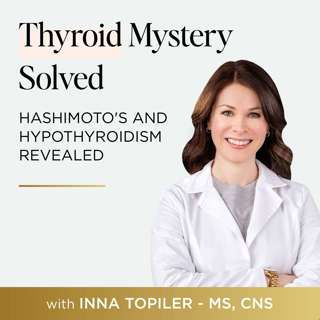
153 A Novel Approach to Supporting Hormones in Perimenopause and Menopause with Emily Sadri

153 A Novel Approach to Supporting Hormones in Perimenopause and Menopause with Emily Sadri

Celebrate Thyolove's 1st birthday with Savings

Use code BIRTHDAY at checkout this weekend only and save.


The Case:

  • Justine is 44 and dealing with sudden abdominal weight gain.
  • She is also experiencing brain fog which is causing her stress. Her PMS is getting worse and she just doesn’t feel like herself.
  • She saw her gynecologist who suggested birth control and antidepressants.

Medications are often the solution offered by traditional medicine but Justine wasn’t interested in going directly down that path. So, she came to me. I noted that she was still getting her regular cycle but suspected that the hormonal changes of perimenopause might be at play here. The Journey to Hormone Balance

My first step in helping Justine manage her changing hormones was to explore the connection between her symptoms and her hormonal changes. I reached out to Emily Sadri who is an expert in Hormone Replacement Therapy (HRT) and achieving hormonal harmony. You may remember Emily from past episodes, including 141 on Semiglutide (like Ozempic) and Weight Loss and 107 on Birth Control Use with Thyroid Issues. The Fundamentals: Understanding Perimenopause and Menopause

Despite the fact that half the population goes through menopause, there’s very little information available (and as Emily pointed out, this really should be something taught in school). So, let's lay the foundation with a basic understanding of hormones. Emily does a great job of explaining this in the episode. She shed light on the lifespan of hormones, highlighting that girls typically begin menstruating around the age of 11, which signifies a culmination of a year-long process where the brain and ovaries coordinate to initiate this significant change. Intriguingly, she drew parallels between menopause and puberty, suggesting that they are two sides of the same hormonal coin.

Emily went on to discuss a fascinating aspect of hormonal decline, indicating that there's approximately a 10-year period before menopause when significant hormonal changes occur. She mentioned that the average age of menopause in the United States has been decreasing, from 51 to possibly 49, although precise data can be challenging to obtain due to various factors like contraceptive methods and hysterectomies. She stressed the unpredictability of when an individual might stop menstruating, emphasizing the importance of tuning into one's body and being attentive to subtle changes. Furthermore, she pointed out the availability of straightforward methods to test estrogen and progesterone levels, which can provide valuable insights into hormonal health. This knowledge gap in medical education, particularly regarding hormone testing, was an eye-opener for both of us during our conversation.

One of the most important things to note, with regards to Justine’s case, is the concept of hormonal acceleration, commonly observed between ages 41 and 43, where hormones can undergo rapid changes, often triggered by life events and stress, making it crucial for women to recognize the connection between these symptoms and hormonal fluctuations. Deciphering Hormone Replacement Therapy

Hormones are the invisible architects of our well-being, influencing energy levels, sleep patterns, and even our emotional states. Achieving the right hormonal balance is paramount for optimal health. One of the ways that women may choose to do this is with Hormone Replacement Therapy also known as HRT. At its core, HRT involves replenishing hormones that our bodies may no longer produce in sufficient quantities. Emily goes into a lot more detail in this episode, so I encourage you to give it a listen. Why You May Want to Consider Replacing Hormones

As with everything to do with our bodies, we are all different. When it comes to replacing hormones, the choice is up to the individual woman going through menopause. Emily and I discussed several reasons women may want to consider HRT. Here are a few:

  • Hormonal Decline: This could be at any time during the 10-year period prior to menopause when there's a significant hormonal decline. Women may experience various symptoms during this time.
  • Acceleration of Symptoms: As mentioned, between the ages of 41 and 43, there can be an acceleration of symptoms. This acceleration can manifest as a sudden and pronounced change in hormonal symptoms.
  • Stress-Related Symptoms: Stress can play a role in exacerbating hormonal symptoms. Emily mentions that women who have had babies in their early 40s often experience an acceleration of symptoms, possibly due to both age and the stress of childbirth.

Exploring the Varieties of Hormone Replacement Therapy
We dove deep into the various options for HRT, including a frank conversation about the biased studies that have left a lot of women fearing HRT. If you are considering it but have some concerns, I highly recommend you listen to this conversation.
If you are exploring the options of HRT, there are two main types of HRT to consider:

  1. Bioidentical Hormones: Bioidentical hormones are hormones derived from plant sources, such as soy or yams, and are designed to have the same molecular structure as hormones naturally produced by the human body, like estrogen and progesterone. They are used in hormone replacement therapy (HRT) because they can be customized to address an individual's specific hormonal imbalances and symptoms. Customization ensures a more tailored and effective treatment under the guidance of a healthcare provider.
  2. Synthetic Hormones: Synthetic hormones, unlike bioidentical hormones, have a molecular structure that is not identical to hormones naturally produced by the body. These hormones are often used in conventional hormone replacement therapy (HRT) but may come with more standardized dosages and less flexibility in addressing individual hormonal needs. The use of synthetic hormones can sometimes lead to side effects or limited effectiveness since they don't precisely match the body's natural hormones.

Striking the Balance: Three Approaches to Hormone Replacement Therapy (HRT)
There are three primary approaches to hormone replacement therapy (HRT), each with its own delivery methods and timing. The first approach is called "static continuous," where individuals take a small amount of estrogen and progesterone every day. This can be administered through methods like patches, transdermal creams, or even oral forms. It's often used to alleviate symptoms and can be suitable for post-menopausal individuals.
The second approach involves taking estrogen daily but adding progesterone for only 12-14 days each month. This approach is essential for those with a uterus to reduce the risk of endometrial cancer associated with unopposed estrogen. Some women prefer this method as they find progesterone can make them feel sleepier or moodier when taken continuously.
The third approach is less common but involves a transdermal method that mimics the natural menstrual cycle. It starts with low hormone doses from days one to five, gradually increasing from days five to twelve, then slightly decreasing on days 13 and 14. With the introduction of progesterone, there's another peak around day 21, followed by a decline. Because this approach mirrors the natural hormonal fluctuations of a menstrual cycle it is known as "rhythmic hormone replacement" or "physiologic restoration." The physiological pro...

Jaksot(216)

205 What Your Thyroid Labs Are Not Telling You About Hashimoto’s

205 What Your Thyroid Labs Are Not Telling You About Hashimoto’s

Celebrate Thyolove's 1st birthday with SavingsUse code BIRTHDAY at checkout this weekend only and save.So many people with Hashimoto’s carry emotional patterns they don’t even realize are affecting th...

25 Joulu 202515min

204 What’s Really Underneath Eating When You’re Not Hungry, and How to Rewrite Your Relationship with Food with Lisa Schlosberg

204 What’s Really Underneath Eating When You’re Not Hungry, and How to Rewrite Your Relationship with Food with Lisa Schlosberg

Celebrate Thyolove's 1st birthday with SavingsUse code BIRTHDAY at checkout this weekend only and save.There is always a deeper story behind emotional eating, and in this episode Inna and guest Lisa S...

11 Joulu 202551min

203 Get the Benefits of Fasting Without Actually Fasting - In a Way That Supports Your Thyroid and Actually Works for Hashimoto’s with Renée Fitton

203 Get the Benefits of Fasting Without Actually Fasting - In a Way That Supports Your Thyroid and Actually Works for Hashimoto’s with Renée Fitton

Celebrate Thyolove's 1st birthday with SavingsUse code BIRTHDAY at checkout this weekend only and save.Fasting is everywhere these days, but most traditional fasting approaches are too harsh when you ...

4 Joulu 202546min

202 How to design your home to support your thyroid and Hashimoto’s with HGTV’s Sabrina Soto

202 How to design your home to support your thyroid and Hashimoto’s with HGTV’s Sabrina Soto

Celebrate Thyolove's 1st birthday with SavingsUse code BIRTHDAY at checkout this weekend only and save.Your surroundings can either calm your body or keep it in constant overdrive. In this episode, HG...

13 Marras 202544min

201 You Don’t Have to Do It All With Hashimoto's: Boundaries, Burnout, and Delegation with Renee Warren

201 You Don’t Have to Do It All With Hashimoto's: Boundaries, Burnout, and Delegation with Renee Warren

Celebrate Thyolove's 1st birthday with SavingsUse code BIRTHDAY at checkout this weekend only and save.This episode will change how you think about stress, support, and what it really means to “do it ...

30 Loka 202550min

200 Hashimoto’s and PANS/PANDAS: The autoimmune connection every parent needs to know with Dr. Nancy O’Hara

200 Hashimoto’s and PANS/PANDAS: The autoimmune connection every parent needs to know with Dr. Nancy O’Hara

Celebrate Thyolove's 1st birthday with SavingsUse code BIRTHDAY at checkout this weekend only and save.If you’ve ever wondered whether your own Hashimoto’s could be connected to what’s going on with y...

16 Loka 202556min

199 GLP-1s, Microdosing and Thyroid Inflammation: What Hashimoto’s Patients Need to Know with McCall McPherson, PA

199 GLP-1s, Microdosing and Thyroid Inflammation: What Hashimoto’s Patients Need to Know with McCall McPherson, PA

Celebrate Thyolove's 1st birthday with SavingsUse code BIRTHDAY at checkout this weekend only and save.GLP-1s are everywhere right now, but most people may not use them in the best way especially with...

2 Loka 202543min

198 What No One Told You About The Connection of Progesterone, Estrogen, and Hashimoto’s with Dr. Felice Gersh (Part 2)

198 What No One Told You About The Connection of Progesterone, Estrogen, and Hashimoto’s with Dr. Felice Gersh (Part 2)

Celebrate Thyolove's 1st birthday with SavingsUse code BIRTHDAY at checkout this weekend only and save.In this second part of my conversation with Dr. Felice Gersh, we shift the focus to progesterone ...

18 Syys 202550min

Suosittua kategoriassa Terveys ja hyvinvointi

unicast
voi-hyvin-meditaatiot-2
vakeva-elama-viisaampi-mieli-vahvempi-keho
tiedenaiset-podcast
psykopodiaa-podcast
rss-pitaisko-erota
puhu-muru
terapiassa
rss-uplevel-by-sonja-hannus
junnut-pelissa
rss-narsisti
rss-kuumilla-aalloilla
katilon-kahvitunti
selviytyjat-tarinoita-elamasta
rss-rakas-mielenterveyteni
rss-duodecim-lehti
meditaatiot-suomeksi
rss-ehjaksi
rss-vapaudu-voimaasi
rss-ayurglow-harmoninen-elama