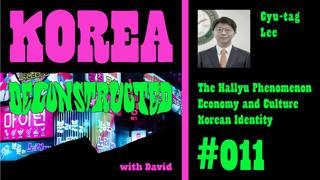
#011 The Hallyu Phenomeon, Economy and Culture, and Korean Identity with Dr. Gyu-tag Lee

#011 The Hallyu Phenomeon, Economy and Culture, and Korean Identity with Dr. Gyu-tag Lee

Hallyu is not a sudden phenomenon, Dr. Lee says. It's been an international culture since the 1990s. But from about the 2010s, enjoying Korean popular culture for non-Asians has become a new trend in cyberspace. This means Korean popularity is closely connected to technological changes in the media environment and industry. The two are interdependent. Despite the earlier popularity of Japanese cultural products, the promotion strategies used then were not very effective and there was not a concerted effort at spreading it to the rest of Asia. Locally, Dr. Lee talks of how one of his friends at high school was punished for playing a Japanese song at lunchtime.

Eventually, economic difficulties domestically pushed Korean cultural products outside of the country and seeking new markets. China's change from communism to capitalism provided a very fortuitous suitable landing pad for many of these products. In Korea, Dr. Lee suggests K-pop is normally considered music for teenagers. There is a social consensus that it is not really appropriate as a genre for people in their 20s. Thus, many people stop listening to it (or perhaps hide their interest) due to cultural conventions. However, international fans are not affected by such attitudes. Conversely, for them, the more knowledge and depth of understanding they show of K-pop, the trendier they are seen. K-pop can also serve as a gateway into other genres. For international fans, K-pop is not mainstream. Instead it speaks to minority and alternative cultures.

For Dr. Lee, K-pop should not just be understood as music: it is related to fashion, fan relationships, videos, and choreography. The fans now believe they are responsible for the artists' success. Thus they expect the idols and entertainment agencies to listen to their requests and desires. However, that democratic culture of fan-led artists is slowly being consumed by capitalism and the entertainment industry like punk and hip-hop were in the past. Moreover, despite K-pop being apolitical in nature, it's been used by the Democratic Party in the United States. Musicians and entertainment companies are aware of this politicization and it has become necessary for them to follow the trend and remain loyal to their fans.

Dr. Lee finishes by questioning what will happen to Hallyu going forward if it continues to internationalize. If the only thing remaining is the Korean ethnicity of the performers, then what will this mean for the culture industry and, more importantly, Korean identity in general. Can a balance be found?

Tämä jakso on lisätty Podme-palveluun avoimen RSS-syötteen kautta eikä se ole Podmen omaa tuotantoa. Siksi jakso saattaa sisältää mainontaa.

Jaksot(138)

Korean Women on Mental Health, Beauty, and the Pressure to Be Perfect

Korean Women on Mental Health, Beauty, and the Pressure to Be Perfect

A lot is said about Korea online. In fact, one of the easiest ways to attract attention on social media these days seems to be to feature Korea in your content. This has been good for the country in m...

15 Loka 1h 4min
Koryo-saram and the Korean Diaspora (with Nathalie M Kwon) #137

Koryo-saram and the Korean Diaspora (with Nathalie M Kwon) #137

Nathalie Marver-Kwon is a visiting researcher at Hankuk University of Foreign Studies who studies inbound immigration from the Korean diaspora. Nathalie's substack: https://nathaliemk.substack.com/ Di...

12 Syys 1h 6min
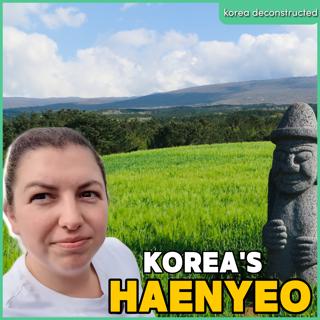
Jeju Island and the Haenyeo of Korea (Kylie Genter) #136

Jeju Island and the Haenyeo of Korea (Kylie Genter) #136

Korea is a country of skyscrapers and semiconductors, but if you go south, far south, you find a different version of the country. you find Jeju Island and the Haenyeo (해녀). They are women who have ou...

6 Syys 1h 5min

How Taoism Helps You Escape Yourself | Dr. Alexander Douglas #135

How Taoism Helps You Escape Yourself | Dr. Alexander Douglas #135

Dr. Alexander Douglas serves as a Senior Lecturer in Philosophy at the University of St. Andrews. His work navigates Eastern and Western thought, focusing on the philosophy of religion, Spinoza, and e...

27 Elo 1h 10min
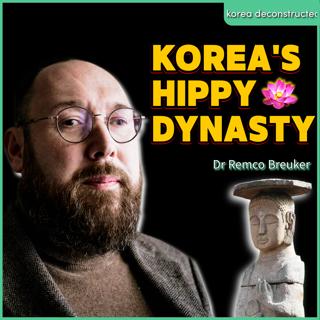
The Goryeo Dynasty and the Samguk Yusa | Dr. Remco Breuker #134

The Goryeo Dynasty and the Samguk Yusa | Dr. Remco Breuker #134

Dr. Remco Breuker, one of the world's leading scholars of pre-modern Korea, joins us to explore the Samguk Yusa, a treasure trove of Korean myth, history, and folklore. We dive into the kingdom of Gor...

10 Elo 1h 19min
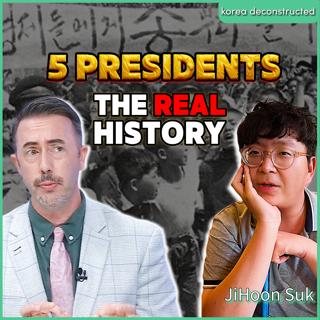
South Korea's First Five Presidents Explained | Jihoon Suk

South Korea's First Five Presidents Explained | Jihoon Suk

South Korea's first presidents are often remembered as either heroes or villains. But history is rarely that simple. Historian Jihoon Suk joins Korea Deconstructed to explore the country's first five ...

24 Heinä 1h 46min
Why Confucianism Isn't a Religion (And Why That Matters for Korea) | Dr. David Tizzard #132

Why Confucianism Isn't a Religion (And Why That Matters for Korea) | Dr. David Tizzard #132

When we think of Confucianism in the West, we often box it into a category alongside world religions like Christianity or Buddhism: a neat, systematic philosophy created by a single figure. But as I'v...

25 Kesä 37min
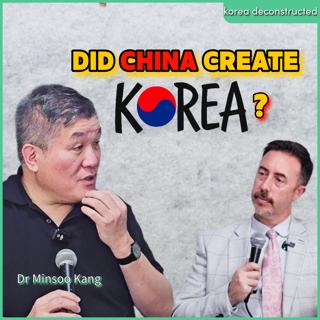
Myths, Stories, and the Origins of Korean Civilization and History | Dr. Minsoo Kang #131

Myths, Stories, and the Origins of Korean Civilization and History | Dr. Minsoo Kang #131

Dr. Minsoo Kang is a historian and writer. Currently, he is an associate professor of European intellectual history in the Department of History at the University of Missouri–St. Louis. Find Minsoo an...

30 Touko 2h

Suosittua kategoriassa Tiede

tiedekulma-podcast
utelias-mieli
rss-mita-tulisi-tietaa
rss-duodecim-lehti
rss-hereilla
docemilia
rss-kasvikutsut
rss-vaasan-yliopiston-podcastit
rss-radplus