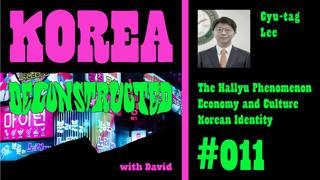
#011 The Hallyu Phenomeon, Economy and Culture, and Korean Identity with Dr. Gyu-tag Lee

#011 The Hallyu Phenomeon, Economy and Culture, and Korean Identity with Dr. Gyu-tag Lee

Hallyu is not a sudden phenomenon, Dr. Lee says. It's been an international culture since the 1990s. But from about the 2010s, enjoying Korean popular culture for non-Asians has become a new trend in cyberspace. This means Korean popularity is closely connected to technological changes in the media environment and industry. The two are interdependent. Despite the earlier popularity of Japanese cultural products, the promotion strategies used then were not very effective and there was not a concerted effort at spreading it to the rest of Asia. Locally, Dr. Lee talks of how one of his friends at high school was punished for playing a Japanese song at lunchtime.

Eventually, economic difficulties domestically pushed Korean cultural products outside of the country and seeking new markets. China's change from communism to capitalism provided a very fortuitous suitable landing pad for many of these products. In Korea, Dr. Lee suggests K-pop is normally considered music for teenagers. There is a social consensus that it is not really appropriate as a genre for people in their 20s. Thus, many people stop listening to it (or perhaps hide their interest) due to cultural conventions. However, international fans are not affected by such attitudes. Conversely, for them, the more knowledge and depth of understanding they show of K-pop, the trendier they are seen. K-pop can also serve as a gateway into other genres. For international fans, K-pop is not mainstream. Instead it speaks to minority and alternative cultures.

For Dr. Lee, K-pop should not just be understood as music: it is related to fashion, fan relationships, videos, and choreography. The fans now believe they are responsible for the artists' success. Thus they expect the idols and entertainment agencies to listen to their requests and desires. However, that democratic culture of fan-led artists is slowly being consumed by capitalism and the entertainment industry like punk and hip-hop were in the past. Moreover, despite K-pop being apolitical in nature, it's been used by the Democratic Party in the United States. Musicians and entertainment companies are aware of this politicization and it has become necessary for them to follow the trend and remain loyal to their fans.

Dr. Lee finishes by questioning what will happen to Hallyu going forward if it continues to internationalize. If the only thing remaining is the Korean ethnicity of the performers, then what will this mean for the culture industry and, more importantly, Korean identity in general. Can a balance be found?

Tämä jakso on lisätty Podme-palveluun avoimen RSS-syötteen kautta eikä se ole Podmen omaa tuotantoa. Siksi jakso saattaa sisältää mainontaa.

Jaksot(130)

Kim Il Sung: The Accidental Tyrant Who Changed Korea Forever

Kim Il Sung: The Accidental Tyrant Who Changed Korea Forever

My guest is Fyodor Tertitskiy, a prolific scholar, polyglot, and one of the few who reads the footnotes of history in multiple languages. His new book, Accidental Tyrant, a biography of Kim Il Sung, c...

20 Kesä 20251h 57min
Koreans React to the 2025 Presidential Election: What Do Koreans Really Want?

Koreans React to the 2025 Presidential Election: What Do Koreans Really Want?

In this episode of Korea Deconstructed, I'm joined by four university students: young people who voted, watched, and waited as South Korea held its most recent presidential election and elected Lee Ja...

8 Kesä 20251h 28min

Is Korea Falling Apart? 4 Young Koreans React to "Korea is Over"

Is Korea Falling Apart? 4 Young Koreans React to "Korea is Over"

A recent viral YouTube video claimed that Korea would soon be extinct. The country transformed negatively by one of the world's lowest birthrates. Change, it suggested, was too late. Four young adults...

18 Touko 20251h 28min
Dividing Korea: Dr. Kornel Chang

Dividing Korea: Dr. Kornel Chang

Kornel Chang on U.S. Power, Korean Resistance, and the Birth of Division What if Korea's true revolution was never allowed to happen? In this episode, I talk with historian Kornel Chang, author of A F...

10 Touko 20251h 42min
Building a Life Abroad: Kim Ninja's Guide to Korea

Building a Life Abroad: Kim Ninja's Guide to Korea

From visas to values: a positive, practical conversation about living in Korea Kim Ninja joins Korea Deconstructed to talk about building an authentic life in Korea. Born in Germany to Vietnamese pare...

27 Huhti 20251h 15min
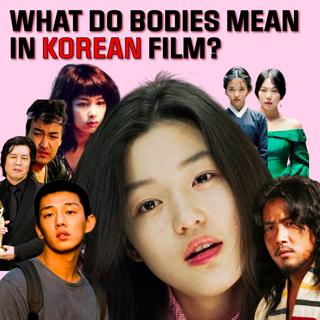
Korean Cinema & The Bodies Within

Korean Cinema & The Bodies Within

I sat down with scholar, Nilesh Kumar to explore how Korean cinema has reflected shifting notions of gender, identity, and social structure across decades. From the angry men of the Korean New Wave to...

24 Huhti 20252h 37min
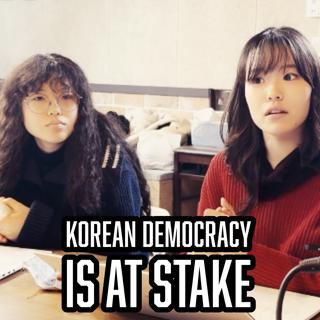
Voices of Change: Korean Students, Art, and Democracy

Voices of Change: Korean Students, Art, and Democracy

보도지침 (Media Guidelines) is a satirical work that critiques the media landscape and the influence of government or corporate power on Korean journalism in the 1980s. It explores themes such as censorsh...

22 Maalis 202553min
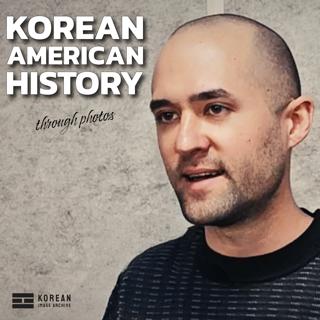
The Korean Diaspora and Korean History Told Through Photos

The Korean Diaspora and Korean History Told Through Photos

A few years ago, Blair's grandmother gave him a present. Approximately 300 photographs his grandfather had taken in Korea nearly 70 years ago. These beautifully preserved color photos not only reveale...

8 Maalis 20251h 8min

Suosittua kategoriassa Tiede

rss-mita-tulisi-tietaa
rss-poliisin-mieli
tiedekulma-podcast
rss-tiedetta-vai-tarinaa
utelias-mieli
docemilia
sotataidon-ytimessa
filocast-filosofian-perusteet
menologeja-tutkimusmatka-vaihdevuosiin
rss-bios-podcast
rss-ranskaa-raakana
rss-duodecim-lehti
rss-duokkari-ekstra
rss-astetta-parempi-elama-podcast
rss-metsantuntijat-podcast
rss-ilmasto-kriisissa
rss-ylistys-elaimille
rss-sosiopodi