
Episode 916: Central Cord Syndrome

Episode 916: Central Cord Syndrome

Contributor: Taylor Lynch, MD

Educational Pearls:

What is Central Cord Syndrome (CCS)?

  • Incomplete spinal cord injury caused by trauma that compresses the center of the cord

  • More common in hyperextension injuries like falling and hitting the chin

  • Usually happens only in individuals with preexisting neck and spinal cord conditions like cervical spondylosis (age-related wear and tear of the cervical spine)

Anatomy of spinal cord

  • Motor tracts

    • The signals the brain sends for the muscles to move travel in the corticospinal tracts of the spinal cord

    • The tracts that control the upper limbs are more central than the ones that control the lower limbs

    • The tracts that control the hands are more central than the ones that control the upper arm/shoulder

  • Fine touch, vibration, and proprioception (body position) tracts

    • These sensations travel in separate tracts in the spinal cord than the sensation of pain and temperature

    • Their pathway is called the dorsal column-medial lemniscus (DCML) pathway

    • This information travels in the most posterior aspect of the spinal cord

  • Pain, crude touch, pressure, and temperature tracts

    • These sensations travel in the spinothalamic tract, which is more centrally located

    • These signals also cross one side of the body to the other within the spinal cord near the level that they enter

How does this anatomy affect the presentation of CCS?

  • Patients typically experience more pronounced weakness or paralysis in their upper extremities as compared to their lower extremities with their hands being weaker than more proximal muscle groups

  • Sensation of pain, crude touch, pressure, and temperature are much morelikely to be diminished while the sensation of fine touch, vibration, and proprioception are spared

What happens with reflexes?

  • Deep tendon reflexes become exaggerated in CCS

  • This is because the disruption in the corticospinal tract removes inhibitory control over reflex arcs

What happens to bladder control?

  • The neural signals that coordinate bladder emptying are disrupted, therefore patients can present with urinary retention and/or urge incontinence

What is a Babinski's Sign?

  • When the sole of the foot is stimulated a normal response in adults is for the toes to flex downward (plantar flexion)

  • If there is an upper motor neuron injury like in CCS, the toes will flex upwards (dorsiflexion)

How is CCS diagnosed?

  • CCS is mostly a clinical diagnosis

  • These patient also need an MRI to see the extent of the damage which will show increased signal intensity within the central part of the spinal cord on T2-weighted images

How is CCS treated?

  • Strict c-spine precautions

  • Neurogenic shock precautions. Maintain a mean arterial pressure (MAP) of 85-90 to ensure profusion of the spinal cord

  • Levophed (norepinephrine bitartrate) and/or phenylephrine can be used to support their blood pressure to support spinal perfusion

  • Consider intubation for injuries above C5 (C3, 4, and 5 keep the diaphragm alive)

  • Consult neurosurgery for possible decompression surgery

  • Physical Therapy

References

  1. Avila, M. J., & Hurlbert, R. J. (2021). Central Cord Syndrome Redefined. Neurosurgery clinics of North America, 32(3), 353–363. https://doi.org/10.1016/j.nec.2021.03.007

  2. Brooks N. P. (2017). Central Cord Syndrome. Neurosurgery clinics of North America, 28(1), 41–47. https://doi.org/10.1016/j.nec.2016.08.002

  3. Engel-Haber, E., Snider, B., & Kirshblum, S. (2023). Central cord syndrome definitions, variations and limitations. Spinal cord, 61(11), 579–586. https://doi.org/10.1038/s41393-023-00894-2

Summarized by Jeffrey Olson, MS3 | Edited by Jorge Chalit, OMS3

Donate: https://emergencymedicalminute.org/donate/

Jaksot(1146)

Podcast 574:  Cyanide Toxicity

Podcast 574: Cyanide Toxicity

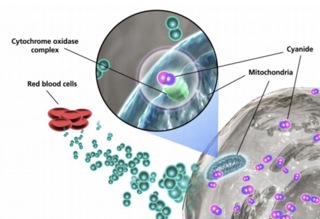
Contributor: Nick Tsipis, MD Educational Pearls: Significant cyanide exposure most commonly occurs from fire/smoke exposure particularly when plastics are involved Cyanide binds to cytochrome oxidase...

23 Kesä 20205min
Podcast 573:  Arsenic Toxicity

Podcast 573: Arsenic Toxicity

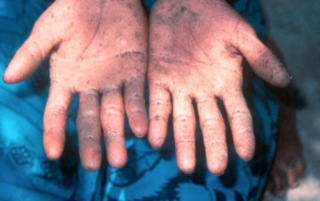
Contributor: Nick Tsipis, MD Educational Pearls: Arsenic is a heavy metal that binds to multiple cellular enzymes and inhibits aerobic metabolism  It is primarily absorbed through the skin, respirato...

22 Kesä 20204min
Preview: The Black Doctors Podcast

Preview: The Black Doctors Podcast

In addition to producing our own content, we believe in using our platform to amplify other voices and perspectives in medicine. With that in mind, check out 'The Black Doctor Podcast' from Dr. Steven...

21 Kesä 202030s
Podcast 572:  Locked In Syndrome

Podcast 572: Locked In Syndrome

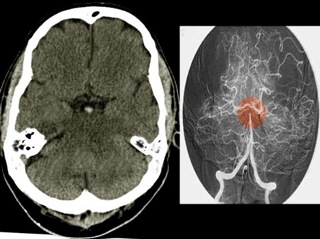
Contributor: Aaron Lessen, MD Educational Pearls: Locked in syndrome results typically from an infarct of the basilar artery leading to infarction of the brainstem but typically preservation of the h...

16 Kesä 20203min
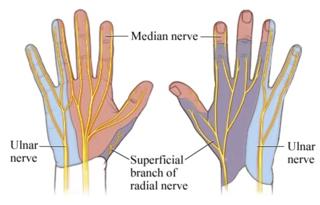
Podcast 571:  Digital Blocks

Podcast 571: Digital Blocks

Contributor: Jared Scott, MD Educational Pearls: Traditional digital block involves dorsal approach on either side of the digit, injecting local anesthetic along each side to numb all four nerves of ...

15 Kesä 20203min
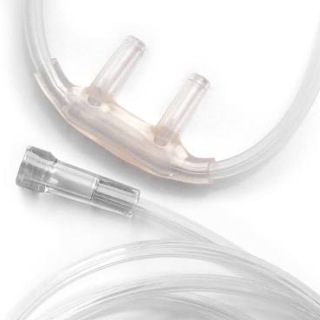
Podcast 570: Oh no no no to O2

Podcast 570: Oh no no no to O2

Contributor: Aaron Lessen, MD Educational Pearls: Supplemental oxygen is not a completely benign intervention. A recent meta-analysis found that O2 saturations above 96% while on supplemental O2 wer...

9 Kesä 20202min
Podcast 570: Oh no no no to O2

Podcast 570: Oh no no no to O2

Contributor: Aaron Lessen, MD Educational Pearls: Supplemental oxygen is not a completely benign intervention. A recent meta-analysis found that O2 saturations above 96% while on supplemental O2 wer...

9 Kesä 20202min

Podcast 569:  The eFAST Exam

Podcast 569: The eFAST Exam

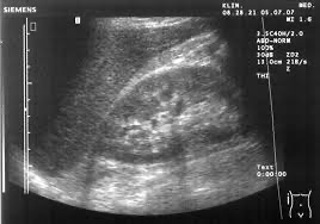
Contributor: Aaron Lessen, MD Educational Pearls:.   Focused assessment with Sonography for Trauma (FAST) exam and the extended-FAST (eFAST) are essential components of current trauma care and evalua...

8 Kesä 20202min

Suosittua kategoriassa Tiede

tiedekulma-podcast
rss-mita-tulisi-tietaa
rss-poliisin-mieli
docemilia
rss-duodecim-lehti
utelias-mieli
rss-astetta-parempi-elama-podcast
rss-luontopodi-samuel-glassar-tutkii-luonnon-ihmeita
filocast-filosofian-perusteet
rss-ammamafia
rss-tiedetta-vai-tarinaa
rss-lapsuuden-rakentajat-podcast
rss-sosiopodi













