Episode 916: Central Cord Syndrome

Episode 916: Central Cord Syndrome

Contributor: Taylor Lynch, MD

Educational Pearls:

What is Central Cord Syndrome (CCS)?

  • Incomplete spinal cord injury caused by trauma that compresses the center of the cord

  • More common in hyperextension injuries like falling and hitting the chin

  • Usually happens only in individuals with preexisting neck and spinal cord conditions like cervical spondylosis (age-related wear and tear of the cervical spine)

Anatomy of spinal cord

  • Motor tracts

    • The signals the brain sends for the muscles to move travel in the corticospinal tracts of the spinal cord

    • The tracts that control the upper limbs are more central than the ones that control the lower limbs

    • The tracts that control the hands are more central than the ones that control the upper arm/shoulder

  • Fine touch, vibration, and proprioception (body position) tracts

    • These sensations travel in separate tracts in the spinal cord than the sensation of pain and temperature

    • Their pathway is called the dorsal column-medial lemniscus (DCML) pathway

    • This information travels in the most posterior aspect of the spinal cord

  • Pain, crude touch, pressure, and temperature tracts

    • These sensations travel in the spinothalamic tract, which is more centrally located

    • These signals also cross one side of the body to the other within the spinal cord near the level that they enter

How does this anatomy affect the presentation of CCS?

  • Patients typically experience more pronounced weakness or paralysis in their upper extremities as compared to their lower extremities with their hands being weaker than more proximal muscle groups

  • Sensation of pain, crude touch, pressure, and temperature are much morelikely to be diminished while the sensation of fine touch, vibration, and proprioception are spared

What happens with reflexes?

  • Deep tendon reflexes become exaggerated in CCS

  • This is because the disruption in the corticospinal tract removes inhibitory control over reflex arcs

What happens to bladder control?

  • The neural signals that coordinate bladder emptying are disrupted, therefore patients can present with urinary retention and/or urge incontinence

What is a Babinski's Sign?

  • When the sole of the foot is stimulated a normal response in adults is for the toes to flex downward (plantar flexion)

  • If there is an upper motor neuron injury like in CCS, the toes will flex upwards (dorsiflexion)

How is CCS diagnosed?

  • CCS is mostly a clinical diagnosis

  • These patient also need an MRI to see the extent of the damage which will show increased signal intensity within the central part of the spinal cord on T2-weighted images

How is CCS treated?

  • Strict c-spine precautions

  • Neurogenic shock precautions. Maintain a mean arterial pressure (MAP) of 85-90 to ensure profusion of the spinal cord

  • Levophed (norepinephrine bitartrate) and/or phenylephrine can be used to support their blood pressure to support spinal perfusion

  • Consider intubation for injuries above C5 (C3, 4, and 5 keep the diaphragm alive)

  • Consult neurosurgery for possible decompression surgery

  • Physical Therapy

References

  1. Avila, M. J., & Hurlbert, R. J. (2021). Central Cord Syndrome Redefined. Neurosurgery clinics of North America, 32(3), 353–363. https://doi.org/10.1016/j.nec.2021.03.007

  2. Brooks N. P. (2017). Central Cord Syndrome. Neurosurgery clinics of North America, 28(1), 41–47. https://doi.org/10.1016/j.nec.2016.08.002

  3. Engel-Haber, E., Snider, B., & Kirshblum, S. (2023). Central cord syndrome definitions, variations and limitations. Spinal cord, 61(11), 579–586. https://doi.org/10.1038/s41393-023-00894-2

Summarized by Jeffrey Olson, MS3 | Edited by Jorge Chalit, OMS3

Donate: https://emergencymedicalminute.org/donate/

Jaksot(1146)

Podcast 569:  The eFAST Exam

Podcast 569: The eFAST Exam

Contributor: Aaron Lessen, MD Educational Pearls:.   Focused assessment with Sonography for Trauma (FAST) exam and the extended-FAST (eFAST) are essential components of current trauma care and evalua...

8 Kesä 20202min
Podcast 568: Shock 'em!

Podcast 568: Shock 'em!

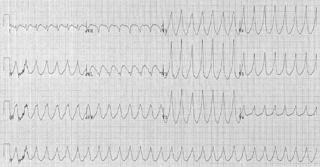
Contributor: John Winkler, MD Educational Pearls: Unstable ventricular tachycardia (VT) typically manifests with syncope, shortness of breath, diaphoresis and/or chest pain with hemodynamic instabili...

2 Kesä 20203min
Podcast 567:  Mechanical CPR….Not So Fast

Podcast 567: Mechanical CPR….Not So Fast

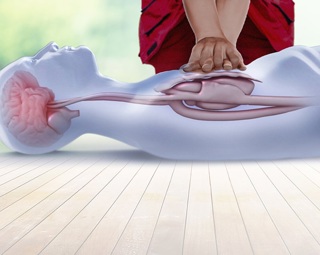
Contributor: Aaron Lessen, MD Educational Pearls: Mechanical CPR (machine assisted compression devices) remains a hot topic of debate in emergency medicine Machine assisted CPR has been advocated to ...

1 Kesä 20202min
Selected Audio from 'UnfilterED #7: Russell J. Ledet, Ph.D.'

Selected Audio from 'UnfilterED #7: Russell J. Ledet, Ph.D.'

"Go unafraid! And also know that you got to reach out to the right people and hold on to those people no matter what they look like, no matter what background they come from...Find people who are posi...

31 Touko 20205min

UnfilterED #7: Russell J. Ledet, Ph.D.

UnfilterED #7: Russell J. Ledet, Ph.D.

Russell J. Ledet hails from Lake Charles, Louisiana. After serving in the U.S. Navy, he attended Southern University and A&M College for his undergraduate degrees in biology and chemistry. Afterwards,...

27 Touko 202058min

Podcast 566:  The Cholera Pandemic

Podcast 566: The Cholera Pandemic

Contributor: Jared Scott, MD Educational Pearls: Cholera has been responsible for 6 previous global pandemics and currently the world is in the seventh pandemic of cholera, ongoing since 1961. Choler...

26 Touko 20204min
Podcast 565: Cesarean Scar Pregnancies

Podcast 565: Cesarean Scar Pregnancies

Contributor: Nick Hatch, MD Educational Pearls: A cesarean scar ectopic pregnancy occurs when the pregnancy implants along the scar tissue deep in the myometrium from a prior cesarean surgery, felt t...

25 Touko 20203min

COVID-19 Digest: The Possible Link Between Severe COVID-19 and Low Vitamin D Levels (Recorded 5/21/20)

COVID-19 Digest: The Possible Link Between Severe COVID-19 and Low Vitamin D Levels (Recorded 5/21/20)

Host: Elizabeth Esty, MD. At this point, with so many of the studies we've digested exploring correlations, associations, observational studies and anecdotal reports and speculation, we could subtitle...

22 Touko 202018min

Suosittua kategoriassa Tiede

tiedekulma-podcast
rss-mita-tulisi-tietaa
rss-poliisin-mieli
docemilia
rss-duodecim-lehti
utelias-mieli
rss-astetta-parempi-elama-podcast
rss-luontopodi-samuel-glassar-tutkii-luonnon-ihmeita
filocast-filosofian-perusteet
rss-ammamafia
rss-tiedetta-vai-tarinaa
rss-lapsuuden-rakentajat-podcast
rss-sosiopodi