Episode 918: Automated Blood Pressure Cuffs

Episode 918: Automated Blood Pressure Cuffs

Contributor: Aaron Lessen, MD

Educational Pearls:

How does an automated blood pressure cuff work?

  • Automated blood pressure cuffs work differently than taking a manual blood pressure.

  • While taking a manual blood pressure, one typically listens for Korotkoff sounds (turbulent flow) while slowly deflating the cuff.

  • An automatic blood pressure cuff only senses the pressure in the cuff itself and specifically pays attention to oscillations in the pressure caused by when the pressure of the cuff is between the systolic (heart squeezing) and diastolic (heart relaxed) pressures.

  • These oscillations are at a maximum when the pressure in the cuff matches the mean arterial pressure (MAP) and therefore the machines are most accurate at reporting the MAP.

  • The machines then use the MAP and other information about the oscillations to estimate the systolic and diastolic pressures, which are less accurate.

What should you do if you need more accurate systolic and diastolic blood pressures?

  • Take a manual blood pressure.

  • Get an arterial-line (a-line), which provides continuous data for the blood pressure at the end of a catheter.

What happens if the cuff is too big or too small for the patient?

  • If the cuff is too small it will overestimate the pressure.

  • If the cuff is too large it will underestimate the pressure.

What should you do if the cuff cycles a bunch of times before reporting a blood pressure?

  • It probably isn't very accurate so consider another method.

Bonus fact!

  • The MAP is not directly in the middle of the systolic and diastolic pressures but is weighted towards the diastolic pressure. The MAP can be calculated by adding two-thirds of the diastolic pressure to one third of the systolic pressure. For example if the BP is 120/90 the MAP is 100 mmHg.

References

  1. Benmira, A., Perez-Martin, A., Schuster, I., Aichoun, I., Coudray, S., Bereksi-Reguig, F., & Dauzat, M. (2016). From Korotkoff and Marey to automatic non-invasive oscillometric blood pressure measurement: does easiness come with reliability?. Expert review of medical devices, 13(2), 179–189. https://doi.org/10.1586/17434440.2016.1128821

  2. Liu, J., Li, Y., Li, J., Zheng, D., & Liu, C. (2022). Sources of automatic office blood pressure measurement error: a systematic review. Physiological measurement, 43(9), 10.1088/1361-6579/ac890e. https://doi.org/10.1088/1361-6579/ac890e

  3. Vilaplana J. M. (2006). Blood pressure measurement. Journal of renal care, 32(4), 210–213. https://doi.org/10.1111/j.1755-6686.2006.tb00025.x

Summarized by Jeffrey Olson, MS3 | Edited by Meg Joyce, MS1 & Jorge Chalit, OMS3

Donate: https://emergencymedicalminute.org/donate/

Jaksot(1145)

Opioid Miniseries Part I: Medicine's Greatest Folly

Opioid Miniseries Part I: Medicine's Greatest Folly

The Emergency Medical Minute proudly presents an educational podcast series sponsored by the Colorado Hospital Association addressing our the United States' opioid epidemic.

7 Kesä 201749min
Podcast #215: Ankle Pain

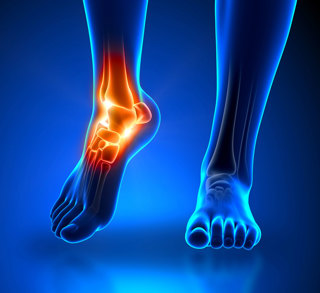
Podcast #215: Ankle Pain

Author: Donald Stader, M.D. Educational Pearls: The most common ankle injury mechanism is an inversion. Most common broken bone in the ankle is the fibula. During exam, it is important to palpate ove...

7 Kesä 20174min
Podcast #214: Dizziness

Podcast #214: Dizziness

Author: Aaron Lessen, M.D. Educational Pearls: We can differentiate verto into benign problems such as vestibular problem (peripheral problem), or something more worrisome that originates in the brai...

5 Kesä 20171min

Podcast #213: Oats and Potatoes

Podcast #213: Oats and Potatoes

Author: Michael Hunt, M.D. Educational Pearls: Oats have been shown to lower LDL. Oat bran is the most effective way to consume oats to lower LDL. A Swedish study of 69,000 people who ate at least 3 ...

3 Kesä 20172min
Podcast #212: Knights Who Say Pessary

Podcast #212: Knights Who Say Pessary

Author: Jared Scott, M.D. Educational Pearls: A pessary is a device inserted into the vagina for medical purposes. Examples include birth control and mechanical support of the pelvic structures. In o...

1 Kesä 20173min
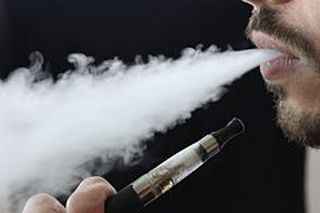
Podcast #211: E-cigarettes

Podcast #211: E-cigarettes

Author: Michael Hunt, M.D. Educational Pearls: Children under age of 6 are at greatest risk of accidental nicotine overdose from ingestion. Biphasic presentation: Hyperadrenergic = nausea, vomiting...

31 Touko 20173min

Podcast #210: Bear Mauling

Podcast #210: Bear Mauling

Author: Jared Scott M.D. Educational Pearls: Bear mauling is not a common issue in the ED. The Ursus americanus (black bear) is the most common in Colorado, but Ursus arctos horribilis (grizzly bear)...

28 Touko 20174min

Podcast #209: Rabbit Done Died

Podcast #209: Rabbit Done Died

Author: Sam Killian, M.D. Educational Pearls: "The Rabbit Has Died" is a lesser used phrase to denote finding out one is pregnant. During a test used in the 1930s, the "Rabbit's Test," a rabbit was i...

26 Touko 20176min

Suosittua kategoriassa Tiede

tiedekulma-podcast
rss-mita-tulisi-tietaa
rss-poliisin-mieli
docemilia
rss-duodecim-lehti
rss-sosiopodi
radio-antro
filocast-filosofian-perusteet
rss-ammamafia
utelias-mieli
mielipaivakirja
rss-bios-podcast
rss-astetta-parempi-elama-podcast
rss-tiedetta-vai-tarinaa
rss-luontopodi-samuel-glassar-tutkii-luonnon-ihmeita