
Episode 918: Automated Blood Pressure Cuffs

Episode 918: Automated Blood Pressure Cuffs

Contributor: Aaron Lessen, MD

Educational Pearls:

How does an automated blood pressure cuff work?

  • Automated blood pressure cuffs work differently than taking a manual blood pressure.

  • While taking a manual blood pressure, one typically listens for Korotkoff sounds (turbulent flow) while slowly deflating the cuff.

  • An automatic blood pressure cuff only senses the pressure in the cuff itself and specifically pays attention to oscillations in the pressure caused by when the pressure of the cuff is between the systolic (heart squeezing) and diastolic (heart relaxed) pressures.

  • These oscillations are at a maximum when the pressure in the cuff matches the mean arterial pressure (MAP) and therefore the machines are most accurate at reporting the MAP.

  • The machines then use the MAP and other information about the oscillations to estimate the systolic and diastolic pressures, which are less accurate.

What should you do if you need more accurate systolic and diastolic blood pressures?

  • Take a manual blood pressure.

  • Get an arterial-line (a-line), which provides continuous data for the blood pressure at the end of a catheter.

What happens if the cuff is too big or too small for the patient?

  • If the cuff is too small it will overestimate the pressure.

  • If the cuff is too large it will underestimate the pressure.

What should you do if the cuff cycles a bunch of times before reporting a blood pressure?

  • It probably isn't very accurate so consider another method.

Bonus fact!

  • The MAP is not directly in the middle of the systolic and diastolic pressures but is weighted towards the diastolic pressure. The MAP can be calculated by adding two-thirds of the diastolic pressure to one third of the systolic pressure. For example if the BP is 120/90 the MAP is 100 mmHg.

References

  1. Benmira, A., Perez-Martin, A., Schuster, I., Aichoun, I., Coudray, S., Bereksi-Reguig, F., & Dauzat, M. (2016). From Korotkoff and Marey to automatic non-invasive oscillometric blood pressure measurement: does easiness come with reliability?. Expert review of medical devices, 13(2), 179–189. https://doi.org/10.1586/17434440.2016.1128821

  2. Liu, J., Li, Y., Li, J., Zheng, D., & Liu, C. (2022). Sources of automatic office blood pressure measurement error: a systematic review. Physiological measurement, 43(9), 10.1088/1361-6579/ac890e. https://doi.org/10.1088/1361-6579/ac890e

  3. Vilaplana J. M. (2006). Blood pressure measurement. Journal of renal care, 32(4), 210–213. https://doi.org/10.1111/j.1755-6686.2006.tb00025.x

Summarized by Jeffrey Olson, MS3 | Edited by Meg Joyce, MS1 & Jorge Chalit, OMS3

Donate: https://emergencymedicalminute.org/donate/

Jaksot(1145)

Podcast #208: Vocal Cord Dysfunction

Podcast #208: Vocal Cord Dysfunction

Author: Martin O'Bryan M.D. Educational Pearls: Vocal cord dysfunction can mimic other causes of stridor, such as asthma and upper airway obstruction. Patients are often very anxious because of the d...

24 Touko 20174min
Podcast #207: Boxer's Fracture

Podcast #207: Boxer's Fracture

Author: Sam Killian, M.D. Educational Pearls: Defined as fracture of neck (distal segment) of 5th metacarpal. Intrinsic muscles of hand pull segment to palmar aspect of hand. 30 degrees of angulation...

22 Touko 20174min
Podcast #206: Urethral Injuries

Podcast #206: Urethral Injuries

Author: Jared Scott, M.D. Educational Pearls: DDx for blood at urethral meatus includes: pelvic fracture, ruptured bladder, kidney laceration, penile trauma. Retrograde Urethrogram (RUG) must be perf...

20 Touko 20174min
Podcast #205: Post Cardiac Arrest Temperature Control

Podcast #205: Post Cardiac Arrest Temperature Control

Author: Michael Hunt, M.D. Educational Pearls: Research has shown that the higher temperatures post-cardiac arrests may lead to poorer outcomes. Initially, 33 deg C was the target temp. However, more...

18 Touko 20173min
Deep Dive #3: The New Standard in Stroke Treatment

Deep Dive #3: The New Standard in Stroke Treatment

Authors: Rebecca van Vliet MS, APN; Michelle Whaley MSN, CNS, CCNS, ANVP-VC The Stroke Team at Swedish Medical Center gives us a taste of how they are breaking records with door-to-needle time in man...

16 Touko 201738min
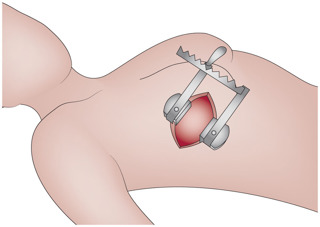
Podcast #204: Thoracotomy

Podcast #204: Thoracotomy

Author: Aaron Lessen M.D. Educational Pearls: Thoracotomy is a potentially life-saving procedure. However, outcomes are often poor and the procedure itself poses many risks to provider and patient....

14 Touko 20172min
Podcast #203: Wine, Milk and… Vaccines!?

Podcast #203: Wine, Milk and… Vaccines!?

Author: Dave Rosenberg M.D. Educational Pearls: Louis Pasteur developed the technique that is now known as pasteurization. It was first used in the wine-producing regions of France, and eventually in...

12 Touko 20174min
Podcast #202: Tide Pods

Podcast #202: Tide Pods

Author: Susan Brion M.D. Educational Pearls: Laundry and dishwasher detergent pods resemble candy and can be ingested by children. These tide pods are very highly concentrated and can cause chemical ...

10 Touko 20173min

Suosittua kategoriassa Tiede

tiedekulma-podcast
rss-mita-tulisi-tietaa
rss-poliisin-mieli
docemilia
rss-duodecim-lehti
rss-sosiopodi
radio-antro
filocast-filosofian-perusteet
rss-ammamafia
utelias-mieli
mielipaivakirja
rss-bios-podcast
rss-astetta-parempi-elama-podcast
rss-tiedetta-vai-tarinaa
rss-luontopodi-samuel-glassar-tutkii-luonnon-ihmeita















