

Episode 918: Automated Blood Pressure Cuffs

Episode 918: Automated Blood Pressure Cuffs

Contributor: Aaron Lessen, MD

Educational Pearls:

How does an automated blood pressure cuff work?

  • Automated blood pressure cuffs work differently than taking a manual blood pressure.

  • While taking a manual blood pressure, one typically listens for Korotkoff sounds (turbulent flow) while slowly deflating the cuff.

  • An automatic blood pressure cuff only senses the pressure in the cuff itself and specifically pays attention to oscillations in the pressure caused by when the pressure of the cuff is between the systolic (heart squeezing) and diastolic (heart relaxed) pressures.

  • These oscillations are at a maximum when the pressure in the cuff matches the mean arterial pressure (MAP) and therefore the machines are most accurate at reporting the MAP.

  • The machines then use the MAP and other information about the oscillations to estimate the systolic and diastolic pressures, which are less accurate.

What should you do if you need more accurate systolic and diastolic blood pressures?

  • Take a manual blood pressure.

  • Get an arterial-line (a-line), which provides continuous data for the blood pressure at the end of a catheter.

What happens if the cuff is too big or too small for the patient?

  • If the cuff is too small it will overestimate the pressure.

  • If the cuff is too large it will underestimate the pressure.

What should you do if the cuff cycles a bunch of times before reporting a blood pressure?

  • It probably isn't very accurate so consider another method.

Bonus fact!

  • The MAP is not directly in the middle of the systolic and diastolic pressures but is weighted towards the diastolic pressure. The MAP can be calculated by adding two-thirds of the diastolic pressure to one third of the systolic pressure. For example if the BP is 120/90 the MAP is 100 mmHg.

References

  1. Benmira, A., Perez-Martin, A., Schuster, I., Aichoun, I., Coudray, S., Bereksi-Reguig, F., & Dauzat, M. (2016). From Korotkoff and Marey to automatic non-invasive oscillometric blood pressure measurement: does easiness come with reliability?. Expert review of medical devices, 13(2), 179–189. https://doi.org/10.1586/17434440.2016.1128821

  2. Liu, J., Li, Y., Li, J., Zheng, D., & Liu, C. (2022). Sources of automatic office blood pressure measurement error: a systematic review. Physiological measurement, 43(9), 10.1088/1361-6579/ac890e. https://doi.org/10.1088/1361-6579/ac890e

  3. Vilaplana J. M. (2006). Blood pressure measurement. Journal of renal care, 32(4), 210–213. https://doi.org/10.1111/j.1755-6686.2006.tb00025.x

Summarized by Jeffrey Olson, MS3 | Edited by Meg Joyce, MS1 & Jorge Chalit, OMS3

Donate: https://emergencymedicalminute.org/donate/

Jaksot(1145)

Podcast #201: Task Interruption

Podcast #201: Task Interruption

Author: Mark Kozlowski M.D. Educational Pearls: Humans cannot "multitask" effectively - a more accurate term is "task interruption." When doing more than one task at once, we are more likely to forge...

8 Touko 20173min
Podcast #200: Non-traumatic Back Pain

Podcast #200: Non-traumatic Back Pain

Author: Don Stader M.D. Educational Pearls: Non-traumatic back pain is a very common complaint in the Emergency Department. Conditions that can manifest with back pain include: ruptured abdominal aor...

6 Touko 20172min
Podcast #199: Prolonged QT with Zofran

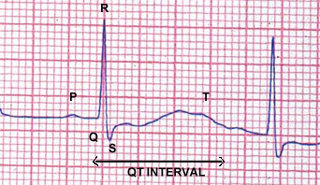
Podcast #199: Prolonged QT with Zofran

Author: Arthur Lessen M.D. Educational Pearls: Zofran (ondansetron) is generally safe to use for the treatment of nausea and vomiting. However, it can prolong the QT interval and increase the chance ...

4 Touko 20173min

Podcast #198: Imodium

Podcast #198: Imodium

Author: Aaron Lessen M.D. Educational Pearls: Imodium (loperamide) is a mu-opioid receptor agonist. Traditionally, it is used as an anti-diarrheal. It is also abused recreationally for an opioid high...

2 Touko 20173min
Podcast #197: Ashman Phenomenon

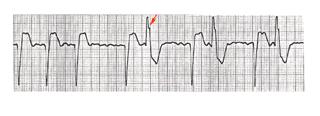
Podcast #197: Ashman Phenomenon

Author: Dylan Luyten M.D. Educational Pearls: Ashman's Phenomenon occurs in the setting atrial fibrillation and mimics ventricular tachycardia, but is harmless. On ECG, the pattern of Ashman Phenomen...

30 Huhti 20171min
Podcast #196: DVT and May-Thurner Syndrome

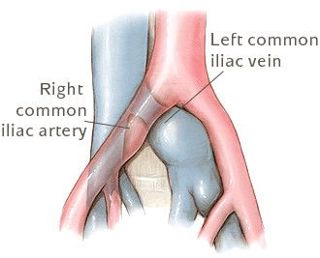
Podcast #196: DVT and May-Thurner Syndrome

Author: Samuel Killian M.D. Educational Pearls: Lower extremity DVTs are extremely common. There are more left lower extremity DVT due to anatomical variation. May-Thurner Syndrome is a form of anato...

28 Huhti 20172min

Podcast #195: How to Properly Inject Heroin

Podcast #195: How to Properly Inject Heroin

Author: Don Stader, M.D Educational Pearls: It is important for providers to know how to use IV drugs properly so that they can instruct their patients on how to avoid injury. Heroin use is increasin...

26 Huhti 20177min
Podcast #194: Atruamatic ICH

Podcast #194: Atruamatic ICH

Author: Peter Bakes, M.D Educational Pearls Intracerebral hemorrhage is an intracranial bleed within the brain tissue or ventricles. Subarachnoid aneurysm causes about 50% of all ICH. Amyloid deposit...

24 Huhti 20179min

Suosittua kategoriassa Tiede

tiedekulma-podcast
rss-mita-tulisi-tietaa
rss-poliisin-mieli
docemilia
rss-duodecim-lehti
rss-sosiopodi
radio-antro
filocast-filosofian-perusteet
rss-ammamafia
utelias-mieli
mielipaivakirja
rss-bios-podcast
rss-astetta-parempi-elama-podcast
rss-tiedetta-vai-tarinaa
rss-luontopodi-samuel-glassar-tutkii-luonnon-ihmeita















