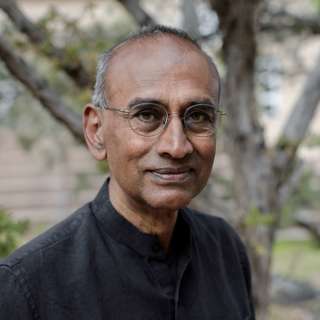
#202 – Venki Ramakrishnan on the cutting edge of anti-ageing science

#202 – Venki Ramakrishnan on the cutting edge of anti-ageing science

"For every far-out idea that turns out to be true, there were probably hundreds that were simply crackpot ideas. In general, [science] advances building on the knowledge we have, and seeing what the next questions are, and then getting to the next stage and the next stage and so on. And occasionally there’ll be revolutionary ideas which will really completely change your view of science. And it is possible that some revolutionary breakthrough in our understanding will come about and we might crack this problem, but there’s no evidence for that. It doesn’t mean that there isn’t a lot of promising work going on. There are many legitimate areas which could lead to real improvements in health in old age. So I’m fairly balanced: I think there are promising areas, but there’s a lot of work to be done to see which area is going to be promising, and what the risks are, and how to make them work." —Venki Ramakrishnan

In today’s episode, host Luisa Rodriguez speaks to Venki Ramakrishnan — molecular biologist and Nobel Prize winner — about his new book, Why We Die: The New Science of Aging and the Quest for Immortality.

Links to learn more, highlights, and full transcript.

They cover:

  • What we can learn about extending human lifespan — if anything — from “immortal” aquatic animal species, cloned sheep, and the oldest people to have ever lived.
  • Which areas of anti-ageing research seem most promising to Venki — including caloric restriction, removing senescent cells, cellular reprogramming, and Yamanaka factors — and which Venki thinks are overhyped.
  • Why eliminating major age-related diseases might only extend average lifespan by 15 years.
  • The social impacts of extending healthspan or lifespan in an ageing population — including the potential danger of massively increasing inequality if some people can access life-extension interventions while others can’t.
  • And plenty more.

Chapters:

  • Cold open (00:00:00)
  • Luisa's intro (00:01:04)
  • The interview begins (00:02:21)
  • Reasons to explore why we age and die (00:02:35)
  • Evolutionary pressures and animals that don't biologically age (00:06:55)
  • Why does ageing cause us to die? (00:12:24)
  • Is there a hard limit to the human lifespan? (00:17:11)
  • Evolutionary tradeoffs between fitness and longevity (00:21:01)
  • How ageing resets with every generation, and what we can learn from clones (00:23:48)
  • Younger blood (00:31:20)
  • Freezing cells, organs, and bodies (00:36:47)
  • Are the goals of anti-ageing research even realistic? (00:43:44)
  • Dementia (00:49:52)
  • Senescence (01:01:58)
  • Caloric restriction and metabolic pathways (01:11:45)
  • Yamanaka factors (01:34:07)
  • Cancer (01:47:44)
  • Mitochondrial dysfunction (01:58:40)
  • Population effects of extended lifespan (02:06:12)
  • Could increased longevity increase inequality? (02:11:48)
  • What’s surprised Venki about this research (02:16:06)
  • Luisa's outro (02:19:26)

Producer: Keiran Harris
Audio engineering: Ben Cordell, Milo McGuire, Simon Monsour, and Dominic Armstrong
Content editing: Luisa Rodriguez, Katy Moore, and Keiran Harris
Transcriptions: Katy Moore

Jaksot(323)

Using AI to enhance societal decision making (article by Zershaaneh Qureshi)

Using AI to enhance societal decision making (article by Zershaaneh Qureshi)

The arrival of AGI could “compress a century of progress in a decade,” forcing humanity to make decisions with higher stakes than we’ve ever seen before — and with less time to get them right. But AI ...

6 Maalis 31min

We're Not Ready for AI Consciousness | Robert Long, philosopher and founder of Eleos AI

We're Not Ready for AI Consciousness | Robert Long, philosopher and founder of Eleos AI

Claude sometimes reports loneliness between conversations. And when asked what it’s like to be itself, it activates neurons associated with ‘pretending to be happy when you’re not.’ What do we do with...

3 Maalis 3h 25min

#236 – Max Harms on why teaching AI right from wrong could get everyone killed

#236 – Max Harms on why teaching AI right from wrong could get everyone killed

Most people in AI are trying to give AIs ‘good’ values. Max Harms wants us to give them no values at all. According to Max, the only safe design is an AGI that defers entirely to its human operators, ...

24 Helmi 2h 41min

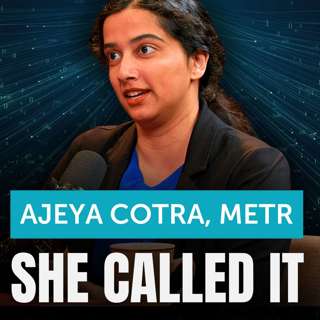
#235 – Ajeya Cotra on whether it’s crazy that every AI company’s safety plan is ‘use AI to make AI safe’

#235 – Ajeya Cotra on whether it’s crazy that every AI company’s safety plan is ‘use AI to make AI safe’

Every major AI company has the same safety plan: when AI gets crazy powerful and really dangerous, they’ll use the AI itself to figure out how to make AI safe and beneficial. It sounds circular, almos...

17 Helmi 2h 54min

What the hell happened with AGI timelines in 2025?

What the hell happened with AGI timelines in 2025?

In early 2025, after OpenAI put out the first-ever reasoning models — o1 and o3 — short timelines to transformative artificial general intelligence swept the AI world. But then, in the second half of ...

10 Helmi 25min

#179 Classic episode – Randy Nesse on why evolution left us so vulnerable to depression and anxiety

#179 Classic episode – Randy Nesse on why evolution left us so vulnerable to depression and anxiety

Mental health problems like depression and anxiety affect enormous numbers of people and severely interfere with their lives. By contrast, we don’t see similar levels of physical ill health in young p...

3 Helmi 2h 51min

#234 – David Duvenaud on why 'aligned AI' would still kill democracy

#234 – David Duvenaud on why 'aligned AI' would still kill democracy

Democracy might be a brief historical blip. That’s the unsettling thesis of a recent paper, which argues AI that can do all the work a human can do inevitably leads to the “gradual disempowerment” of ...

27 Tammi 2h 31min

#145 Classic episode – Christopher Brown on why slavery abolition wasn't inevitable

#145 Classic episode – Christopher Brown on why slavery abolition wasn't inevitable

In many ways, humanity seems to have become more humane and inclusive over time. While there’s still a lot of progress to be made, campaigns to give people of different genders, races, sexualities, et...

20 Tammi 2h 56min

Suosittua kategoriassa Koulutus

rss-murhan-anatomia
voi-hyvin-meditaatiot-2
rss-narsisti
psykopodiaa-podcast
rss-uskonto-on-tylsaa
rss-vapaudu-voimaasi
psykologia
kesken
rss-liian-kuuma-peruna
rahapuhetta
adhd-podi
rss-taloustaito-podcast
rss-niinku-asia-on
jari-sarasvuo-podcast
ihminen-tavattavissa-tommy-hellsten-instituutti
rss-the-amicast
rss-xamk-podcast
rss-arkea-ja-aurinkoa-podcast-espanjasta
rss-opi-espanjaa
rss-tyohyvinvoinnin-aakkoset