

Carissa Carter & Scott Doorley on Assembling Tomorrow

Carissa Carter & Scott Doorley on Assembling Tomorrow

What role does creativity play in navigating an unpredictable world?

On this episode, I sit down with Carissa Carter and Scott Doorley, both members of the Stanford d.school faculty. Together, they’ve co-authored Assembling Tomorrow, a fascinating exploration of how design influences the future, especially amidst the rapid rise of emerging technologies like AI and synthetic biology. We discuss how design shapes the environments we live and work in and why getting it right can help people make better, safer, and more ethical choices.

Our conversation dives into some intriguing concepts like “mischievous materials” and the role that design fiction plays in imagining the future. Carissa and Scott share their insights into the power of speculative fiction, demonstrating how it can help us predict and adapt to the future consequences of today’s decisions. We also discuss how design often starts as fiction and evolves into real-world innovations and how emotions and make-believe play crucial roles in the creative process.

Lastly, we discuss the ethical implications of design and the importance of considering all possible outcomes—positive and negative—when creating new tools or systems. The discussion is both a hopeful and realistic look at how designers, and indeed all of us, can better navigate an increasingly unpredictable world.


Biography of the Guests:
Carissa Carter
is a designer, geoscientist, and the academic director at the Stanford d.school. She teaches design courses focused on emerging technologies, climate change, and data visualization, helping students apply design thinking to complex, real-world challenges. Carissa is passionate about exploring how design can foster creativity, ethical decision-making, and positive societal impact.

Scott Doorley
is the creative director at the Stanford d.school, where he oversees a wide array of projects, including books, workspaces, digital products, and initiatives aimed at shaping the future of learning and design. A designer and writer, Scott has a deep interest in how design can be used as a tool for understanding and influencing human behaviour, particularly in times of rapid technological and societal change.

Together, Carissa and Scott have co-authored Assembling Tomorrow, a book that delves into how emerging technologies influence human behaviour, decision-making, and ethics. They use the power of storytelling and speculative fiction to imagine future scenarios and provoke thought on how design can guide us through an increasingly complex world.

Links
Carissa's profile - https://dschool.stanford.edu/team-directory/carissa-l-carter

Scott's profile - https://dschool.stanford.edu/team-directory/scott-doorley

The Stanford d School - https://dschool.stanford.edu/

Assembling Tomorrow and other d School books - https://dschool.stanford.edu/books

AI-Generated Timestamp Summary
[00:00:00] Introduction and welcome

[00:00:33] How design shapes our environments and influences decision-making

[00:01:00] Introduction to Stanford d.school and the work of Carissa and Scott

[00:01:41] Overview of Assembling Tomorrow and its exploration of emerging tech

[00:02:20] Ethical implications of design and the influence of emerging technologies

[00:03:16] Carissa and Scott introduce themselves and their work

[00:04:36] The role of ambiguity in design and navigating uncertainty

[00:06:24] Emotions and make-believe in the design process

[00:08:19] Importance of seeing the full impact of design decisions

[00:10:07] The dynamic of young versus experienced creators in technology

[00:15:35] Speculative fiction as a tool for imagining future design consequences

[00:17:23] The process behind creating Assembling Tomorrow

[00:22:04] Strategies for solving complex problems in an unpredictable world

[00:23:14] Embracing awkwardness and aiming for imperfection in design

[00:26:35] Need to adapt to more organic, unpredictable processes in design

[00:33:04] Developing an ethical mindset within design education

[00:36:00] Generational shift in attitudes towards ethical design

[00:45:11] Visuals and illustrations as tools for engaging readers in design concepts

Tämä jakso on lisätty Podme-palveluun avoimen RSS-syötteen kautta eikä se ole Podmen omaa tuotantoa. Siksi jakso saattaa sisältää mainontaa.

Jaksot(368)

Ella Jenkins & Pete Dyson on Why Do Cyclists Run Red Lights?

Ella Jenkins & Pete Dyson on Why Do Cyclists Run Red Lights?

Why do cyclists in London run red lights? It's against the law, and yet, if you've cycled, driven or just observed London's cyclists, you'll know that many of them don't stop when there's a red light....

31 Elo 202554min

Dr Nuno Reis on Rare Dots

Dr Nuno Reis on Rare Dots

What if the ideas that linger in the back of your mind — the ones you can’t quite explain — are the ones you most need to pay attention to?Episode SummaryIn this episode, I explore that question with ...

24 Elo 20251h 7min
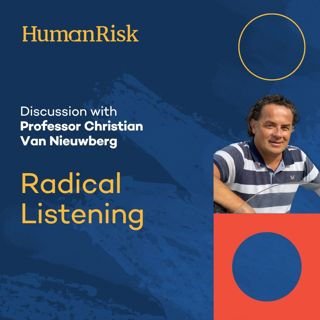
Professor Christian van Nieuwberg on Radical Listening

Professor Christian van Nieuwberg on Radical Listening

Is listening a hidden superpower we’ve overlooked?  You've heard of Active Listening, but what is Radical Listening and why does it matter?Episode SummaryOn this episode, I’m joined by Professor Chris...

17 Elo 20251h 9min
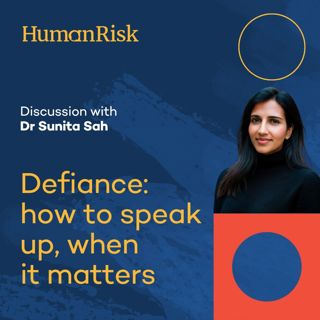
Dr Sunita Sah on Defiance - how to speak up when it matters

Dr Sunita Sah on Defiance - how to speak up when it matters

Why do we follow orders or go along with things that feel wrong? Why might defiance be better than compliance? And how can we go about becoming more defiant?Episode SummaryI’ve always been fascinated ...

9 Elo 20251h 2min
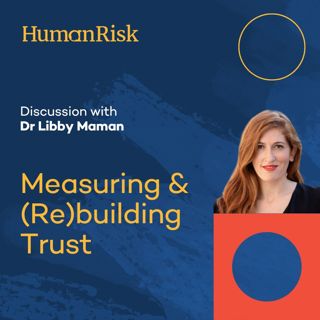
Dr Libby Maman on Measuring and (Re-)building Trust

Dr Libby Maman on Measuring and (Re-)building Trust

What happens when citizens lose faith in the institutions that serve them? And how can we rebuild that trust?Episode SummaryOn this episode, I'm speaking to someone who cares passionately about this s...

2 Elo 20251h
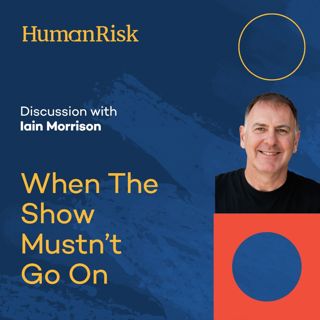
Iain Morrison on When The Show Mustn't Go On

Iain Morrison on When The Show Mustn't Go On

We’ve all heard the phrase ‘the show must go on’.  But when shouldn’t the show go on?  To help me answer that, I’m speaking to someone who has spent 35 years managing some of Australia’s most iconic l...

26 Heinä 20251h 5min
Zsike Peter on Thinkbait

Zsike Peter on Thinkbait

What if the real risk of AI isn’t job loss but brain atrophy?Episode SummaryIf you've spent any time on social media recently, you'll be familiar with the flood of low-quality AI-generated sludge. And...

19 Heinä 20251h 9min
Dr Kiran Bhatti & Professor Thomas Roulet on Wellbeing Intelligence

Dr Kiran Bhatti & Professor Thomas Roulet on Wellbeing Intelligence

What if we treated mental health like a capability instead of a crisis? On this episode, I'm talking to a business school professor and a counselling psychologist about their new book that looks at pr...

12 Heinä 20251h 2min

Suosittua kategoriassa Tiede

rss-poliisin-mieli
tiedekulma-podcast
rss-mita-tulisi-tietaa
docemilia
filocast-filosofian-perusteet
menologeja-tutkimusmatka-vaihdevuosiin
rss-duodecim-lehti
rss-tiedetta-vai-tarinaa
sotataidon-ytimessa
rss-lapsuuden-rakentajat-podcast
rss-lihavuudesta-podcast
utelias-mieli
radio-antro
rss-bios-podcast
rss-metsantuntijat-podcast
rss-luontopodi-samuel-glassar-tutkii-luonnon-ihmeita
rss-sosiopodi