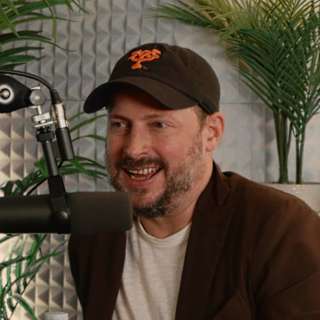

#204 – Nate Silver on making sense of SBF, and his biggest critiques of effective altruism

#204 – Nate Silver on making sense of SBF, and his biggest critiques of effective altruism

Rob Wiblin speaks with FiveThirtyEight election forecaster and author Nate Silver about his new book: On the Edge: The Art of Risking Everything.

Links to learn more, highlights, video, and full transcript.

On the Edge explores a cultural grouping Nate dubs “the River” — made up of people who are analytical, competitive, quantitatively minded, risk-taking, and willing to be contrarian. It’s a tendency he considers himself a part of, and the River has been doing well for itself in recent decades — gaining cultural influence through success in finance, technology, gambling, philanthropy, and politics, among other pursuits.

But on Nate’s telling, it’s a group particularly vulnerable to oversimplification and hubris. Where Riverians’ ability to calculate the “expected value” of actions isn’t as good as they believe, their poorly calculated bets can leave a trail of destruction — aptly demonstrated by Nate’s discussion of the extended time he spent with FTX CEO Sam Bankman-Fried before and after his downfall.

Given this show’s focus on the world’s most pressing problems and how to solve them, we narrow in on Nate’s discussion of effective altruism (EA), which has been little covered elsewhere. Nate met many leaders and members of the EA community in researching the book and has watched its evolution online for many years.

Effective altruism is the River style of doing good, because of its willingness to buck both fashion and common sense — making its giving decisions based on mathematical calculations and analytical arguments with the goal of maximising an outcome.

Nate sees a lot to admire in this, but the book paints a mixed picture in which effective altruism is arguably too trusting, too utilitarian, too selfless, and too reckless at some times, while too image-conscious at others.

But while everything has arguable weaknesses, could Nate actually do any better in practice? We ask him:

  • How would Nate spend $10 billion differently than today’s philanthropists influenced by EA?
  • Is anyone else competitive with EA in terms of impact per dollar?
  • Does he have any big disagreements with 80,000 Hours’ advice on how to have impact?
  • Is EA too big a tent to function?
  • What global problems could EA be ignoring?
  • Should EA be more willing to court controversy?
  • Does EA’s niceness leave it vulnerable to exploitation?
  • What moral philosophy would he have modelled EA on?

Rob and Nate also talk about:

  • Nate’s theory of Sam Bankman-Fried’s psychology.
  • Whether we had to “raise or fold” on COVID.
  • Whether Sam Altman and Sam Bankman-Fried are structurally similar cases or not.
  • “Winners’ tilt.”
  • Whether it’s selfish to slow down AI progress.
  • The ridiculous 13 Keys to the White House.
  • Whether prediction markets are now overrated.
  • Whether venture capitalists talk a big talk about risk while pushing all the risk off onto the entrepreneurs they fund.
  • And plenty more.

Chapters:

  • Cold open (00:00:00)
  • Rob's intro (00:01:03)
  • The interview begins (00:03:08)
  • Sam Bankman-Fried and trust in the effective altruism community (00:04:09)
  • Expected value (00:19:06)
  • Similarities and differences between Sam Altman and SBF (00:24:45)
  • How would Nate do EA differently? (00:31:54)
  • Reservations about utilitarianism (00:44:37)
  • Game theory equilibrium (00:48:51)
  • Differences between EA culture and rationalist culture (00:52:55)
  • What would Nate do with $10 billion to donate? (00:57:07)
  • COVID strategies and tradeoffs (01:06:52)
  • Is it selfish to slow down AI progress? (01:10:02)
  • Democratic legitimacy of AI progress (01:18:33)
  • Dubious election forecasting (01:22:40)
  • Assessing how reliable election forecasting models are (01:29:58)
  • Are prediction markets overrated? (01:41:01)
  • Venture capitalists and risk (01:48:48)

Producer and editor: Keiran Harris
Audio engineering by Ben Cordell, Milo McGuire, Simon Monsour, and Dominic Armstrong
Video engineering: Simon Monsour
Transcriptions: Katy Moore

Jaksot(326)

#35 Classic episode - Tara Mac Aulay on the audacity to fix the world without asking permission

#35 Classic episode - Tara Mac Aulay on the audacity to fix the world without asking permission

Rebroadcast: this episode was originally released in June 2018. How broken is the world? How inefficient is a typical organisation? Looking at Tara Mac Aulay’s life, the answer seems to be ‘very’. A...

10 Tammi 20221h 23min
#67 Classic episode – David Chalmers on the nature and ethics of consciousness

#67 Classic episode – David Chalmers on the nature and ethics of consciousness

Rebroadcast: this episode was originally released in December 2019. What is it like to be you right now? You're seeing this text on the screen, smelling the coffee next to you, and feeling the warmth...

3 Tammi 20224h 42min
#59 Classic episode - Cass Sunstein on how change happens, and why it's so often abrupt & unpredictable

#59 Classic episode - Cass Sunstein on how change happens, and why it's so often abrupt & unpredictable

Rebroadcast: this episode was originally released in June 2019. It can often feel hopeless to be an activist seeking social change on an obscure issue where most people seem opposed or at best indiff...

27 Joulu 20211h 43min

#119 – Andrew Yang on our very long-term future, and other topics most politicians won’t touch

#119 – Andrew Yang on our very long-term future, and other topics most politicians won’t touch

Andrew Yang — past presidential candidate, founder of the Forward Party, and leader of the 'Yang Gang' — is kind of a big deal, but is particularly popular among listeners to The 80,000 Hours Podcast....

20 Joulu 20211h 25min
#118 – Jaime Yassif on safeguarding bioscience to prevent catastrophic lab accidents and bioweapons development

#118 – Jaime Yassif on safeguarding bioscience to prevent catastrophic lab accidents and bioweapons development

If a rich country were really committed to pursuing an active biological weapons program, there’s not much we could do to stop them. With enough money and persistence, they’d be able to buy equipment,...

13 Joulu 20212h 15min
#117 – David Denkenberger on using paper mills and seaweed to feed everyone in a catastrophe, ft Sahil Shah

#117 – David Denkenberger on using paper mills and seaweed to feed everyone in a catastrophe, ft Sahil Shah

If there's a nuclear war followed by nuclear winter, and the sun is blocked out for years, most of us are going to starve, right? Well, currently, probably we would, because humanity hasn't done much ...

29 Marras 20213h 8min

#116 – Luisa Rodriguez on why global catastrophes seem unlikely to kill us all

#116 – Luisa Rodriguez on why global catastrophes seem unlikely to kill us all

If modern human civilisation collapsed — as a result of nuclear war, severe climate change, or a much worse pandemic than COVID-19 — billions of people might die.That's terrible enough to contemplate....

19 Marras 20213h 45min
#115 – David Wallace on the many-worlds theory of quantum mechanics and its implications

#115 – David Wallace on the many-worlds theory of quantum mechanics and its implications

Quantum mechanics — our best theory of atoms, molecules, and the subatomic particles that make them up — underpins most of modern physics. But there are varying interpretations of what it means, all o...

12 Marras 20213h 9min

Suosittua kategoriassa Koulutus

rss-murhan-anatomia
voi-hyvin-meditaatiot-2
psykopodiaa-podcast
adhd-podi
rss-narsisti
rss-rahamania
rahapuhetta
rss-liian-kuuma-peruna
kesken
rss-uskonto-on-tylsaa
rss-vapaudu-voimaasi
rss-niinku-asia-on
rss-tietoinen-yhteys-podcast-2
aloita-meditaatio
salainen-paivakirja
esa-saarinen-filosofia-ja-systeemiajattelu
filocast-filosofian-perusteet
rss-valo-minussa-2
rss-koira-haudattuna
rss-hereilla