
Ep. 324 Embolization for Treatment of Hemorrhoids with Dr. Alex Pavidapha

Ep. 324 Embolization for Treatment of Hemorrhoids with Dr. Alex Pavidapha

In this episode, host Dr. Aaron Fritts and interventional radiologist Dr. Alex Pavidapha give a primer on the emerging field of hemorrhoidal artery embolization (HAE), including patient presentations and referrals, treatment algorithms, procedural steps, and follow up care. --- CHECK OUT OUR SPONSOR Boston Scientific Nextlab https://www.bostonscientific.com/en-US/nextlab.html?utm_source=oth_site&utm_medium=native&utm_campaign=pi-at-us-nextlab-hci&utm_content=n-backtable-n-backtable_site_nextlab_1_2023&cid=n10013202 --- SHOW NOTES To start. Dr. Pavidapha describes the typical patient presenting with hemorrhoids. This is a prevalent condition that peaks at the ages of 45-65 and in the pregnant population. There are a variety of treatment options ranging from banding, hemorrhoidectomy, and cryotherapy; however, many patients may experience recurrence after these treatments or they may not be suitable candidates for surgery. Next, we discuss the current landscape of HAE. This treatment is a good option for patients who have failed other treatment options. The majority of Dr. Pavidapha’s patients come from referrals by gastroenterologists, although some come based on their own research on the web. It is important that all patients have a colonoscopy before HAE, to rule out the possibility of colon cancer. Additionally, a full history and rectal exam should be performed, since the choice to treat can be guided by the patient’s symptom severity and the degree of internal hemorrhoid prolapse. It is also advisable to identify extremely painful external hemorrhoids, since these can be addressed with conservative measures. Dr. Pavidapha notes that patient counseling is extremely important, since hemorrhoids have a high risk of recurrence and bowel habits play a large part in this. In terms of procedural risks, he counsels patients about standard risks of bleeding and infection, recurrence, mild pain in the few days after the procedure, and although it is rare, non-target embolization of skin or other organs. During the procedure, Dr. Pavidapha prefers femoral access, since this is the easiest way to select the internal mesenteric artery. He does a base catheter run here to visualize the superior rectal arteries. These vessels are the most commonly involved in internal hemorrhoids, and if they are feeding the hemorrhoid, he will inject 500 micron beads and then follow with embolic coils. Next, he navigates through the internal iliac and pudendal arteries to arrive at the middle rectal arteries for another run. If they also supply the hemorrhoids, he will embolize them. The inferior rectal arteries are usually not involved in hemorrhoid formation, embolization of them carries a high risk of skin necrosis. Treatment of inferior rectal arteries is usually avoided. It is important to know typical anatomy very well so you can determine targets for embolization and recognize whether a patient has variant anatomy. Finally, Dr. Pavidapha sees his patients for follow-up at 1 month, 4 months, and 1 year to check for symptomatic improvement, primarily decreased bleeding. If bleeding has worsened, the patient most likely needs a repeat procedure to identify new blood vessels supplying the hemorrhoid. To IRs who are interested in starting an HAE service line, Dr. Pavidapha advises them to read the existing literature about hemorrhoids and HAE and be able to show clinical outcomes data to gastroenterologists. Overall, patients with recurrent hemorrhoids are typically an underserved population and have the potential to benefit from this novel procedure. --- RESOURCES Ep. 319 - How to Collaborate with GI on a New Outpatient Service Line: https://www.backtable.com/shows/vi/podcasts/319/how-to-collaborate-with-gi-on-a-new-outpatient-service-line Outcomes of Hemorrhoidal Artery Embolization from a Multidisciplinary Outpatient Interventional Center: https://pubmed.ncbi.nlm.nih.gov/36736822/ The STREAM Meeting: ​​https://www.thestreammeeting.com/

Jaksot(625)

Ep. 572 How to Perform Mesocaval Shunts: Techniques & Outcomes with Dr. Omar Chohan and Dr. Harris Chengazi

Ep. 572 How to Perform Mesocaval Shunts: Techniques & Outcomes with Dr. Omar Chohan and Dr. Harris Chengazi

Before the advent of TIPS, mesocaval shunts were considered a less popular option for managing portal hypertension. But today, could they serve as a lifeline when no other choices remain? This week on...

12 Syys 20251h 12min

Ep. 571 Independent IR Practices: Key Strategies for Success with Dr. Kartik Kansagra and Dr. Harout Dermendjian

Ep. 571 Independent IR Practices: Key Strategies for Success with Dr. Kartik Kansagra and Dr. Harout Dermendjian

What does it really take to break away from the hospital system and build your own interventional radiology practice?---This podcast is supported by:Medtronic Emprinthttps://www.medtronic.com/emprint-...

9 Syys 202537min

Introducing Backtable Cardiology

Introducing Backtable Cardiology

8 Syys 20251min

Ep. 570 Exploring Atherectomy’s Role Below the Knee with Dr. Anahita Dua

Ep. 570 Exploring Atherectomy’s Role Below the Knee with Dr. Anahita Dua

Below the knee atherectomy is a hot topic right now in the vascular community. Why is it so controversial? Dr. Anahita Dua, vascular surgeon at Mass General, joins host Dr. Sabeen Dhand to explore the...

5 Syys 202545min
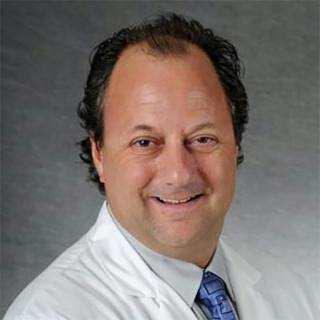
Ep. 569 Advances & Challenges in Carotid Artery Stenting with Dr. Wayne Olan

Ep. 569 Advances & Challenges in Carotid Artery Stenting with Dr. Wayne Olan

From new techniques to evolving best practices–are you up to date with the latest developments in carotid artery stenting? In this episode, Dr. Wayne Olan, Interventional Neuroradiologist and the dire...

2 Syys 202548min

Ep. 568 Understanding CON Laws: Effects on Rural Cardiovascular Care with Dr. Ash Sastry and Dr. Sree Nair

Ep. 568 Understanding CON Laws: Effects on Rural Cardiovascular Care with Dr. Ash Sastry and Dr. Sree Nair

What does it really take to bring cutting-edge vascular care to the most underserved corners of the rural South? In this episode of the BackTable Podcast, host Dr. Ally Baheti welcomes interventional ...

29 Elo 202534min
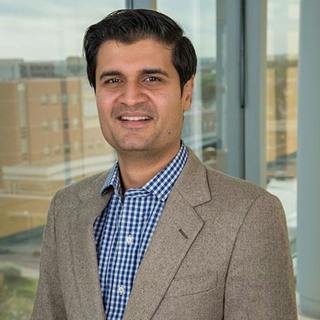
Ep. 567 How to Manage Biliary Strictures with Dr. Premal Trivedi

Ep. 567 How to Manage Biliary Strictures with Dr. Premal Trivedi

What piques your clinical suspicion for biliary structure? And when is interventional endoscopy the preferred approach? Fine tune your diagnostic and treatment algorithm with Dr. Premal Trivedi from t...

26 Elo 202557min

Ep. 566 Navigating the Private Equity Practice Setting with Dr. Oleksandra Kutsenko

Ep. 566 Navigating the Private Equity Practice Setting with Dr. Oleksandra Kutsenko

As new graduates enter the workforce, what are the key differences between academic, private, and hybrid practice models? Dr. Oleksandra Kutsenko, Chief of Interventional Radiology at Red Rock Radiol...

22 Elo 202535min

Suosittua kategoriassa Koulutus

rss-murhan-anatomia
psykopodiaa-podcast
voi-hyvin-meditaatiot-2
rss-valo-minussa-2
rss-narsisti
adhd-podi
rss-niinku-asia-on
aamukahvilla
rss-duodecim-lehti
kesken
rahapuhetta
aloita-meditaatio
salainen-paivakirja
rss-elamankoulu
psykologia
rss-uskonto-on-tylsaa
rss-psykalab
rss-selvat-savelet
rss-koira-haudattuna
rss-hereilla