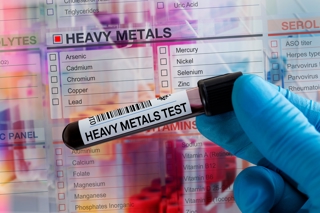

Heavy Metal Poisoning
PodcastDX16 Heinä 2024

Heavy Metal Poisoning

Heavy metal poisoning (toxicity) is the result of exposure to heavy metals like lead, mercury and arsenic. Heavy metals bind to parts of your cells that prevent your organs from doing their job. Symptoms of heavy metal poisoning can be life threatening and they can cause irreversible damage.

Heavy metal poisoning occurs when microscopic molecules of metals accumulate within your body after exposure. Heavy metals attach to your cells and prevent them from performing their functions, which causes symptoms that could be life threatening without treatment.

What metals cause heavy metal poisoning (toxicity)?

Several metals can be toxic to your body. The most common toxic metals are:

  • Lead. Contaminated water from lead pipes, batteries, paint, gasoline, construction materials.

  • Mercury. Liquid in thermometers, lightbulbs, dental amalgam ("silver") fillings, batteries, seafood, topical antiseptics.

  • Arsenic. Topical creams, herbicides, insecticides, pesticides, fungicides, paints, enamels, glass, contaminated water, seafood, algae.

  • Cadmium. Cigarette smoke, metal plating, batteries.

  • Thallium. Rodenticides, pesticides, fireworks.

How does someone get heavy metal poisoning?

You can get heavy metal poisoning by exposing yourself to heavy metals. Heavy metals form naturally within the Earth's crust. We interact with small amounts of heavy metals every day, like when you check the temperature of your thermometer, which uses mercury. Heavy metal poisoning occurs when metals get into your body. This can happen if you're exposed to a large amount of metal including:

  • Eating a lot of food that contains metals (fish).

  • Drinking water from older water supply systems.

  • Working with metals on the job.

  • Taking medications or supplements with high amounts of metallic elements.

  • Handling metals or products made with a large amount of metal (like paint or pesticides) without using personal protective equipment.

Most metals that cause poisoning are in a microscopic (molecular) form when they enter your body. They are so small, you won't be able to see them. Heavy metals can enter your body by:

  • Absorbing into your skin.

  • Breathing in or inhaling tiny metal molecules.

  • Eating or drinking (ingesting) the metal from food or water.

Who does heavy metal poisoning affect?

Heavy metal poisoning can affect anyone who has exposure to heavy metals. This most often affects people who:

  • Drink water from pipes made of older metals (lead).

  • Work with metals.

  • Take more than the prescribed dosage of medicine or supplements that contain metal.

  • Live in an environment with high air or water pollution.

  • Eat a lot of foods that contain metal.

  • Consume a non-edible product made with metal (paint).

Children are at a higher risk of heavy metal poisoning because their bodies are still developing and they are more sensitive to the harmful effects of heavy metals.

How common is heavy metal poisoning?

The exact rate of occurrence is unknown, but in the United States, heavy metal poisoning is rare since it only affects people who have exposure to heavy metals. The number of people diagnosed with heavy metal poisoning decreased significantly over the last 20 years because of awareness and preventative measures to remove heavy metals from homes.

What does heavy metal poisoning do to my body?

Exposure to heavy metals can be dangerous to your health. While we use and interact with metals every day, certain heavy metals are toxic because the molecules that make up the metal damage or negatively interact with the cells in your body that are essential to keep your organs functioning.

Your body has small amounts of metals in it already, like iron, copper and zinc. These metals are important to keep your organs functioning. If you have too much metal accumulated within your body, it can damage your vital organs like your brain and liver. (credits: Cleveland Clinic)

Tämä jakso on lisätty Podme-palveluun avoimen RSS-syötteen kautta eikä se ole Podmen omaa tuotantoa. Siksi jakso saattaa sisältää mainontaa.

Jaksot(441)

Ai and Robotics in Medicine

Ai and Robotics in Medicine

This week on PodcastDX, Dr. Sanjeev Kumar joins Lita, Ron, and Jean Marie to discuss AI and robotics in medicine—from surgical robots and rehabilitation technology to hospital automation, patient safe...

1 Syys 47min

EECP The Most Underutilized Therapy in Medicine

EECP The Most Underutilized Therapy in Medicine

Retired U.S. Coast Guard Master Chief Petty Officer Jack Clifford joins PodcastDX to share how severe chronic angina once limited even everyday activities and left him facing the possibility of triple...

25 Elo 44min

Diary of An Epileptic

Diary of An Epileptic

In this episode of PodcastDX, we speak with Allany Muniz, founder of Diary of an Epileptic, about the realities of living with epilepsy beyond what most people see. Allany shares how her diagnosis cha...

18 Elo 28min

Memory Villages

Memory Villages

Memory Villages explores the promise and the questions surrounding dementia villages—care communities designed to feel more like neighborhoods than institutions. We discuss how familiar surroundings, ...

11 Elo 17min

Ebola

Ebola

In this PodcastDX episode, Lita and Jean Marie unpack Ebola as a severe but not casually spread viral disease, explaining that infection requires direct contact with blood or other body fluids or cont...

4 Elo 23min
Sunscreen

Sunscreen

In this week's episode of PodcastDX, Lita and Jean Marie break down why sunscreen is about far more than avoiding a bad sunburn—it's everyday cancer prevention. They explain how UV damage happens whil...

28 Heinä 17min
Vagus Nerve Reset

Vagus Nerve Reset

In this solo PodcastDX episode, Lita introduces the concept of the vagus nerve and explains why it has become such a focus in wellness, neurology, psychiatry, and online health spaces. She describes t...

21 Heinä 17min
When Seconds Matter

When Seconds Matter

"When Seconds Matter" is a strong, urgent PodcastDX episode.  It is a personal story about emergency response and the critical minutes before help arrives. It's focused on recognizing danger early, ca...

14 Heinä 14min

Suosittua kategoriassa Terveys ja hyvinvointi

unicast
rss-pitaisko-erota
tiedenaiset-podcast
psykopodiaa-podcast
vakeva-elama-viisaampi-mieli-vahvempi-keho
terapiassa
meditaatiot-suomeksi
katilon-kahvitunti
rss-kuumilla-aalloilla
rss-uplevel-by-sonja-hannus
rss-pt-paahtio
rss-sanelunpurku-podcast
voi-hyvin-meditaatiot-2
fitnessvastaanotto
selviytyjat-tarinoita-elamasta
rss-terapiaklubi
rss-vapaudu-voimaasi
paritellen
junnut-pelissa
rss-rakas-mielenterveyteni