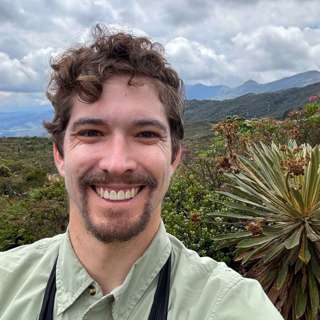

#210 – Cameron Meyer Shorb on dismantling the myth that we can’t do anything to help wild animals
80,000 Hours Podcast29 Marras 2024

#210 – Cameron Meyer Shorb on dismantling the myth that we can’t do anything to help wild animals

"I really don’t want to give the impression that I think it is easy to make predictable, controlled, safe interventions in wild systems where there are many species interacting. I don’t think it’s easy, but I don’t see any reason to think that it’s impossible. And I think we have been making progress. I think there’s every reason to think that if we continue doing research, both at the theoretical level — How do ecosystems work? What sorts of things are likely to have what sorts of indirect effects? — and then also at the practical level — Is this intervention a good idea? — I really think we’re going to come up with plenty of things that would be helpful to plenty of animals." —Cameron Meyer Shorb

In today’s episode, host Luisa Rodriguez speaks to Cameron Meyer Shorb — executive director of the Wild Animal Initiative — about the cutting-edge research on wild animal welfare.

Links to learn more, highlights, and full transcript.

They cover:

  • How it’s almost impossible to comprehend the sheer number of wild animals on Earth — and why that makes their potential suffering so important to consider.
  • How bad experiences like disease, parasites, and predation truly are for wild animals — and how we would even begin to study that empirically.
  • The tricky ethical dilemmas in trying to help wild animals without unintended consequences for ecosystems or other potentially sentient beings.
  • Potentially promising interventions to help wild animals — like selective reforestation, vaccines, fire management, and gene drives.
  • Why Cameron thinks the best approach to improving wild animal welfare is to first build a dedicated research field — and how Wild Animal Initiative’s activities support this.
  • The many career paths in science, policy, and technology that could contribute to improving wild animal welfare.
  • And much more.

Chapters:

  • Cold open (00:00:00)
  • Luisa's intro (00:01:04)
  • The interview begins (00:03:40)
  • One concrete example of how we might improve wild animal welfare (00:04:04)
  • Why should we care about wild animal suffering? (00:10:00)
  • What’s it like to be a wild animal? (00:19:37)
  • Suffering and death in the wild (00:29:19)
  • Positive, benign, and social experiences (00:51:33)
  • Indicators of welfare (01:01:40)
  • Can we even help wild animals without unintended consequences? (01:13:20)
  • Vaccines for wild animals (01:30:59)
  • Fire management (01:44:20)
  • Gene drive technologies (01:47:42)
  • Common objections and misconceptions about wild animal welfare (01:53:19)
  • Future promising interventions (02:21:58)
  • What’s the long game for wild animal welfare? (02:27:46)
  • Eliminating the biological basis for suffering (02:33:21)
  • Optimising for high-welfare landscapes (02:37:33)
  • Wild Animal Initiative’s work (02:44:11)
  • Careers in wild animal welfare (02:58:13)
  • Work-related guilt and shame (03:12:57)
  • Luisa's outro (03:19:51)


Producer: Keiran Harris
Audio engineering: Ben Cordell, Milo McGuire, Simon Monsour, and Dominic Armstrong
Content editing: Luisa Rodriguez, Katy Moore, and Keiran Harris
Transcriptions: Katy Moore

Jaksot(332)

#193 – Sihao Huang on navigating the geopolitics of US–China AI competition

#193 – Sihao Huang on navigating the geopolitics of US–China AI competition

"You don’t necessarily need world-leading compute to create highly risky AI systems. The biggest biological design tools right now, like AlphaFold’s, are orders of magnitude smaller in terms of comput...

18 Heinä 20242h 23min

#192 – Annie Jacobsen on what would happen if North Korea launched a nuclear weapon at the US

#192 – Annie Jacobsen on what would happen if North Korea launched a nuclear weapon at the US

"Ring one: total annihilation; no cellular life remains. Ring two, another three-mile diameter out: everything is ablaze. Ring three, another three or five miles out on every side: third-degree burns ...

12 Heinä 20241h 54min
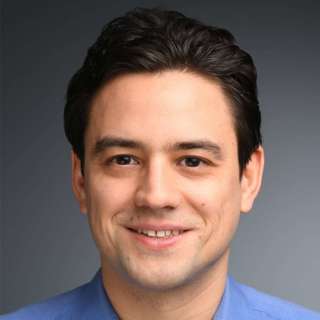
#191 (Part 2) – Carl Shulman on government and society after AGI

#191 (Part 2) – Carl Shulman on government and society after AGI

This is the second part of our marathon interview with Carl Shulman. The first episode is on the economy and national security after AGI. You can listen to them in either order!If we develop artificia...

5 Heinä 20242h 20min

#191 (Part 1) – Carl Shulman on the economy and national security after AGI

#191 (Part 1) – Carl Shulman on the economy and national security after AGI

This is the first part of our marathon interview with Carl Shulman. The second episode is on government and society after AGI. You can listen to them in either order!The human brain does what it does ...

27 Kesä 20244h 14min
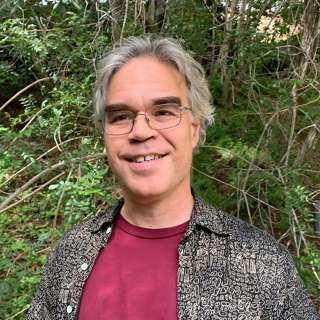
#190 – Eric Schwitzgebel on whether the US is conscious

#190 – Eric Schwitzgebel on whether the US is conscious

"One of the most amazing things about planet Earth is that there are complex bags of mostly water — you and me – and we can look up at the stars, and look into our brains, and try to grapple with the ...

7 Kesä 20242h
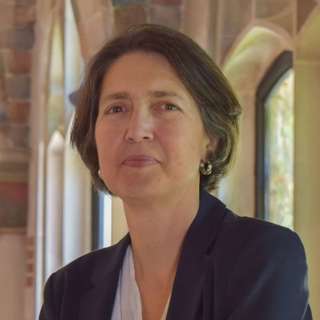
#189 – Rachel Glennerster on why we still don’t have vaccines that could save millions

#189 – Rachel Glennerster on why we still don’t have vaccines that could save millions

"You can’t charge what something is worth during a pandemic. So we estimated that the value of one course of COVID vaccine in January 2021 was over $5,000. They were selling for between $6 and $40. So...

29 Touko 20242h 48min

#188 – Matt Clancy on whether science is good

#188 – Matt Clancy on whether science is good

"Suppose we make these grants, we do some of those experiments I talk about. We discover, for example — I’m just making this up — but we give people superforecasting tests when they’re doing peer revi...

23 Touko 20242h 40min

#187 – Zach Weinersmith on how researching his book turned him from a space optimist into a "space bastard"

#187 – Zach Weinersmith on how researching his book turned him from a space optimist into a "space bastard"

"Earth economists, when they measure how bad the potential for exploitation is, they look at things like, how is labour mobility? How much possibility do labourers have otherwise to go somewhere else?...

14 Touko 20243h 6min

Suosittua kategoriassa Koulutus

rss-murhan-anatomia
psykopodiaa-podcast
voi-hyvin-meditaatiot-2
adhd-podi
psykologia
rss-valo-minussa-2
rss-tietoinen-yhteys-podcast-2
rss-rahamania
rss-niinku-asia-on
kesken
rss-arkea-ja-aurinkoa-podcast-espanjasta
rahapuhetta
rss-liian-kuuma-peruna
rss-narsisti
dear-ladies
rss-eron-alkemiaa
rss-vapaudu-voimaasi
leikitaanko-laakaria
aamukahvilla
rss-uskonto-on-tylsaa