Paleorobotics, revisiting the landscape of fear, and a book on the future of imagination

Paleorobotics, revisiting the landscape of fear, and a book on the future of imagination

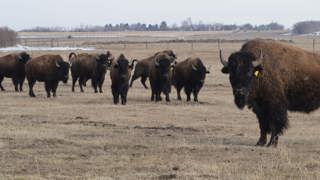
Using robots to study evolution, the last installment of our series of books on a future to look forward to, and did reintroducing wolves really restore an ecosystem? First up this week, a new study of an iconic ecosystem doesn’t support the “landscape of fear” concept. This is the idea that bringing back apex predators has a huge impact on the behavior of their prey, eventually altering the rest of the ecosystem. Host Sarah Crespi talks with Contributing Correspondent Virginia Morell about the findings. Next, using bioinspired robotics to explore deep time. Michael Ishida, a postdoctoral researcher in the Bio-Inspired Robotics Lab at the University of Cambridge, talks about studying key moments in evolutionary history, such as the transition from water to land by creating robotic versions of extinct creatures. Finally in the last in our series of books on an optimistic future, books host Angela Saini talks with Ruha Benjamin, a professor of African American studies at Princeton University and recently named MacArthur Fellow. The two discuss Benjamin’s latest book, Imagination: A Manifesto, which explores the part that imagination plays in creating new and radical futures. This week’s episode was produced with help from Podigy. About the Science Podcast Episode page: https://www.science.org/doi/10.1126/science.zu8ch5j Authors: Sarah Crespi; Angela Saini; Virginia Morell Learn more about your ad choices. Visit megaphone.fm/adchoices

Tämä jakso on lisätty Podme-palveluun avoimen RSS-syötteen kautta eikä se ole Podmen omaa tuotantoa. Siksi jakso saattaa sisältää mainontaa.

Jaksot(650)

Owl wars and the immune system’s memory

Owl wars and the immune system’s memory

First up on the podcast, Contributing Correspondent Warren Cornwall goes on an owl hunt in the woods of Northern California. After surviving logging and habitat destruction in the 1990s, the endangere...

9 Heinä 35min

How Antarctica got its ice sheets, and what happens when geopolitical relationships turn chilly in the Arctic

How Antarctica got its ice sheets, and what happens when geopolitical relationships turn chilly in the Arctic

First up on the podcast, relationships turn chilly in the polar research haven of Svalbard in Norway. Senior International Correspondent Richard Stone joins host Sarah Crespi to discuss the impacts of...

2 Heinä 32min

Cracking color vision, U.S. science policy changes, and a trailblazing biography

Cracking color vision, U.S. science policy changes, and a trailblazing biography

First up on the podcast, ScienceInsider editor Jocelyn Kaiser joins host Sarah Crespi to discuss big policy stories from the past month, including a proposal from President Donald Trump’s administrati...

25 Kesä 45min

An electronic nose that detects spoiled chicken, and wolves make a spectacular comeback in Europe

An electronic nose that detects spoiled chicken, and wolves make a spectacular comeback in Europe

First up on the podcast, wrangling wolves in Europe. After near extermination in much of the continent, wolf numbers have surged up to about 20,000 individuals. Contributing Correspondent Gretchen Vog...

18 Kesä 46min

How childhood environments shape the brain, and how susceptible is the Atlantic Ocean’s current to climate change?

How childhood environments shape the brain, and how susceptible is the Atlantic Ocean’s current to climate change?

First up on the podcast, producer Kevin McLean talks with Staff Writer Paul Voosen about the latest on the Atlantic Meridional Overturning Circulation, or AMOC. Researchers have long been concerned th...

11 Kesä 31min

Will AI replace astronomers, how healthy are ultraprocessed foods, and a peek behind the scenes of ‘The Normals’

Will AI replace astronomers, how healthy are ultraprocessed foods, and a peek behind the scenes of ‘The Normals’

First up on the podcast, freelance science journalist Joshua Sokol talks about the intense discussion happening in the astrophysics community as artificial intelligence and machine learning become inc...

4 Kesä 50min

Disembodied human brains, immortal bits of sea cucumber, and fame in Galileo’s time

Disembodied human brains, immortal bits of sea cucumber, and fame in Galileo’s time

First up on the podcast, a company is using whole brains—maintained with specialized life support—to study new drugs. Freelance science journalist Sara Reardon joins host Sarah Crespi to talk about th...

28 Touko 45min

USAID cuts linked to violence, unexpected parallels between humans and bacteria, and how to rule the world

USAID cuts linked to violence, unexpected parallels between humans and bacteria, and how to rule the world

First up on the podcast, Senior International Correspondent Richard Stone joins host Sarah Crespi to discuss the surprising commonalities between our immune systems and the tools bacteria use to defen...

21 Touko 41min

Suosittua kategoriassa Politiikka ja uutiset

aikalisa
uutiscast
ootsa-kuullut-tasta-2
rss-ootsa-kuullut-tasta
rss-podme-livebox
tervo-halme
otetaan-yhdet
aihe
politiikan-puskaradio
rss-vaalirankkurit-podcast
rss-seksicast
rss-girls-finish-f1rst
the-ulkopolitist
et-sa-noin-voi-sanoo-esittaa
rss-aijat-hopottaa-podcast
rss-kovin-paikka
rss-mita-tapahtuu
rss-kaikki-uusiksi
rss-ulkopoditiikkaa
rss-pinnalla