
#132 Classic episode – Nova DasSarma on why information security may be critical to the safe development of AI systems

#132 Classic episode – Nova DasSarma on why information security may be critical to the safe development of AI systems

If a business has spent $100 million developing a product, it’s a fair bet that they don’t want it stolen in two seconds and uploaded to the web where anyone can use it for free.

This problem exists in extreme form for AI companies. These days, the electricity and equipment required to train cutting-edge machine learning models that generate uncanny human text and images can cost tens or hundreds of millions of dollars. But once trained, such models may be only a few gigabytes in size and run just fine on ordinary laptops.

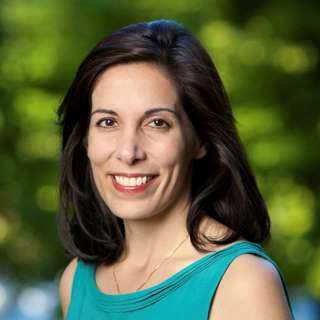
Today’s guest, the computer scientist and polymath Nova DasSarma, works on computer and information security for the AI company Anthropic with the security team. One of her jobs is to stop hackers exfiltrating Anthropic’s incredibly expensive intellectual property, as recently happened to Nvidia.

Rebroadcast: this episode was originally released in June 2022.

Links to learn more, highlights, and full transcript.

As she explains, given models’ small size, the need to store such models on internet-connected servers, and the poor state of computer security in general, this is a serious challenge.

The worries aren’t purely commercial though. This problem looms especially large for the growing number of people who expect that in coming decades we’ll develop so-called artificial ‘general’ intelligence systems that can learn and apply a wide range of skills all at once, and thereby have a transformative effect on society.

If aligned with the goals of their owners, such general AI models could operate like a team of super-skilled assistants, going out and doing whatever wonderful (or malicious) things are asked of them. This might represent a huge leap forward for humanity, though the transition to a very different new economy and power structure would have to be handled delicately.

If unaligned with the goals of their owners or humanity as a whole, such broadly capable models would naturally ‘go rogue,’ breaking their way into additional computer systems to grab more computing power — all the better to pursue their goals and make sure they can’t be shut off.

As Nova explains, in either case, we don’t want such models disseminated all over the world before we’ve confirmed they are deeply safe and law-abiding, and have figured out how to integrate them peacefully into society. In the first scenario, premature mass deployment would be risky and destabilising. In the second scenario, it could be catastrophic — perhaps even leading to human extinction if such general AI systems turn out to be able to self-improve rapidly rather than slowly, something we can only speculate on at this point.

If highly capable general AI systems are coming in the next 10 or 20 years, Nova may be flying below the radar with one of the most important jobs in the world.

We’ll soon need the ability to ‘sandbox’ (i.e. contain) models with a wide range of superhuman capabilities, including the ability to learn new skills, for a period of careful testing and limited deployment — preventing the model from breaking out, and criminals from breaking in. Nova and her colleagues are trying to figure out how to do this, but as this episode reveals, even the state of the art is nowhere near good enough.

Chapters:

  • Cold open (00:00:00)
  • Rob's intro (00:00:52)
  • The interview begins (00:02:44)
  • Why computer security matters for AI safety (00:07:39)
  • State of the art in information security (00:17:21)
  • The hack of Nvidia (00:26:50)
  • The most secure systems that exist (00:36:27)
  • Formal verification (00:48:03)
  • How organisations can protect against hacks (00:54:18)
  • Is ML making security better or worse? (00:58:11)
  • Motivated 14-year-old hackers (01:01:08)
  • Disincentivising actors from attacking in the first place (01:05:48)
  • Hofvarpnir Studios (01:12:40)
  • Capabilities vs safety (01:19:47)
  • Interesting design choices with big ML models (01:28:44)
  • Nova’s work and how she got into it (01:45:21)
  • Anthropic and career advice (02:05:52)
  • $600M Ethereum hack (02:18:37)
  • Personal computer security advice (02:23:06)
  • LastPass (02:31:04)
  • Stuxnet (02:38:07)
  • Rob's outro (02:40:18)

Producer: Keiran Harris
Audio mastering: Ben Cordell and Beppe Rådvik
Transcriptions: Katy Moore

Jaksot(320)

#164 – Kevin Esvelt on cults that want to kill everyone, stealth vs wildfire pandemics, and how he felt inventing gene drives

#164 – Kevin Esvelt on cults that want to kill everyone, stealth vs wildfire pandemics, and how he felt inventing gene drives

"Imagine a fast-spreading respiratory HIV. It sweeps around the world. Almost nobody has symptoms. Nobody notices until years later, when the first people who are infected begin to succumb. They might...

2 Loka 20233h 3min

Great power conflict (Article)

Great power conflict (Article)

Today’s release is a reading of our Great power conflict problem profile, written and narrated by Stephen Clare.If you want to check out the links, footnotes and figures in today’s article, you can fi...

22 Syys 20231h 19min

#163 – Toby Ord on the perils of maximising the good that you do

#163 – Toby Ord on the perils of maximising the good that you do

Effective altruism is associated with the slogan "do the most good." On one level, this has to be unobjectionable: What could be bad about helping people more and more?But in today's interview, Toby O...

8 Syys 20233h 7min

The 80,000 Hours Career Guide (2023)

The 80,000 Hours Career Guide (2023)

An audio version of the 2023 80,000 Hours career guide, also available on our website, on Amazon, and on Audible.If you know someone who might find our career guide helpful, you can get a free copy se...

4 Syys 20234h 41min

#162 – Mustafa Suleyman on getting Washington and Silicon Valley to tame AI

#162 – Mustafa Suleyman on getting Washington and Silicon Valley to tame AI

Mustafa Suleyman was part of the trio that founded DeepMind, and his new AI project is building one of the world's largest supercomputers to train a large language model on 10–100x the compute used to...

1 Syys 202359min

#161 – Michael Webb on whether AI will soon cause job loss, lower incomes, and higher inequality — or the opposite

#161 – Michael Webb on whether AI will soon cause job loss, lower incomes, and higher inequality — or the opposite

"Do you remember seeing these photographs of generally women sitting in front of these huge panels and connecting calls, plugging different calls between different numbers? The automated version of th...

23 Elo 20233h 30min

#160 – Hannah Ritchie on why it makes sense to be optimistic about the environment

#160 – Hannah Ritchie on why it makes sense to be optimistic about the environment

"There's no money to invest in education elsewhere, so they almost get trapped in the cycle where they don't get a lot from crop production, but everyone in the family has to work there to just stay a...

14 Elo 20232h 36min

#159 – Jan Leike on OpenAI's massive push to make superintelligence safe in 4 years or less

#159 – Jan Leike on OpenAI's massive push to make superintelligence safe in 4 years or less

In July, OpenAI announced a new team and project: Superalignment. The goal is to figure out how to make superintelligent AI systems aligned and safe to use within four years, and the lab is putting a ...

7 Elo 20232h 51min

Suosittua kategoriassa Koulutus

rss-murhan-anatomia
psykopodiaa-podcast
rss-narsisti
voi-hyvin-meditaatiot-2
aamukahvilla
rss-vapaudu-voimaasi
rss-niinku-asia-on
psykologia
rss-liian-kuuma-peruna
adhd-podi
kesken
dear-ladies
leveli
rss-duodecim-lehti
rss-koira-haudattuna
rss-luonnollinen-synnytys-podcast
rahapuhetta
aloita-meditaatio
ihminen-tavattavissa-tommy-hellsten-instituutti
rss-ai-mita-siskopodcast