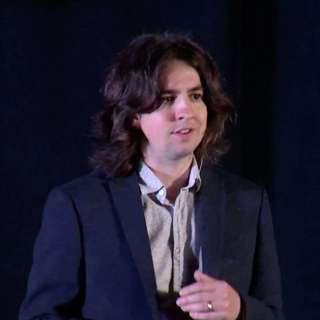
#124 Classic episode – Karen Levy on fads and misaligned incentives in global development, and scaling deworming to reach hundreds of millions

#124 Classic episode – Karen Levy on fads and misaligned incentives in global development, and scaling deworming to reach hundreds of millions

If someone said a global health and development programme was sustainable, participatory, and holistic, you'd have to guess that they were saying something positive. But according to today's guest Karen Levy — deworming pioneer and veteran of Innovations for Poverty Action, Evidence Action, and Y Combinator — each of those three concepts has become so fashionable that they're at risk of being seriously overrated and applied where they don't belong.

Rebroadcast: this episode was originally released in March 2022.

Links to learn more, highlights, and full transcript.

Such concepts might even cause harm — trying to make a project embody all three is as likely to ruin it as help it flourish.

First, what do people mean by 'sustainability'? Usually they mean something like the programme will eventually be able to continue without needing further financial support from the donor. But how is that possible? Governments, nonprofits, and aid agencies aim to provide health services, education, infrastructure, financial services, and so on — and all of these require ongoing funding to pay for materials and staff to keep them running.

Given that someone needs to keep paying, Karen tells us that in practice, 'sustainability' is usually a euphemism for the programme at some point being passed on to someone else to fund — usually the national government. And while that can be fine, the national government of Kenya only spends $400 per person to provide each and every government service — just 2% of what the US spends on each resident. Incredibly tight budgets like that are typical of low-income countries.

'Participatory' also sounds nice, and inasmuch as it means leaders are accountable to the people they're trying to help, it probably is. But Karen tells us that in the field, ‘participatory’ usually means that recipients are expected to be involved in planning and delivering services themselves.

While that might be suitable in some situations, it's hardly something people in rich countries always want for themselves. Ideally we want government healthcare and education to be high quality without us having to attend meetings to keep it on track — and people in poor countries have as many or more pressures on their time. While accountability is desirable, an expectation of participation can be as much a burden as a blessing.

Finally, making a programme 'holistic' could be smart, but as Karen lays out, it also has some major downsides. For one, it means you're doing lots of things at once, which makes it hard to tell which parts of the project are making the biggest difference relative to their cost. For another, when you have a lot of goals at once, it's hard to tell whether you're making progress, or really put your mind to focusing on making one thing go extremely well. And finally, holistic programmes can be impractically expensive — Karen tells the story of a wonderful 'holistic school health' programme that, if continued, was going to cost 3.5 times the entire school's budget.

In this in-depth conversation, originally released in March 2022, Karen Levy and host Rob Wiblin chat about the above, as well as:

  • Why it pays to figure out how you'll interpret the results of an experiment ahead of time
  • The trouble with misaligned incentives within the development industry
  • Projects that don't deliver value for money and should be scaled down
  • How Karen accidentally became a leading figure in the push to deworm tens of millions of schoolchildren
  • Logistical challenges in reaching huge numbers of people with essential services
  • Lessons from Karen's many-decades career
  • And much more

Chapters:

  • Cold open (00:00:00)
  • Rob's intro (00:01:33)
  • The interview begins (00:02:21)
  • Funding for effective altruist–mentality development projects (00:04:59)
  • Pre-policy plans (00:08:36)
  • ‘Sustainability’, and other myths in typical international development practice (00:21:37)
  • ‘Participatoriness’ (00:36:20)
  • ‘Holistic approaches’ (00:40:20)
  • How the development industry sees evidence-based development (00:51:31)
  • Initiatives in Africa that should be significantly curtailed (00:56:30)
  • Misaligned incentives within the development industry (01:05:46)
  • Deworming: the early days (01:21:09)
  • The problem of deworming (01:34:27)
  • Deworm the World (01:45:43)
  • Where the majority of the work was happening (01:55:38)
  • Logistical issues (02:20:41)
  • The importance of a theory of change (02:31:46)
  • Ways that things have changed since 2006 (02:36:07)
  • Academic work vs policy work (02:38:33)
  • Fit for Purpose (02:43:40)
  • Living in Kenya (03:00:32)
  • Underrated life advice (03:05:29)
  • Rob’s outro (03:09:18)

Producer: Keiran Harris
Audio mastering: Ben Cordell and Ryan Kessler
Transcriptions: Katy Moore

Jaksot(321)

#16 - Michelle Hutchinson on global priorities research & shaping the ideas of intellectuals

#16 - Michelle Hutchinson on global priorities research & shaping the ideas of intellectuals

In the 40s and 50s neoliberalism was a fringe movement within economics. But by the 80s it had become a dominant school of thought in public policy, and achieved major policy changes across the Englis...

22 Joulu 201755min

#15 - Phil Tetlock on how chimps beat Berkeley undergrads and when it’s wise to defer to the wise

#15 - Phil Tetlock on how chimps beat Berkeley undergrads and when it’s wise to defer to the wise

Prof Philip Tetlock is a social science legend. Over forty years he has researched whose predictions we can trust, whose we can’t and why - and developed methods that allow all of us to be better at p...

20 Marras 20171h 24min

#14 - Sharon Nunez & Jose Valle on going undercover to expose animal abuse

#14 - Sharon Nunez & Jose Valle on going undercover to expose animal abuse

What if you knew that ducks were being killed with pitchforks? Rabbits dumped alive into containers? Or pigs being strangled with forklifts? Would you be willing to go undercover to expose the crime? ...

13 Marras 20171h 25min

#13 - Claire Walsh on testing which policies work & how to get governments to listen to the results

#13 - Claire Walsh on testing which policies work & how to get governments to listen to the results

In both rich and poor countries, government policy is often based on no evidence at all and many programs don’t work. This has particularly harsh effects on the global poor - in some countries governm...

31 Loka 201752min

#12 - Beth Cameron works to stop you dying in a pandemic. Here’s what keeps her up at night.

#12 - Beth Cameron works to stop you dying in a pandemic. Here’s what keeps her up at night.

“When you're in the middle of a crisis and you have to ask for money, you're already too late.” That’s Dr Beth Cameron, who leads Global Biological Policy and Programs at the Nuclear Threat Initiative...

25 Loka 20171h 45min

#11 - Spencer Greenberg on speeding up social science 10-fold & why plenty of startups cause harm

#11 - Spencer Greenberg on speeding up social science 10-fold & why plenty of startups cause harm

Do most meat eaters think it’s wrong to hurt animals? Do Americans think climate change is likely to cause human extinction? What is the best, state-of-the-art therapy for depression? How can we make ...

17 Loka 20171h 29min

#10 - Nick Beckstead on how to spend billions of dollars preventing human extinction

#10 - Nick Beckstead on how to spend billions of dollars preventing human extinction

What if you were in a position to give away billions of dollars to improve the world? What would you do with it? This is the problem facing Program Officers at the Open Philanthropy Project - people l...

11 Loka 20171h 51min

#9 - Christine Peterson on how insecure computers could lead to global disaster, and how to fix it

#9 - Christine Peterson on how insecure computers could lead to global disaster, and how to fix it

Take a trip to Silicon Valley in the 70s and 80s, when going to space sounded like a good way to get around environmental limits, people started cryogenically freezing themselves, and nanotechnology l...

4 Loka 20171h 45min

Suosittua kategoriassa Koulutus

rss-murhan-anatomia
psykopodiaa-podcast
voi-hyvin-meditaatiot-2
rss-narsisti
rss-liian-kuuma-peruna
rss-vapaudu-voimaasi
rss-hereilla
dear-ladies
rss-uskonto-on-tylsaa
rss-valo-minussa-2
ihminen-tavattavissa-tommy-hellsten-instituutti
leveli
rss-luonnollinen-synnytys-podcast
rss-tietoinen-yhteys-podcast-2
adhd-podi
aloita-meditaatio
kesken
psykologia
rss-duodecim-lehti
esa-saarinen-filosofia-ja-systeemiajattelu