
Intro to Ehlers Danlos Syndrome
PodcastDX25 Helmi 2025

Intro to Ehlers Danlos Syndrome

This week we discuss the basics about a topic several of our guests have spoken about- Ehlers Danlos Syndrome or EDS.

​Ehlers-Danlos syndrome is a group of inherited disorders that affect your connective tissues — primarily your skin, joints and blood vessel walls. Connective tissue is a complex mixture of proteins and other substances that provide strength and elasticity to the underlying structures in your body.

​The Ehlers-Danlos syndromes received a major overhaul in 2017 and this is what we now know:

  • EDS are heritable connective tissue disorders affecting the quality of collagen in every part of the body.

  • There are now 13 recognized subtypes of EDS, 12 of which are genuinely rare and have the aberrant gene identified.

  • Hypermobile EDS (hEDS) and hypermobility spectrum disorder (HSD) is by far the most common type; these conditions are part of a spectrum and the distinction is hoped to be useful for research, but is otherwise academic.

  • hEDS/HSD is a multi-system disorder which can have a marked impact on health and which may help us to explain apparently mysterious multiple symptoms.

  • Don't let the changing terminology confuse you. 3.4% of the population have generalized joint hypermobility and chronic widespread pain (a proxy for the now obsolete diagnosis of joint hypermobility syndrome (JHS).

  • Patients who in the past received a diagnosis of JHS (or Benign JHS), EDS-Hypermobility Type or EDS Type III would now be categorized as having hEDS or HSD.

  • "If you can't connect the issues, think connective tissues" Non-specific and medically unexplained symptoms are usually real and should not be dismissed It can be easy to make a big difference to the quality of life of some of your most complex patients with a few simple and inexpensive measures, but the journey starts with recognition.

  • The median time from symptom onset to seeking a GP opinion is 2 years and the median time to diagnosis 10 years. If we make an early diagnosis and manage the conditions appropriately, there may be potential to reduce long term disability which can occur from EDS.

  • Enquire about family members; these are hereditary disorders of connective tissue so positive family histories are common. Although no gene has yet been identified, hEDS is primarily of autosomal dominant inheritance.

  • Children can present with symptoms of hEDS/HSD, including abdominal symptoms or growing pains. They may also present with neurodevelopmental disorders such as hyperactivity, inattention, dyspraxia, autistic spectrum disorder, sleep, and food issues, emotional problems, hypersensitivity and anxiety.

  • A low Beighton score does not exclude hEDS/HSD,. Patients stiffen with age so their Beighton score may decrease, although pain may worsen. The extent of multi-system symptoms is not related to the Beighton score.

  • Consider co-existing conditions; In recent years, we have begun to understand more about associated or co-morbid conditions which are frequently found in people with hEDS, including autonomic dysfunction (postural tachycardia syndrome (PoTS) and symptomatic low blood pressure), mast cell activation syndrome (MCAS) and gastrointestinal dysfunction.

(Credits: GPTOOLKIT)

Tämä jakso on lisätty Podme-palveluun avoimen RSS-syötteen kautta eikä se ole Podmen omaa tuotantoa. Siksi jakso saattaa sisältää mainontaa.

Jaksot(440)

EECP The Most Underutilized Therapy in Medicine

EECP The Most Underutilized Therapy in Medicine

Retired U.S. Coast Guard Master Chief Petty Officer Jack Clifford joins PodcastDX to share how severe chronic angina once limited even everyday activities and left him facing the possibility of triple...

25 Elo 44min
Diary of An Epileptic

Diary of An Epileptic

In this episode of PodcastDX, we speak with Allany Muniz, founder of Diary of an Epileptic, about the realities of living with epilepsy beyond what most people see. Allany shares how her diagnosis cha...

18 Elo 28min

Memory Villages

Memory Villages

Memory Villages explores the promise and the questions surrounding dementia villages—care communities designed to feel more like neighborhoods than institutions. We discuss how familiar surroundings, ...

11 Elo 17min
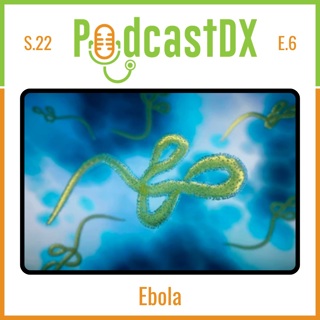
Ebola

Ebola

In this PodcastDX episode, Lita and Jean Marie unpack Ebola as a severe but not casually spread viral disease, explaining that infection requires direct contact with blood or other body fluids or cont...

4 Elo 23min
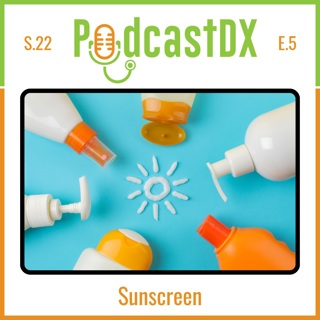
Sunscreen

Sunscreen

In this week's episode of PodcastDX, Lita and Jean Marie break down why sunscreen is about far more than avoiding a bad sunburn—it's everyday cancer prevention. They explain how UV damage happens whil...

28 Heinä 17min
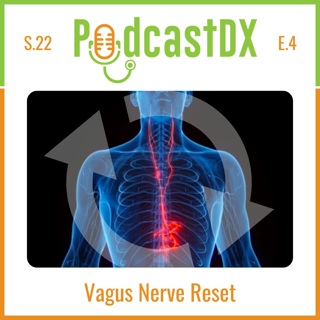
Vagus Nerve Reset

Vagus Nerve Reset

In this solo PodcastDX episode, Lita introduces the concept of the vagus nerve and explains why it has become such a focus in wellness, neurology, psychiatry, and online health spaces. She describes t...

21 Heinä 17min
When Seconds Matter

When Seconds Matter

"When Seconds Matter" is a strong, urgent PodcastDX episode.  It is a personal story about emergency response and the critical minutes before help arrives. It's focused on recognizing danger early, ca...

14 Heinä 14min
Heart, Brain & Immunity: New Clues After a Heart Attack

Heart, Brain & Immunity: New Clues After a Heart Attack

After a heart attack, the story doesn't end in the arteries. In this episode of PodcastDX, Lita and Jean Marie explore new science showing how the heart, brain, and immune system talk to each other du...

26 Touko 19min
Suosittua kategoriassa Terveys ja hyvinvointi

unicast
tiedenaiset-podcast
rss-pitaisko-erota
vakeva-elama-viisaampi-mieli-vahvempi-keho
meditaatiot-suomeksi
psykopodiaa-podcast
terapiassa
voi-hyvin-meditaatiot-2
katilon-kahvitunti
rss-uplevel-by-sonja-hannus
rss-pt-paahtio
rss-kuumilla-aalloilla
rss-vapaudu-voimaasi
rss-sanelunpurku-podcast
junnut-pelissa
fitnessvastaanotto
rss-terapiaklubi
selviytyjat-tarinoita-elamasta
paritellen
rss-kehtaanko-kysya-podcast-aideille