#139 Classic episode – Alan Hájek on puzzles and paradoxes in probability and expected value

#139 Classic episode – Alan Hájek on puzzles and paradoxes in probability and expected value

A casino offers you a game. A coin will be tossed. If it comes up heads on the first flip you win $2. If it comes up on the second flip you win $4. If it comes up on the third you win $8, the fourth you win $16, and so on. How much should you be willing to pay to play?

The standard way of analysing gambling problems, ‘expected value’ — in which you multiply probabilities by the value of each outcome and then sum them up — says your expected earnings are infinite. You have a 50% chance of winning $2, for '0.5 * $2 = $1' in expected earnings. A 25% chance of winning $4, for '0.25 * $4 = $1' in expected earnings, and on and on. A never-ending series of $1s added together comes to infinity. And that's despite the fact that you know with certainty you can only ever win a finite amount!

Today's guest — philosopher Alan Hájek of the Australian National University — thinks of much of philosophy as “the demolition of common sense followed by damage control” and is an expert on paradoxes related to probability and decision-making rules like “maximise expected value.”

Rebroadcast: this episode was originally released in October 2022.

Links to learn more, highlights, and full transcript.

The problem described above, known as the St. Petersburg paradox, has been a staple of the field since the 18th century, with many proposed solutions. In the interview, Alan explains how very natural attempts to resolve the paradox — such as factoring in the low likelihood that the casino can pay out very large sums, or the fact that money becomes less and less valuable the more of it you already have — fail to work as hoped.

We might reject the setup as a hypothetical that could never exist in the real world, and therefore of mere intellectual curiosity. But Alan doesn't find that objection persuasive. If expected value fails in extreme cases, that should make us worry that something could be rotten at the heart of the standard procedure we use to make decisions in government, business, and nonprofits.

These issues regularly show up in 80,000 Hours' efforts to try to find the best ways to improve the world, as the best approach will arguably involve long-shot attempts to do very large amounts of good.

Consider which is better: saving one life for sure, or three lives with 50% probability? Expected value says the second, which will probably strike you as reasonable enough. But what if we repeat this process and evaluate the chance to save nine lives with 25% probability, or 27 lives with 12.5% probability, or after 17 more iterations, 3,486,784,401 lives with a 0.00000009% chance. Expected value says this final offer is better than the others — 1,000 times better, in fact.

Ultimately Alan leans towards the view that our best choice is to “bite the bullet” and stick with expected value, even with its sometimes counterintuitive implications. Where we want to do damage control, we're better off looking for ways our probability estimates might be wrong.

In this conversation, originally released in October 2022, Alan and Rob explore these issues and many others:

  • Simple rules of thumb for having philosophical insights
  • A key flaw that hid in Pascal's wager from the very beginning
  • Whether we have to simply ignore infinities because they mess everything up
  • What fundamentally is 'probability'?
  • Some of the many reasons 'frequentism' doesn't work as an account of probability
  • Why the standard account of counterfactuals in philosophy is deeply flawed
  • And why counterfactuals present a fatal problem for one sort of consequentialism

Chapters:

  • Cold open {00:00:00}
  • Rob's intro {00:01:05}
  • The interview begins {00:05:28}
  • Philosophical methodology {00:06:35}
  • Theories of probability {00:40:58}
  • Everyday Bayesianism {00:49:42}
  • Frequentism {01:08:37}
  • Ranges of probabilities {01:20:05}
  • Implications for how to live {01:25:05}
  • Expected value {01:30:39}
  • The St. Petersburg paradox {01:35:21}
  • Pascal’s wager {01:53:25}
  • Using expected value in everyday life {02:07:34}
  • Counterfactuals {02:20:19}
  • Most counterfactuals are false {02:56:06}
  • Relevance to objective consequentialism {03:13:28}
  • Alan’s best conference story {03:37:18}
  • Rob's outro {03:40:22}

Producer: Keiran Harris
Audio mastering: Ben Cordell and Ryan Kessler
Transcriptions: Katy Moore

Jaksot(324)

Parenting insights from Rob and 8 past guests

Parenting insights from Rob and 8 past guests

With kids very much on the team's mind we thought it would be fun to review some comments about parenting featured on the show over the years, then have hosts Luisa Rodriguez and Rob Wiblin react to t...

8 Marras 20241h 35min
#206 – Anil Seth on the predictive brain and how to study consciousness

#206 – Anil Seth on the predictive brain and how to study consciousness

"In that famous example of the dress, half of the people in the world saw [blue and black], half saw [white and gold]. It turns out there’s individual differences in how brains take into account ambie...

1 Marras 20242h 33min
How much does a vote matter? (Article)

How much does a vote matter? (Article)

If you care about social impact, is voting important? In this piece, Rob investigates the two key things that determine the impact of your vote:The chances of your vote changing an election’s outcome....

28 Loka 202432min
#205 – Sébastien Moro on the most insane things fish can do

#205 – Sébastien Moro on the most insane things fish can do

"You have a tank split in two parts: if the fish gets in the compartment with a red circle, it will receive food, and food will be delivered in the other tank as well. If the fish takes the blue trian...

23 Loka 20243h 11min

#204 – Nate Silver on making sense of SBF, and his biggest critiques of effective altruism

#204 – Nate Silver on making sense of SBF, and his biggest critiques of effective altruism

Rob Wiblin speaks with FiveThirtyEight election forecaster and author Nate Silver about his new book: On the Edge: The Art of Risking Everything.Links to learn more, highlights, video, and full transc...

16 Loka 20241h 57min
#203 – Peter Godfrey-Smith on interfering with wild nature, accepting death, and the origin of complex civilisation

#203 – Peter Godfrey-Smith on interfering with wild nature, accepting death, and the origin of complex civilisation

"In the human case, it would be mistaken to give a kind of hour-by-hour accounting. You know, 'I had +4 level of experience for this hour, then I had -2 for the next hour, and then I had -1' — and you...

3 Loka 20241h 25min

Luisa and Keiran on free will, and the consequences of never feeling enduring guilt or shame

Luisa and Keiran on free will, and the consequences of never feeling enduring guilt or shame

In this episode from our second show, 80k After Hours, Luisa Rodriguez and Keiran Harris chat about the consequences of letting go of enduring guilt, shame, anger, and pride.Links to learn more, highl...

27 Syys 20241h 36min
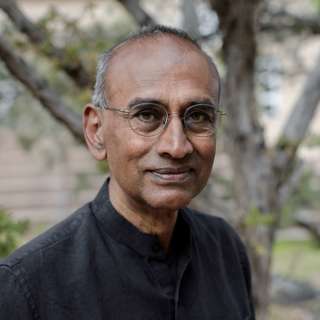
#202 – Venki Ramakrishnan on the cutting edge of anti-ageing science

#202 – Venki Ramakrishnan on the cutting edge of anti-ageing science

"For every far-out idea that turns out to be true, there were probably hundreds that were simply crackpot ideas. In general, [science] advances building on the knowledge we have, and seeing what the n...

19 Syys 20242h 20min

Suosittua kategoriassa Koulutus

rss-murhan-anatomia
voi-hyvin-meditaatiot-2
rss-narsisti
psykopodiaa-podcast
rss-niinku-asia-on
rss-vapaudu-voimaasi
adhd-podi
psykologia
rss-duodecim-lehti
rss-rahamania
rss-valo-minussa-2
kesken
rss-uskonto-on-tylsaa
aamukahvilla
koulu-podcast-2
rss-liian-kuuma-peruna
rss-koira-haudattuna
avara-mieli
rss-turun-yliopisto
rss-arkea-ja-aurinkoa-podcast-espanjasta