
Vectors in a Hotter World
PodcastDX4 Maalis 2025

Vectors in a Hotter World

This week we discuss vectors in a hotter world.

Vector-borne diseases, which are transmitted by hematophagous arthropods such as mosquitoes, ticks, and sandflies, pose a significant burden on global public health. These diseases disproportionately affect populations in tropical and subtropical regions, where environmental conditions favor the survival and proliferation of vectors. Given that vectors are ectothermic organisms, their life cycles, reproduction, survival rates, and geographic distribution are heavily influenced by climate variables such as temperature, rainfall, and humidity. Consequently, changes in climate patterns can have profound effects on the transmission dynamics of vector-borne diseases, altering their geographic spread and intensity.

Rising global temperatures have led to the expansion of vector habitats into previously unsuitable regions, including temperate zones. Warmer climates accelerate the development of many vectors and pathogens, reducing the extrinsic incubation period of viruses such as dengue, Zika, and chikungunya. Additionally, increased temperatures can extend the breeding season of mosquitoes like Aedes aegypti and Anopheles species, enhancing their capacity to transmit diseases such as malaria. Conversely, extreme heat events may reduce vector survival in some regions, leading to localized declines in transmission.

​Changes in precipitation patterns also play a crucial role in shaping vector distribution. Heavy rainfall events can create new breeding sites for mosquitoes by increasing the availability of stagnant water, while drought conditions may drive vectors closer to human settlements in search of water sources. In particular, shifts in rainfall patterns have been linked to outbreaks of malaria, dengue, and West Nile virus in various parts of the world. Increased humidity can further facilitate the survival of certain pathogens within vectors, enhancing their ability to transmit infections.

Beyond climate variables, other anthropogenic factors contribute to the spread of vector-borne diseases. Land use changes, such as deforestation and urbanization, have disrupted natural ecosystems, bringing vectors and humans into closer contact. For example, deforestation in the Amazon has been associated with increased malaria transmission due to the creation of new breeding sites for Anopheles mosquitoes. Similarly, expanding urban populations with inadequate water management systems provide ideal conditions for the proliferation of Aedes mosquitoes, driving the rise in dengue and chikungunya cases.

Globalization and human mobility further compound the issue by facilitating the movement of infected individuals and vectors across borders. Increased travel and trade have contributed to the introduction and establishment of vector-borne diseases in regions where they were previously rare. For instance, the spread of Aedes albopictus, a competent vector for dengue and chikungunya, has been linked to international trade in used tires and lucky bamboo plants, which serve as breeding grounds during transport.

The multifaceted relationship between climate change and vector-borne diseases presents a challenge for public health interventions. While climate factors influence vector dynamics, their impact is often modulated by socio-economic conditions, infrastructure, and public health responses. To mitigate the growing threat of vector-borne diseases, an integrated approach is necessary—combining climate adaptation strategies, vector control measures, surveillance programs, and community engagement.

Recent research underscores the importance of predictive modeling to anticipate outbreaks and inform public health policies. Advances in remote sensing, artificial intelligence, and climate modeling are enabling researchers to identify high-risk areas and implement targeted interventions. Strengthening early warning systems and investing in sustainable vector control strategies, such as genetically modified mosquitoes and Wolbachia-infected mosquito programs, offer promising avenues for reducing disease transmission.

In conclusion, while climate change is reshaping the global landscape of vector-borne diseases, its effects are complex and intertwined with other environmental and societal factors. Understanding these dynamics is crucial for developing proactive strategies to mitigate the risks associated with the redistribution of vectors and the spread of diseases worldwide. By integrating climate science, epidemiology, and public health measures, we can better prepare for emerging threats and protect vulnerable populations from the growing impact of vector-borne diseases.

Tämä jakso on lisätty Podme-palveluun avoimen RSS-syötteen kautta eikä se ole Podmen omaa tuotantoa. Siksi jakso saattaa sisältää mainontaa.

Jaksot(446)

L.A.T.E. A New Dementia (take two)

L.A.T.E. A New Dementia (take two)

This week on PodcastDX, we're talking about L.A.T.E., which stands for Limbic-predominant Age-related TDP-43 Encephalopathy. It's a type of dementia that many people have never heard of, but it's comm...

27 Loka 34min
Social Media Health Advice- How Do You Vet It?

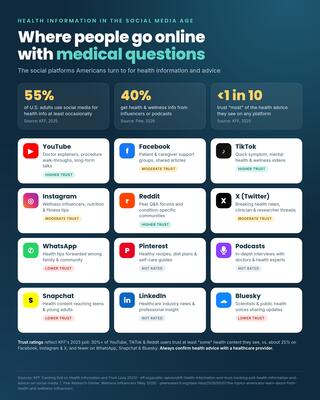
Social Media Health Advice- How Do You Vet It?

Welcome to PodcastDx, the show that helps you make sense of your health. I'm Jean Marie McNamara.  I'm joining you today with Lita Tomas, our Production Manager and of our co-hosts, Ron Rispoli (our t...

20 Loka 18min

Fatigue in Ehlers Danlos

Fatigue in Ehlers Danlos

Fatigue is more than feeling tired—for many people living with Ehlers-Danlos syndromes (EDS), it can mean overwhelming physical and mental exhaustion that affects even the simplest daily tasks. Chroni...

13 Loka 16min

Product Recalls (AGAIN!) and Your Health

Product Recalls (AGAIN!) and Your Health

This week we will discuss product recalls and your health.  According to WEBMD: A product safety recall happens when a consumer watch group or a manufacturer finds problems with a product. Lots of ite...

15 Syys 15min

Stage 4 Cancer as an ER Doc

Stage 4 Cancer as an ER Doc

Our guest today is a physician, author and activist.  The topic this week is "Stage 4 Cancer as an ER Doc".   Dr. James Maskalyk practices emergency medicine at St. Michael's, Toronto's inner-city tr...

8 Syys 1h 3min

Ai and Robotics in Medicine

Ai and Robotics in Medicine

This week on PodcastDX, Dr. Sanjeev Kumar joins Lita, Ron, and Jean Marie to discuss AI and robotics in medicine—from surgical robots and rehabilitation technology to hospital automation, patient safe...

1 Syys 47min

EECP The Most Underutilized Therapy in Medicine

EECP The Most Underutilized Therapy in Medicine

Retired U.S. Coast Guard Master Chief Petty Officer Jack Clifford joins PodcastDX to share how severe chronic angina once limited even everyday activities and left him facing the possibility of triple...

25 Elo 44min

Diary of An Epileptic

Diary of An Epileptic

In this episode of PodcastDX, we speak with Allany Muniz, founder of Diary of an Epileptic, about the realities of living with epilepsy beyond what most people see. Allany shares how her diagnosis cha...

18 Elo 28min

Suosittua kategoriassa Terveys ja hyvinvointi

unicast
aamukahvilla
psykopodiaa-podcast
vakeva-elama-viisaampi-mieli-vahvempi-keho
meditaatiot-suomeksi
tiedenaiset-podcast
rss-pt-paahtio
katilon-kahvitunti
voi-hyvin-meditaatiot-2
rss-hereilla
rss-uplevel-by-sonja-hannus
hippokrateen-vastaanotolla
rss-rampaseksia
rss-rentoudu-podcast-rentoutumiseen-hanna-viljanmaa
rss-adama-mindful-hetki
rss-vapaudu-voimaasi
rss-sanelunpurku-podcast
rakkaudella-karita
selviytyjat-tarinoita-elamasta
rss-mighty-finland-podcast