
Kaori Wada - How Grief Became a Disorder and What This Means About Us

Kaori Wada - How Grief Became a Disorder and What This Means About Us

In March 2022, a new grief-related disorder was officially adopted into mainstream mental health diagnosis nomenclature. Prolonged Grief Disorder (PGD) is a recent addition to the Diagnostic and Statistical Manual fifth edition text revision (DSM-5-TR). A PGD diagnosis is to be used when a person is grieving too long and too intensely.

In this interview, Kaori Wada, Psychologist, grief researcher, and Associate Professor and Director of Training at the University of Calgary, builds upon her recent paper on the Medicalization of Grief in conversation with MIA Science News Writer and Psychologist Zenobia Morrill. Wada articulates a history of institutional tensions and financial conflicts behind the creation of this new PGD diagnosis. She also discusses the ways PGD could shape how we collectively understand and respond to those grieving.

Wada's work demonstrates that the creation of PGD was not based on scientific findings but appears to be entangled in long-standing arguments between camps of mental health professionals with different stakes in whether the diagnosis became legitimized. Further, PGD, as with other diagnoses, represents elements of mainstream psychological theory that tend to render deviations from Western cultural norms as "unhealthy." Is diagnosis needed to provide support and care? If so, those most likely to experience marginalization, violence, and unjust loss are also most likely to be classified as having PGD, a mental illness.

At a time when the world is fraught with tragic loss—owing to causes ranging from political failures, state violence, and the COVID-19 pandemic—grieving has been transformed into a mental health disorder. But the complicated question of what a mental disorder is continues to be glossed over. The opportunity for psychiatric professionals to embrace humility seems to have reverted to the familiar "diagnose-and-treat" response. Will pharmacological intervention become the dominant "treat" response to a diagnosis of PGD?

A new grief disorder is a clear departure, however, from the way grief used to be described in the field as an example of something that is clearly not a mental health disorder, Wada shared. She exclaims: "To me, the medicalization of grief is controversial because it may fundamentally shake up the concept of a mental disorder, [how it has] been defined and understood."

Wada and Morrill explore what this new PGD diagnosis may mean, reflecting on the ways the "diagnose-and-treat" logic seems to of experiences formerly considered part of the territory of being human. The need to pathologize experiences in order to address them represents a paradox. A new ethical and moral quandary befalls professionals tasked with determining when grief is an illness and when expressions of grief are inappropriate.

Will the public embrace this new disorder? Will the medicalization of grief be resisted? Will a pandemic of PGD diagnoses follow a global pandemic? Wada speaks to the personal and professional influences that shaped these curiosities and her approach to researching how grief is being construed in the mental health field.

Tämä jakso on lisätty Podme-palveluun avoimen RSS-syötteen kautta eikä se ole Podmen omaa tuotantoa. Siksi jakso saattaa sisältää mainontaa.

Jaksot(308)

When Stopping Prescription Drugs Isn't Simple: Alicia Martin and the TaperMate Story

When Stopping Prescription Drugs Isn't Simple: Alicia Martin and the TaperMate Story

Alicia Martin is an Australian community pharmacist, a member of the Not Broken Project and founder of TaperMate. Through her work in pharmacy, Alicia saw patients struggling with unusual and severe s...

16 Syys 34min
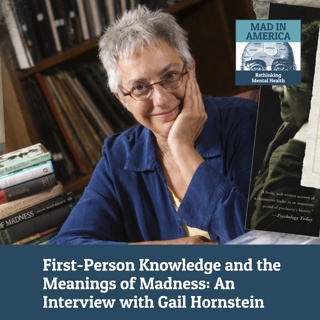
First-Person Knowledge and the Meanings of Madness: An Interview with Gail Hornstein

First-Person Knowledge and the Meanings of Madness: An Interview with Gail Hornstein

Gail Hornstein is Professor Emerita of Psychology at Mount Holyoke College. Across a long and influential career, her work has moved between psychology, psychoanalysis, history, qualitative research, ...

2 Syys 1h 8min
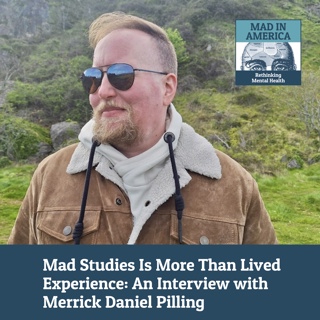
Mad Studies Is More Than Lived Experience: An Interview with Merrick Daniel Pilling

Mad Studies Is More Than Lived Experience: An Interview with Merrick Daniel Pilling

Merrick Daniel Pilling is an Associate Professor and Interim Co-Director of the School of Disability Studies at Toronto Metropolitan University. He is the author of Queer and Trans Madness: Struggles ...

19 Elo 49min

The West Doesn't Have All the Answers: An Interview with Dinesh Bhugra

The West Doesn't Have All the Answers: An Interview with Dinesh Bhugra

Dinesh Bhugra is a leading voice in social and cultural psychiatry. He is Emeritus Professor of Mental Health and Cultural Diversity at King's College London and has served as president of the Royal ...

12 Elo 36min
Go/No Go - How Mental Health Research Took a Wrong Turn: An Interview with Marianne Apostolides

Go/No Go - How Mental Health Research Took a Wrong Turn: An Interview with Marianne Apostolides

Marianne Apostolides is the award-winning author of eight books, four of which have been translated and published internationally. She is a two-time recipient of the Chalmers Arts Fellowship and winne...

29 Heinä 48min
Unlearn Your Pain: Harnessing the Power of Neuroplasticity – A Conversation With Howard Schubiner

Unlearn Your Pain: Harnessing the Power of Neuroplasticity – A Conversation With Howard Schubiner

Welcome to the Mad in America podcast. My name is Brooke Siem, and I am the author of the award-winning memoir on antidepressant withdrawal, May Cause Side Effects. Today, I'm excited to have Dr. Howa...

15 Heinä 41min
The Empire of Madness: Why Psychiatry Must Rethink Human Suffering - An Interview with Khameer Kidia

The Empire of Madness: Why Psychiatry Must Rethink Human Suffering - An Interview with Khameer Kidia

Khameer Kidia is a physician and an anthropologist, works at Harvard Medical School and the University of Zimbabwe, and spends his life between Washington DC and Harare. Kidia has many accolades to hi...

8 Heinä 48min
A Mother's Journey Through Psychiatric Drug Harm and Healing

A Mother's Journey Through Psychiatric Drug Harm and Healing

Chelsea McVeigh began her journey with psychiatric medications at 16, never imagining where it would lead. At 31, during a new pregnancy, she suffered a severe adverse reaction that turned her world u...

1 Heinä 24min

Suosittua kategoriassa Terveys ja hyvinvointi

unicast
aamukahvilla
psykopodiaa-podcast
vakeva-elama-viisaampi-mieli-vahvempi-keho
rss-pitaisko-erota
tiedenaiset-podcast
meditaatiot-suomeksi
rss-kuumilla-aalloilla
voi-hyvin-meditaatiot-2
katilon-kahvitunti
paritellen
rss-hereilla
rss-pt-paahtio
terapiassa
rss-vapaudu-voimaasi
rss-kehtaanko-kysya-podcast-aideille
rss-mighty-finland-podcast
rss-uplevel-by-sonja-hannus
rss-sanelunpurku-podcast
rss-narsisti