
Think Thursday: The Power of the Pause to Think on Purpose

Think Thursday: The Power of the Pause to Think on Purpose


Molly Watts discusses the concept of "thinking on purpose" to manage stress and anxiety, particularly in the context of recent events like the US presidential election. She emphasizes the importance of pausing, breathing, and taking just 10 minutes to avoid immediate, reactive responses. Watts introduces the "PB and J" method: Pause and Ponder to interrupt automatic thoughts, Breathe to calm the nervous system, and Just 10 Minutes to allow emotions to fade. She also suggests a "thought download" to externalize anxious thoughts and evaluate their usefulness. Watts encourages listeners to practice these techniques to foster resilience and intentional thinking.

Action Items

  • [ ] Practice the "PB&J" technique when feeling anxious or overwhelmed by news or events.
  • [ ] Try the "thought download" exercise to process anxious thoughts.
  • [ ] Implement the strategies discussed during the upcoming holidays and other stressful periods.

Outline
Understanding the Concept of Thinking on Purpose

  • Molly Watts introduces the episode's focus on neuroscience, brain health, and mindset, particularly in the context of recent events like the US presidential election.
  • She emphasizes the importance of thinking on purpose and harnessing the power of the pause to create space between stimuli and responses.
  • Molly explains that default thinking during turbulent times often leads to anxious or pessimistic thoughts, which can be overwhelming.
  • She highlights the need to choose our thoughts deliberately to avoid getting stuck in a negative thought spiral.

The Power of Pause and Its Role in Managing Stress

  • Molly references Victor Frankl's quote about the space between stimulus and response, emphasizing the power to choose our responses.
  • She discusses how the primitive brain can react to stressors like election news as if they were physical threats, leading to paper tiger paranoia.
  • Molly introduces the PB and J method (Pause, Breathe, and Just 10 Minutes) as a tool to manage stress and emotional reactions.
  • The first step, Pause and Ponder, involves interrupting automatic thoughts and observing them to engage the prefrontal cortex for logical decision-making.

Deep Breathing and Its Benefits

  • Molly explains the importance of deep breathing in calming the nervous system and shifting the brain out of fight or flight mode.
  • She guides listeners through a deep breathing exercise, emphasizing the relaxation it brings.
  • Deep breathing helps in observing thoughts rather than being swept away by them, providing space for intentional responses.
  • Molly encourages listeners to practice deep breathing to manage stress and emotional reactions effectively.

The Role of Just 10 Minutes in Managing Emotions

  • The J in PB and J stands for "Just 10 Minutes," which helps in managing powerful emotions or strong urges to react immediately.
  • Molly advises allowing intense emotions to be present without acting on them, as they often fade with time.
  • She suggests asking oneself what one really wants and what response will align with values during the 10-minute pause.
  • This practice helps shift from a reactive mode to a more intentional, empowered mindset.

Thought Downloads and Observing Thoughts

  • Molly introduces the concept of a thought download, where one writes down all anxious thoughts to observe them with distance.
  • This practice helps in seeing thoughts as data and deciding if they are helpful or moving one forward.
  • Molly emphasizes the importance of not censoring or judging thoughts during the thought download.
  • By observing thoughts on paper, one can choose to let go of unhelpful thoughts and adopt new ones that support better responses.

Visualizing the Space Between Stimulus and Response

  • Molly encourages listeners to visualize the space between stimulus and response, as described by Viktor Frankl.
  • She suggests picturing this space as a tangible buffer that can be created whenever needed.
  • This visualization helps in managing overwhelm from news, social media, or conversations about stressful events.
  • Molly emphasizes the importance of using this space for pausing, breathing, and reflecting to find freedom in choosing responses.

Practicing Compassion and Clarity

  • Molly highlights the importance of compassion for oneself and others during difficult times.
  • The pause creates room for self-compassion and clarity about what truly matters.
  • She encourages listeners to practice the PB and J method during stressful times, including the upcoming holidays.
  • Molly emphasizes that the more one practices, the more natural the pause becomes, leading to thinking on purpose and managing stress effectively.

Conclusion and Encouragement

  • Molly concludes the episode by encouraging listeners to practice the PB and J method and other tools discussed.
  • She reiterates the importance of creating space, managing the mind, and finding calm amidst a chaotic world.
  • Molly signs off, wishing listeners well and looking forward to the next episode on Monday.
  • She emphasizes the ongoing practice of managing stress and emotional reactions to show up as the best version of oneself.


★ Support this podcast ★

Tämä jakso on lisätty Podme-palveluun avoimen RSS-syötteen kautta eikä se ole Podmen omaa tuotantoa. Siksi jakso saattaa sisältää mainontaa.

Jaksot(375)

Alcohol Awareness Month: How Curious Elixirs Is Redefining What Drinking Less Can Look Like with J.W. Wiseman

Alcohol Awareness Month: How Curious Elixirs Is Redefining What Drinking Less Can Look Like with J.W. Wiseman

In this episode of the Alcohol Minimalist Podcast, Molly talks with J.W. Wiseman, founder of Curious Elixirs, about the rise of craft non-alcoholic cocktails and why they matter so much for people who...

20 Huhti 40min
Revisiting-Think Thursday: How Mindset Impact's the Body's Biology

Revisiting-Think Thursday: How Mindset Impact's the Body's Biology

In this Think Thursday episode, Molly revisits a timely conversation on mindset, neuroscience, and the biology of belief. Drawing on the work of Stanford health psychologist Dr. Alia Crum, she explore...

16 Huhti 18min

Alcohol Awareness Month: 8 Facts Everyone Should Know About Alcohol

Alcohol Awareness Month: 8 Facts Everyone Should Know About Alcohol

In this episode of the Alcohol Minimalist Podcast, Molly shares 8 evidence-based facts everyone should know about alcohol. From cancer risk and “safe” drinking limits to binge drinking, sleep, toleran...

13 Huhti 19min
Think Thursday: Paradox-The Power of "Both/And"

Think Thursday: Paradox-The Power of "Both/And"

In this Think Thursday episode, Molly explores Brené Brown’s ideas on paradox and why emotional resilience is less about certainty and more about our capacity to hold two truths at once. When we stop ...

9 Huhti 16min
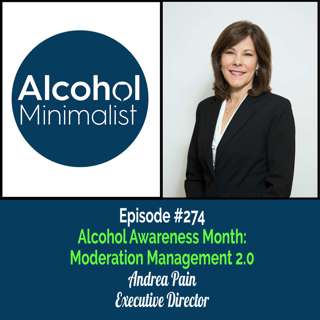
Alcohol Awareness Month:  Moderation Management 2.0 with Andrea Pain, Executive Director

Alcohol Awareness Month: Moderation Management 2.0 with Andrea Pain, Executive Director

In this episode of The Alcohol Minimalist Podcast, Molly talks with Andrea Pain, Executive Director of Moderation Management, about alcohol support options for people who want to drink less, explore m...

6 Huhti 41min
Revisiting: Think Thursday-The Neuroscience of New Habit Formation

Revisiting: Think Thursday-The Neuroscience of New Habit Formation

In this revisited Think Thursday episode, Molly explains why March may be a better time than January to build lasting habits. If your New Year’s goals have faded, this conversation offers a science-ba...

2 Huhti 18min

Why Your Partner Doesn't Have to Change for You to Change Your Drinking with Matt Wing

Why Your Partner Doesn't Have to Change for You to Change Your Drinking with Matt Wing

What happens when you want to drink less—but your partner doesn’t?In this episode, Molly talks with midlife sobriety coach Matt Wing about how to change your relationship with alcohol, even when your ...

30 Maalis 40min

Think Thursday: The Zeigarnik Effect: Why Your Brain Won’t Let Things Go

Think Thursday: The Zeigarnik Effect: Why Your Brain Won’t Let Things Go

Episode SummaryWhy does your brain keep bringing things back up—especially when you’re trying to relax?In this Think Thursday episode, Molly expands on the Zeigarnik Effect, a psychological principle ...

26 Maalis 9min

Suosittua kategoriassa Koulutus

rss-murhan-anatomia
psykopodiaa-podcast
voi-hyvin-meditaatiot-2
adhd-podi
rss-rahamania
rss-valo-minussa-2
rss-luonnollinen-synnytys-podcast
rss-liian-kuuma-peruna
rss-narsisti
rahapuhetta
kesken
ihminen-tavattavissa-tommy-hellsten-instituutti
rss-tietoinen-yhteys-podcast-2
rss-arkea-ja-aurinkoa-podcast-espanjasta
rss-niinku-asia-on
aamukahvilla
dear-ladies
filocast-filosofian-perusteet
rss-vapaudu-voimaasi
rss-ammattipuhuja