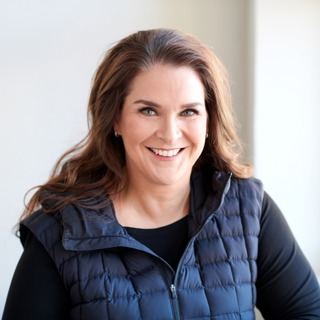
#217 – Beth Barnes on the most important graph in AI right now — and the 7-month rule that governs its progress

#217 – Beth Barnes on the most important graph in AI right now — and the 7-month rule that governs its progress

AI models today have a 50% chance of successfully completing a task that would take an expert human one hour. Seven months ago, that number was roughly 30 minutes — and seven months before that, 15 minutes. (See graph.)

These are substantial, multi-step tasks requiring sustained focus: building web applications, conducting machine learning research, or solving complex programming challenges.

Today’s guest, Beth Barnes, is CEO of METR (Model Evaluation & Threat Research) — the leading organisation measuring these capabilities.

Links to learn more, video, highlights, and full transcript: https://80k.info/bb

Beth's team has been timing how long it takes skilled humans to complete projects of varying length, then seeing how AI models perform on the same work. The resulting paper “Measuring AI ability to complete long tasks” made waves by revealing that the planning horizon of AI models was doubling roughly every seven months. It's regarded by many as the most useful AI forecasting work in years.

Beth has found models can already do “meaningful work” improving themselves, and she wouldn’t be surprised if AI models were able to autonomously self-improve as little as two years from now — in fact, “It seems hard to rule out even shorter [timelines]. Is there 1% chance of this happening in six, nine months? Yeah, that seems pretty plausible.”

Beth adds:

The sense I really want to dispel is, “But the experts must be on top of this. The experts would be telling us if it really was time to freak out.” The experts are not on top of this. Inasmuch as there are experts, they are saying that this is a concerning risk. … And to the extent that I am an expert, I am an expert telling you you should freak out.


What did you think of this episode? https://forms.gle/sFuDkoznxBcHPVmX6


Chapters:

  • Cold open (00:00:00)
  • Who is Beth Barnes? (00:01:19)
  • Can we see AI scheming in the chain of thought? (00:01:52)
  • The chain of thought is essential for safety checking (00:08:58)
  • Alignment faking in large language models (00:12:24)
  • We have to test model honesty even before they're used inside AI companies (00:16:48)
  • We have to test models when unruly and unconstrained (00:25:57)
  • Each 7 months models can do tasks twice as long (00:30:40)
  • METR's research finds AIs are solid at AI research already (00:49:33)
  • AI may turn out to be strong at novel and creative research (00:55:53)
  • When can we expect an algorithmic 'intelligence explosion'? (00:59:11)
  • Recursively self-improving AI might even be here in two years — which is alarming (01:05:02)
  • Could evaluations backfire by increasing AI hype and racing? (01:11:36)
  • Governments first ignore new risks, but can overreact once they arrive (01:26:38)
  • Do we need external auditors doing AI safety tests, not just the companies themselves? (01:35:10)
  • A case against safety-focused people working at frontier AI companies (01:48:44)
  • The new, more dire situation has forced changes to METR's strategy (02:02:29)
  • AI companies are being locally reasonable, but globally reckless (02:10:31)
  • Overrated: Interpretability research (02:15:11)
  • Underrated: Developing more narrow AIs (02:17:01)
  • Underrated: Helping humans judge confusing model outputs (02:23:36)
  • Overrated: Major AI companies' contributions to safety research (02:25:52)
  • Could we have a science of translating AI models' nonhuman language or neuralese? (02:29:24)
  • Could we ban using AI to enhance AI, or is that just naive? (02:31:47)
  • Open-weighting models is often good, and Beth has changed her attitude to it (02:37:52)
  • What we can learn about AGI from the nuclear arms race (02:42:25)
  • Infosec is so bad that no models are truly closed-weight models (02:57:24)
  • AI is more like bioweapons because it undermines the leading power (03:02:02)
  • What METR can do best that others can't (03:12:09)
  • What METR isn't doing that other people have to step up and do (03:27:07)
  • What research METR plans to do next (03:32:09)

This episode was originally recorded on February 17, 2025.

Video editing: Luke Monsour and Simon Monsour
Audio engineering: Ben Cordell, Milo McGuire, Simon Monsour, and Dominic Armstrong
Music: Ben Cordell
Transcriptions and web: Katy Moore

Jaksot(320)

#94 – Ezra Klein on aligning journalism, politics, and what matters most

#94 – Ezra Klein on aligning journalism, politics, and what matters most

How many words in U.S. newspapers have been spilled on tax policy in the past five years? And how many words on CRISPR? Or meat alternatives? Or how AI may soon automate the majority of jobs? When p...

20 Maalis 20211h 45min
#93 – Andy Weber on rendering bioweapons obsolete & ending the new nuclear arms race

#93 – Andy Weber on rendering bioweapons obsolete & ending the new nuclear arms race

COVID-19 has provided a vivid reminder of the power of biological threats. But the threat doesn't come from natural sources alone. Weaponized contagious diseases — which were abandoned by the United S...

12 Maalis 20211h 54min

#92 – Brian Christian on the alignment problem

#92 – Brian Christian on the alignment problem

Brian Christian is a bestselling author with a particular knack for accurately communicating difficult or technical ideas from both mathematics and computer science. Listeners loved our episode abo...

5 Maalis 20212h 55min

#91 – Lewis Bollard on big wins against factory farming and how they happened

#91 – Lewis Bollard on big wins against factory farming and how they happened

I suspect today's guest, Lewis Bollard, might be the single best person in the world to interview to get an overview of all the methods that might be effective for putting an end to factory farming an...

15 Helmi 20212h 33min

Rob Wiblin on how he ended up the way he is

Rob Wiblin on how he ended up the way he is

This is a crosspost of an episode of the Eureka Podcast. The interviewer is Misha Saul, a childhood friend of Rob's, who he has known for over 20 years. While it's not an episode of our own show, we...

3 Helmi 20211h 57min

#90 – Ajeya Cotra on worldview diversification and how big the future could be

#90 – Ajeya Cotra on worldview diversification and how big the future could be

You wake up in a mysterious box, and hear the booming voice of God: “I just flipped a coin. If it came up heads, I made ten boxes, labeled 1 through 10 — each of which has a human in it. If it ca...

21 Tammi 20212h 59min

Rob Wiblin on self-improvement and research ethics

Rob Wiblin on self-improvement and research ethics

This is a crosspost of an episode of the Clearer Thinking Podcast: 022: Self-Improvement and Research Ethics with Rob Wiblin. Rob chats with Spencer Greenberg, who has been an audience favourite in...

13 Tammi 20212h 30min

#73 - Phil Trammell on patient philanthropy and waiting to do good [re-release]

#73 - Phil Trammell on patient philanthropy and waiting to do good [re-release]

Rebroadcast: this episode was originally released in March 2020. To do good, most of us look to use our time and money to affect the world around us today. But perhaps that's all wrong. If you too...

7 Tammi 20212h 41min

Suosittua kategoriassa Koulutus

rss-murhan-anatomia
psykopodiaa-podcast
rss-narsisti
voi-hyvin-meditaatiot-2
aamukahvilla
rss-vapaudu-voimaasi
psykologia
rss-liian-kuuma-peruna
dear-ladies
leveli
adhd-podi
kesken
rss-duodecim-lehti
aloita-meditaatio
ihminen-tavattavissa-tommy-hellsten-instituutti
rss-koira-haudattuna
rahapuhetta
ilona-rauhala
rss-niinku-asia-on
rss-luonnollinen-synnytys-podcast