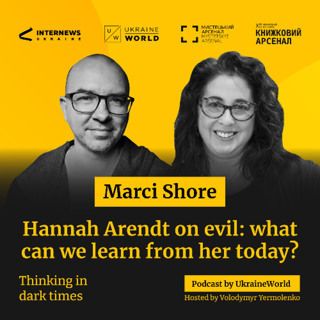
Hannah Arendt on evil: what can we learn from her today? - with Marci Shore
Explaining Ukraine20 Kesä 2025

Hannah Arendt on evil: what can we learn from her today? - with Marci Shore

Some might argue that the concept of evil is outdated in our relativistic age. And yet—how can we speak of war crimes, cruelty, or the neglect of human dignity without invoking the word evil? Perhaps it’s time to take it seriously again, to revisit the thinkers who have grappled with its meaning. One of them, of course, is Hannah Arendt. This is a conversation about Hannah Arendt and the concept of evil, which took place in Kyiv, the capital of Ukraine, on June 1st, at the Kyiv Book Arsenal—one of the country’s major literary events. Despite the ongoing war, the fair was full of people. My guest was Marci Shore, an American intellectual, historian, and university professor. She specializes in 20th-century European intellectual history, with a particular focus on Hannah Arendt. This year, Marci co-curated the Kyiv Book Arsenal’s focus topic, alongside Oksana Forostyna. My name is Volodymyr Yermolenko. I’m a Ukrainian philosopher, the editor-in-chief of UkraineWorld, and the president of PEN Ukraine. UkraineWorld is an English language media outlet about Ukraine run by Internews Ukraine, one of the country’s leading media NGOs. *** You can support our work at https://www.patreon.com/c/ukraineworld Your support is vital, as we increasingly rely on crowdfunding. Even a small monthly donation can make a big difference. You can also help fund our regular volunteer trips to Ukraine’s front-line areas, where we provide aid to both soldiers and civilians—mainly by delivering vehicles for the military and books for local communities. To support these efforts, you can donate via PayPal at ukraine.resisting@gmail.com. *** Contents: 00:00 Intro 01:18 Support our work 04:44 Why is Hannah Arendt essential to understanding the 20th and 21st centuries? 06:16 What is Hannah Arendt's concept of 'radical evil'? 07:48 How are people made superfluous? 10:12 How has World War II shaped Arendt’s thought? 17:17 From “radical evil” to the “banality of evil”: connecting Arendt’s key concepts. 26:34 Marci Shore on the current situation in America 30:46 Thoughts on human dignity 32:14 Is the idea that 'everyone is replaceable' starting to repeat itself? 34:49 Why Sartre’s idea of “nothingness” might be dangerous? 42:14 Hannah Arendt: vita activa versus vita contemplativa 50:15 Outro

Tämä jakso on lisätty Podme-palveluun avoimen RSS-syötteen kautta eikä se ole Podmen omaa tuotantoa. Siksi jakso saattaa sisältää mainontaa.

Jaksot(428)

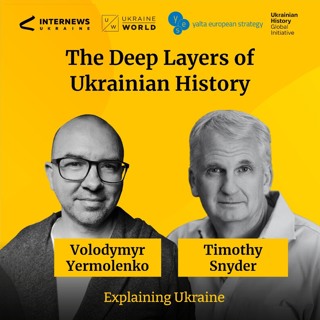
Timothy Snyder on the Deep Layers of Ukrainian History

Timothy Snyder on the Deep Layers of Ukrainian History

Studying Ukrainian history can be far more fascinating than you might think. It can reveal deeper layers of our past than we ever imagined and help us better understand the history of humanity as a wh...

23 Syys 44min
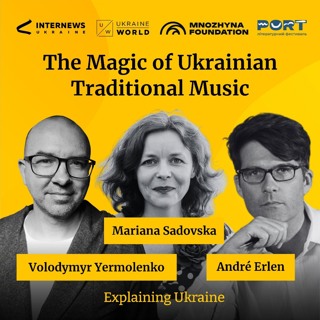
The Magic of Ukrainian Traditional Music - with Mariana Sadovska and André Erlen

The Magic of Ukrainian Traditional Music - with Mariana Sadovska and André Erlen

Ukrainian traditional music has preserved one of the richest traditions of polyphonic singing in the world. It has survived centuries of oppression, oblivion, marginalisation, and even physical exterm...

17 Syys 46min
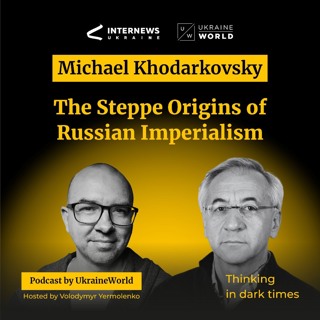
The Steppe Origins of Russian Imperialism - with Michael Khodarkovsky

The Steppe Origins of Russian Imperialism - with Michael Khodarkovsky

How did the vastness of the Eurasian steppe shape the political model of Russian imperialism? What does the Russian Empire have in common with other Eurasian empires — the Ottoman, Persian, Mughal, Ch...

28 Elo 56min
The War, Without Illusions - with Andriy Zagorodnyuk

The War, Without Illusions - with Andriy Zagorodnyuk

How can Ukraine protect itself against Russia’s ballistic missile threat? What role can Europe play, particularly through joint production? Can Ukraine develop its own anti-ballistic missile? And who ...

20 Elo 47min
Unmasking Russian Propaganda - with Thomas Kent

Unmasking Russian Propaganda - with Thomas Kent

Why should we take Russian propaganda seriously? Why is it so deeply rooted in Russia’s authoritarian vision of society and politics? What lessons can we learn from Russia’s war against Ukraine about ...

13 Elo 47min
What You Need to Know About Ukrainian Society - with Maryna Starodubska

What You Need to Know About Ukrainian Society - with Maryna Starodubska

What values define Ukrainian society? How accurate is it to say that Ukrainians have high levels of horizontal trust—trust in one another—but low trust in public institutions? How should we understand...

17 Heinä 44min
What Are the Hidden Risks of a Ceasefire? We Asked Chatham House Experts

What Are the Hidden Risks of a Ceasefire? We Asked Chatham House Experts

When people look at this war from the outside, they often ask one question: When will it end? Many assume that if a ceasefire is reached, the war will be over and life will return to normal. But we s...

9 Heinä 51min
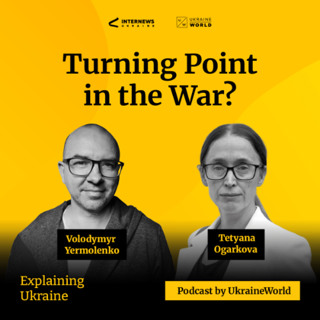
Is the War Approaching a Turning Point? - with Tetyana Ogarkova

Is the War Approaching a Turning Point? - with Tetyana Ogarkova

Many things have changed this year. Ukraine is now striking targets deep inside Russian territory on a regular basis. Russia’s traditional strengths—its vast territory and abundant resources—are incre...

2 Heinä 36min
Suosittua kategoriassa Politiikka ja uutiset

uutiscast
vallattomat
aikalisa
politiikan-puskaradio
rss-viihde-media
ootsa-kuullut-tasta-2
rss-ootsa-kuullut-tasta
rss-vaalirankkurit-podcast
tervo-halme
rss-voi-venaja
otetaan-yhdet
et-sa-noin-voi-sanoo-esittaa
rss-ulkopoditiikkaa
rss-podme-livebox
rss-asiastudio
rikosmyytit
the-ulkopolitist
rss-raha-talous-ja-politiikka
rss-kaikki-uusiksi
aihe