Weill: The Seven Deadly Sins

Weill: The Seven Deadly Sins

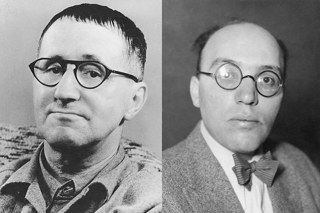
The collaboration between Kurt Weill and Bertolt Brecht is rightly legendary. The two men could not have been more different from each other, and like the Brahms/Joachim relationship I mentioned in my recent show about the Brahms Double concerto, the friendship between Weill and Brecht was stormy to say the least. The two collaborated on some of the most memorable works of the Weimar era in Germany, such as the Threepenny Opera, which features a pretty famous tune called Mack the Knife.

Their final collaboration was on the "sung ballet" The Seven Deadly Sins. This is a piece that was written at a point of remarkably high tension within Weimar Germany. On an artistic level, the 1920s and early 1930s had seen a veritable explosion in the world of culture, with art, dance, theater, and music all featuring artists who were pushing the boundaries with wild experimentation and a kind of ecstatic fervor that produced some of the world's greatest and most memorable cultural achievements. On a parallel track however, the rise of the Nazis cast a pall over all of this. By 1933, both Brecht and Weill(who was Jewish) knew that Germany was not a place that they could stay safely. Weill ended up in Paris and then in the US for the rest of his life, while Brecht bounced around Europe before returning to East Germany after the war, hoping to be a part of the Marxist Utopia that he believed had been founded there. The simmering combination of Weill's mastery of transforming popular forms into a unique kind of classical music along with Brecht's pointed satire and brilliantly inventive libretti resulted in the Seven Deadly Sins, a piece that that brutally satirizes extreme capitalism and the degradation of the human soul that supposedly results from it. This is a nakedly political piece, and I should make it clear that by talking about it, by choosing to feature it on the show, and by regularly performing it, I don't necessarily endorse its views. Brecht was extreme in all ways, as we'll get to today, and the power of this piece in my opinion doesn't come from its politics, but from its remarkable and devastating portrayal of a human soul and the tragedies that can befall it. This is one of my favorite pieces of the whole 20th century, and I'm so happy to share it with you today. Join us!

Jaksot(283)

R. Schumann Piano Concerto

R. Schumann Piano Concerto

In January of 1839, Clara Wieck, Robert's future wife, wrote to Robert, "Don't take it amiss if I tell you that I've been seized by the desire to encourage you to write for orchestra. Your imagination...

2 Marras 202348min
Brahms Violin Concerto

Brahms Violin Concerto

Brahms' violin concerto is one of the most difficult works for any violinist to tackle. It is as virtuosic as the hardest piece of Paganini as well as being as musically complex as a Brahms symphony. ...

26 Loka 202350min
What Does Music Mean?

What Does Music Mean?

Today is a bit of an unusual episode. Last month I was invited by the British Society of Aesthetics to address their annual conference. My task was to give a lecture on whatever topic I wanted, having...

19 Loka 202352min
William Grant Still Symphony No. 1., "Afro-American"

William Grant Still Symphony No. 1., "Afro-American"

On October 29th, 1931, The Rochester Philharmonic presented the world premiere of a new symphony by the composer William Grant Still. A symphonic premiere is always something to look out for in musica...

12 Loka 20231h 6min
(Part 2) - The Music of World War II and the Holocaust with "Time's Echo" writer Jeremy Eichler

(Part 2) - The Music of World War II and the Holocaust with "Time's Echo" writer Jeremy Eichler

This is another episode where I highly recommend listening to Part 1 from last week before listening to this episode! It was a great honor to speak with the critic and cultural historian Jeremy Eichle...

5 Loka 202355min

The Music of World War II and the Holocaust with "Time's Echo" writer Jeremy Eichler (Part 1)

The Music of World War II and the Holocaust with "Time's Echo" writer Jeremy Eichler (Part 1)

I had the great pleasure and honor this week(and next week) to speak with the author of the new book Time's Echo Jeremy Eichler. The book chronicles four composers and their varied reactions to World ...

28 Syys 202357min
Mahler Symphony No. 4, Part 2

Mahler Symphony No. 4, Part 2

If you haven't listened to Part 1 of this episode about Mahler's 4th symphony, I highly recommend doing that, as every movement of this symphony builds to the "Heavenly Life" of the last movement. On ...

21 Syys 202359min
Mahler Symphony No. 4, Part 1

Mahler Symphony No. 4, Part 1

After the truly heavenly slow movement of Mahler's 4th symphony, a soprano emerges and sings a song literally called "The Heavenly Life." It is a symphonic ending like no other, one that leaves the li...

14 Syys 202351min

Suosittua kategoriassa Viihde

anni-jaajo
tuplakaak
grekovit
hei-baby-3
terveisia-perheesta
the-harlin-show
antin-palautepalvelu
dear-shirly
bella-table
antin-elokuvakerho
dear-shirly-ja-arttu
verhon-takaa
nonsensepodi
get-jassud
ootsa-kuullut-tasta-2
tahtitehdas
hollywood-love-stories-2
tervo-halme
everypodi
rss-wivolinin-viisukevat