The Zombie Cat, The Runaway Trolley, and Einstein’s Elevator: How to Master Your Mind with Thought Experiments

The Zombie Cat, The Runaway Trolley, and Einstein’s Elevator: How to Master Your Mind with Thought Experiments

00:00:26 Welcome back to Social Skills Coaching with Patrick King.

00:02:26 Thinking About Thinking

00:11:42 The Problem of the Runaway Trolley

00:16:16 The Zombie Cat

00:20:15 Physics First

00:25:27 Takeaways


Learn To Think Using Thought Experiments: How to Expand Your Mental Horizons, Understand Metacognition, Improve Your Curiosity, and Think Like a Philosopher (Clear Thinking and Fast Action Book 5) By Patrick King


Hear it Here - https://bit.ly/ThoughtExpKing


The Zombie Cat, The Runaway Trolley, and Einstein’s Elevator: How to Master Your Mind with Thought Experiments


Welcome to a journey into the deepest corners of your mind, inspired by the groundbreaking book, "Learn to Think Using Thought Experiments: How to Expand Your Mental Horizons, Understand Metacognition, Improve Your Curiosity, and Think Like a Philosopher." In this video, we're going to explore the incredible power of gedankenexperiments, or thought experiments, and how they can fundamentally change the way you think.


Do you want to unlock your creativity, sharpen your critical thinking skills, and foster a deeper sense of curiosity? Thought experiments are powerful mental tools used by the greatest minds in history, from Albert Einstein and Isaac Newton to Werner Heisenberg and Niels Bohr. They are mental simulations designed to explore the implications and consequences of a hypothesis without a real-world setup. They force you to confront your assumptions and challenge your preconceived notions. It's the ultimate exercise in problem solving.


Think about Isaac Newton's cannon: he imagined a cannonball fired from a mountain to understand orbital mechanics. This simple hypothetical laid the groundwork for our understanding of gravity. Or consider Schrödinger's cat, the "zombie cat" paradox proposed by Erwin Schrödinger. He used this bizarre scenario not to suggest a cat could be both alive and dead, but to highlight the strange interpretation of quantum mechanics. It's a brilliant example of using an outlandish idea to provoke deeper inquiry.


The most famous moral dilemma of all is the trolley problem. You see a runaway trolley speeding toward five people. You can pull a lever to divert it, killing only one person. This scenario has no easy answer; it's designed to make you examine your own ethical frameworks and understand concepts of responsibility.


The book "Learn to Think Using Thought Experiments" by Patrick King is a comprehensive guide to mastering this invaluable skill. It’s a practical guide to using these mental tools for your own cognitive development and intellectual growth. You'll learn how to create your own thought experiments and use them to improve everything from your career to your personal relationships. Imagine using a thought experiment to test a new business idea or to make a difficult life decision. The book equips you with the tools for these mental simulations.


The book delves into a wide range of thought experiments, from those of physicists like Werner Heisenberg and Niels Bohr to philosophical puzzles that challenge our understanding of consciousness and free will. It even touches on concepts from other fields, such as the famous Geiger counter, used in a way to illustrate randomness and probability.


This isn't about memorizing facts; it's about cultivating metacognition—the ability to think about your own thinking. By using thought experiments, you learn to question everything, explore every possibility, and think like a philosopher. You'll move beyond simple facts and into the realm of deeper understanding, honing your imagination and learning to see the world not just as it is, but as it could be.


If you’re ready to expand your mental horizons, improve your problem-solving skills, and ignite your curiosity, grab a copy of "Learn to Think Using Thought Experiments" by Patrick King. This video is just the beginning. The book is the manual that will equip you with the tools to master your mind and unleash your full intellectual potential.


#LearnToThinkUsingThoughtExperiments #PatrickKing #ThoughtExperiment #CriticalThinking #Metacognition #ProblemSolving #Curiosity #Creativity #IntellectualGrowth #CognitiveDevelopment #Philosopher #Philosophy #Gedankenexperiments #Schrödinger #SchrödingersCat #ZombieCat #TrolleyProblem #RunawayTrolley #MoralDilemmas #IsaacNewton #NewtonsCannon #AlbertEinstein #WernerHeisenberg #NielsBohr #Bohr #Heisenberg #Hypotheticals #Assumptions #Implications #Consequences #Simulations #Interpretation #Geiger


Tämä jakso on lisätty Podme-palveluun avoimen RSS-syötteen kautta eikä se ole Podmen omaa tuotantoa. Siksi jakso saattaa sisältää mainontaa.

Jaksot(244)

Why Your Questions Keep Conversations Shallow

Why Your Questions Keep Conversations Shallow

Tired of small talk? Want to move past surface-level chats and actually connect with people? Learn how to ask better questions that make people feel valued and eager to share. Patrick King shares spec...

11 Elo 24min

Awkward Silences Aren't the Problem — Running Out of Things to Say Is

Awkward Silences Aren't the Problem — Running Out of Things to Say Is

You're mid-conversation and suddenly—silence. If social anxiety creeps in when talk stalls, conversation threading fixes that. This is the practical technique for asking connected questions that keep ...

16 Heinä 39min
Follow-Up Questions That Make People Want to Keep Talking

Follow-Up Questions That Make People Want to Keep Talking

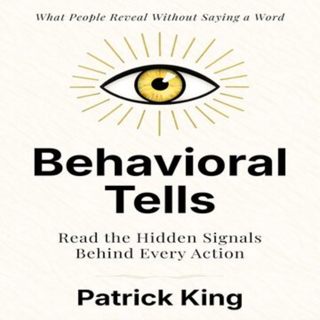
00:01:00 Chunking Up and Chunking Down 00:10:27 We’ve discussed a few methods 00:14:51 Let's summarize these with the primary takeaways from this episode. Behavioral Tells: Read the Hidden Signals Be...

1 Heinä 15min

Why Your Questions Are Making People Like You Less

Why Your Questions Are Making People Like You Less

00:00:54 The Art of Asking the Right Questions 00:01:51 The Kipling Method 00:08:38 Assumptive Questions 00:12:29 Here are the main takeaways from today's episode. Behavioral Tells: Read the Hidden S...

24 Kesä 13min

How To Spot A Fake Friend By Noticing The Baseline Shift

How To Spot A Fake Friend By Noticing The Baseline Shift

Unlock the hidden code behind human behavior—before it costs you opportunities, relationships, and influence.Most people think they’re good at reading others. They’re not. They project, assume, and mi...

15 Kesä 25min
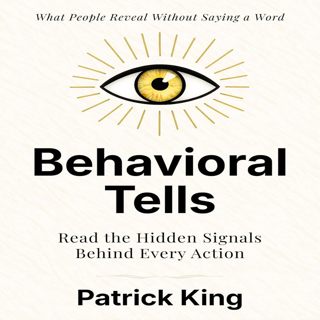
The Power of Gaze: Decoding Dominance and Flow in Group Dynamics

The Power of Gaze: Decoding Dominance and Flow in Group Dynamics

00:00:27 Behavioral Tells is the new book from Patrick King. 00:01:23 Watch Where Attention Flows 00:03:03 The VDR is a way to visualize attention 00:09:32 Understanding “Group Flow” 00:18:32 Here are...

11 Kesä 19min

Why You Can't Always Trust Facial Expressions

Why You Can't Always Trust Facial Expressions

00:01:04 Why You Can’t Always Trust Facial Expressions00:07:25 Let's take a look at the main takeaways from today's episode.Behavioral Tells: Read the Hidden Signals Behind Every Action. What People R...

1 Kesä 8min
Vulnerability's Timing: Share, Don't Spill

Vulnerability's Timing: Share, Don't Spill

Unlock the secret to becoming more likable by mastering vulnerability's timing in our latest episode! You'll learn how to share modest pieces of your truth that align perfectly with the conversation a...

11 Touko 6min

Suosittua kategoriassa Koulutus

rss-murhan-anatomia
psykopodiaa-podcast
voi-hyvin-meditaatiot-2
adhd-podi
rss-liian-kuuma-peruna
rss-vapaudu-voimaasi
psykologia
rss-niinku-asia-on
kesken
leikitaanko-laakaria
rss-narsisti
koulu-podcast-2
puhutaan-koiraa
rss-eron-alkemiaa
solu-ja-molekyylibiologian-perusteet
rss-koira-haudattuna
rss-duodecim-lehti
rss-hereilla
ilona-rauhala
jari-sarasvuo-podcast