54. Dr. Michele Gelfand — Rule Makers, Rule Breakers: How Tight and Loose Cultures Wire Our World

54. Dr. Michele Gelfand — Rule Makers, Rule Breakers: How Tight and Loose Cultures Wire Our World

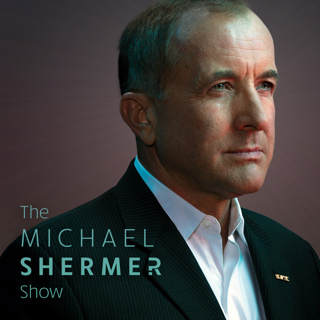
In this wide-ranging conversation Dr. Shermer talks with the author of the new book, Rule Makers, Rule Breakers: How Tight and Loose Cultures Wire Our World, Dr. Michele Gelfand, Distinguished University Professor of Psychology at the University of Maryland, College Park. Her pioneering research into cultural norms has been cited thousands of times in the press, including the New York Times, Washington Post, Harvard Business Review, and Science, and on NPR. As a cultural psychologist, Dr. Gelfand takes us on an epic journey through human cultures, offering a startling new view of the world and ourselves. With a mix of brilliantly conceived studies and surprising on-the-ground discoveries, she shows that much of the diversity in the way we think and act derives from a key difference—how tightly or loosely we adhere to social norms.

Why are clocks in Germany so accurate while those in Brazil are frequently wrong? Why do New Zealand's women have the highest number of sexual partners? Why are "Red" and "Blue" States really so divided? Why is the driver of a Jaguar more likely to run a red light than the driver of a plumber's van? Why does one spouse prize running a "tight ship" while the other refuses to "sweat the small stuff?"

In search of a common answer, Gelfand has spent two decades conducting research in more than fifty countries. Across all age groups, family variations, social classes, businesses, states and nationalities, she's identified a primal pattern that can trigger cooperation or conflict. Her fascinating conclusion: behavior is highly influenced by the perception of threat.

Dr. Shermer and Dr. Gelfand discuss these and other interesting topics:

  • examples of tightness and looseness in everything from parenting to international politics
  • the motivation of suicide terrorists
  • globalization and why it has been so disruptive
  • Trump and why he won
  • how Liberals and Conservatives think
  • why gum is not allowed in Singapore but guns are allowed in America
  • lessons from Jack Nickolson's speech in A Few Good Men
  • George Lakoff's theory of moral politics and how that relates to tightness-looseness
  • Jonathan Haidt's theory of moral foundations and how that relates to tightness-looseness
  • Alan Fiske's Relational Models theory and how that relates to tightness-looseness.

Listen to Science Salon via iTunes, Spotify, Google Play Music, Stitcher, iHeartRadio, TuneIn, and Soundcloud.

This Science Salon was recorded on February 13, 2019.

You play a vital part in our commitment to promote science and reason. If you enjoy the Science Salon Podcast, please show your support by making a donation, or by becoming a patron.

Tämä jakso on lisätty Podme-palveluun avoimen RSS-syötteen kautta eikä se ole Podmen omaa tuotantoa. Siksi jakso saattaa sisältää mainontaa.

Jaksot(628)

Why I Joined the Government UAP Science Advisory Council

Why I Joined the Government UAP Science Advisory Council

Michael Shermer has been appointed to the newly formed UAP Science Advisory Council, formed at the request of the White House and in coordination with the All-domain Anomaly Resolution Office (AARO), ...

23 Kesä 29min

Massimo Pigliucci on Doubt, Moral Courage, and Living Without Illusions

Massimo Pigliucci on Doubt, Moral Courage, and Living Without Illusions

What does it mean to live well when certainty is unavailable? Michael Shermer speaks with Massimo Pigliucci about moral character, ancient philosophy, and the difficult art of making decisions without...

20 Kesä 1h 33min

Cathy Young: Why Free Societies Need Free Speech

Cathy Young: Why Free Societies Need Free Speech

Cathy Young returns to the show for a wide-ranging conversation about free speech, institutional trust, and the strange incentives shaping public debate today. What happens when universities, media ou...

16 Kesä 1h 30min

The Zodiac Killer Wasn't Real

The Zodiac Killer Wasn't Real

The Zodiac Killer has been treated for decades as America's ultimate unsolved true crime mystery: one mysterious killer, taunting letters, cryptic ciphers, a strange costume, and a trail of victims ac...

13 Kesä 1h 39min

How Algorithms Use Your Data to Control You

How Algorithms Use Your Data to Control You

Michael Shermer speaks with Oxford philosopher Carissa Véliz about the long human desire to know the future—from ancient oracles and astrology to AI, surveillance capitalism, predictive policing, and ...

9 Kesä 1h 34min

Batya Ungar-Sargon: Why the Left Sees Jews Differently Now

Batya Ungar-Sargon: Why the Left Sees Jews Differently Now

Batya Ungar-Sargon joins Michael Shermer for a wide-ranging conversation about the historical relationship between Jews and the American left, and why that relationship has become increasingly straine...

6 Kesä 54min

From Equality to Equity: How Social Justice Becomes Ideology

From Equality to Equity: How Social Justice Becomes Ideology

Jon Mills, a philosopher, psychoanalyst, and clinical psychologist, joins Michael Shermer to discuss how social justice ideology has moved from a concern with fairness and equal treatment into a rigid...

3 Kesä 58min

Can Science Fix Criminal Justice?

Can Science Fix Criminal Justice?

America's criminal justice debate usually gets reduced to two options: abolish the system or lock everyone up forever. Economist Jennifer Doleac thinks the data point somewhere else entirely. In this ...

29 Touko 1h 6min

Suosittua kategoriassa Tiede

hippokrateen-vastaanotolla
rss-mita-tulisi-tietaa
tiedekulma-podcast
rss-hereilla
utelias-mieli
docemilia
rss-totuuden-liepeilla
sotataidon-ytimessa
radio-antro
filocast-filosofian-perusteet
rss-vaasan-yliopiston-podcastit
rss-poliisin-mieli
rss-duodecim-lehti
rss-ammamafia
rss-laakaripodi
rss-jyvaskylan-yliopisto
rss-kasvikutsut