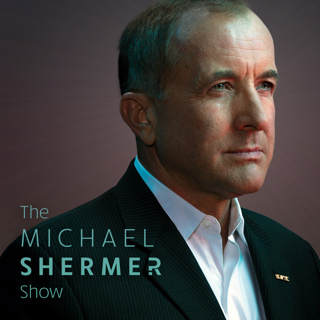
260. Batya Ungar-Sargon — Bad News: How Woke Media Is Undermining Democracy

260. Batya Ungar-Sargon — Bad News: How Woke Media Is Undermining Democracy

Something is wrong with American journalism. Long before "fake news" became the calling card of the Right, Americans had lost faith in their news media. But lately, the feeling that something is off has become impossible to ignore. That's because the majority of our mainstream news is no longer just liberal; it's woke. Today's newsrooms are propagating radical ideas that were fringe as recently as a decade ago, including "antiracism," intersectionality, open borders, and critical race theory. How did this come to be? It all has to do with who our news media is written by — and who it is written for.

Michael Shermer speaks with Batya Ungar-Sargon about her new book Bad News: How Woke Media Is Undermining Democracy in which she reveals how American journalism underwent a status revolution over the twentieth century — from a blue-collar trade to an elite profession. As a result, journalists shifted their focus away from the working class and toward the concerns of their affluent, highly educated peers.

Ungar-Sargon avers that, in abandoning the working class by creating a culture war around identity, our national media is undermining American democracy.

Tämä jakso on lisätty Podme-palveluun avoimen RSS-syötteen kautta eikä se ole Podmen omaa tuotantoa. Siksi jakso saattaa sisältää mainontaa.

Jaksot(639)

Why Be Honest When Cheating Pays?

Why Be Honest When Cheating Pays?

Most of us think of ourselves as honest. But would we still tell the truth if lying got us what we wanted—and nobody would ever find out? Philosopher Christian Miller joins Michael Shermer to discuss ...

9 Syys 1h 45min

Is the Future Unknowable? Uncertainty, Free Will, and the Limits of Science

Is the Future Unknowable? Uncertainty, Free Will, and the Limits of Science

What if uncertainty isn't a temporary problem science will eventually solve, but a fundamental feature of reality? Neuroscientist Stuart Firestein joins Michael Shermer to make the case that the unive...

1 Syys 1h 23min

Why We Want to Believe in Aliens and Why We Still Haven't Found Them

Why We Want to Believe in Aliens and Why We Still Haven't Found Them

UFOs were once the stuff of tabloids and conspiracy theories. Today they're the subject of congressional hearings, Pentagon investigations, mainstream news coverage, and a new wave of claims about gov...

25 Elo 1h 13min

Is There a Second Arrow of Time? A New Law of Evolution, Information, and Complexity

Is There a Second Arrow of Time? A New Law of Evolution, Information, and Complexity

Why does the universe produce ever more elaborate forms, from atoms and minerals to cells, organisms, brains, technology, and civilization? The familiar laws of physics can explain much of what happen...

18 Elo 1h 18min

Why Good People Disagree About Right and Wrong

Why Good People Disagree About Right and Wrong

Why do reasonable people disagree so strongly about right and wrong? And why are we so quick to assume that people on the other side of a moral or political issue are irrational, selfish, ignorant, or...

11 Elo 1h 57min

Are We Building a God? AI, Superintelligence, and the Coming Singularity

Are We Building a God? AI, Superintelligence, and the Coming Singularity

Robert Wright joins Michael Shermer to discuss his new book, The God Test: Artificial Intelligence and Our Coming Cosmic Reckoning, and why he thinks the AI revolution may be moving much faster than m...

5 Elo 1h 22min

Can You Trust Wikipedia? Co-Founder Larry Sanger on Wikipedia's Bias and Why He Was Banned

Can You Trust Wikipedia? Co-Founder Larry Sanger on Wikipedia's Bias and Why He Was Banned

Michael Shermer speaks with Wikipedia co-founder Larry Sanger shortly after Sanger was permanently banned from editing the site he helped create. Sanger tells the story of Wikipedia's founding, how it...

30 Heinä 2h 3min

How to Think Clearly About a World in Crisis: Iran, China, Russia, and the West's Economic Pessimism

How to Think Clearly About a World in Crisis: Iran, China, Russia, and the West's Economic Pessimism

Michael Shermer speaks with political scientist Marlene Laruelle about Russia's turbulent transformation during the 1990s and the rise of Vladimir Putin, why the Kremlin so badly misjudged Ukraine, Ch...

18 Heinä 1h 4min

Suosittua kategoriassa Tiede

rss-mita-tulisi-tietaa
tiedekulma-podcast
rss-poliisin-mieli
utelias-mieli
rss-duodecim-lehti
hippokrateen-vastaanotolla
rss-totuuden-liepeilla
rss-kasvikutsut
rss-ruoka-murroksessa
mielipaivakirja
rss-sosiopodi
filocast-filosofian-perusteet
rss-tervetta-skeptisyytta
rss-lihavuudesta-podcast