Rani Bora - Innate Health and Resilience, How It Differs to Mainstream Psychiatric Treatment

Rani Bora - Innate Health and Resilience, How It Differs to Mainstream Psychiatric Treatment

This week, we interview Dr. Rani Bora.

Dr. Bora is a qualified Psychiatrist and Mental Health and Resilience Coach. She has studied a number of approaches to mental well-being – both traditional and non-traditional, and she focuses on holistic approaches to supporting people with their mental wellness.

Since deepening her own understanding of the paradigm of 'Innate Health and Resilience', she has committed herself to sharing this understanding in her coaching and training and has witnessed remarkable transformation in individuals whom she has supported.

In this interview we discuss Dr. Bora's background in psychiatry, how she came to move away from more traditional psychiatric approaches and the concept of innate health and resilience.

In this episode, we discuss:

How Dr. Bora graduated from medical school in 1997 and became interested in connecting with people leading to specialising in psychiatry

That Rani found working in India as a psychiatrist very different compared to the UK and there were very few community services with most services delivered in a hospital setting

That after working in the UK, Dr. Bora became interested in self help and personal development

That this led to training in parallel both as a psychiatrist and as a life coach studying Neuro Linguistic Programming (NLP), Emotional Freedom Techniques (EFT) and Narrative Coaching

That Rani came to see that using tools and techniques as a quick fix can be problematic, because difficulties can re-surface once people stop using the tools and techniques

That Innate health and resilience (also known as the three principles) is a new paradigm pointing to the health and wellbeing within all and how the mind works

That the three principles are mind, thought and consciousness

That Rani sees medication and mindfulness as tools but they don't really address the root cause of emotional distress

That having an understanding about how the mind works can help people to heal from emotional difficulties or trauma

That people are more resourceful than they think they are and Rani helps people to discover that resourcefulness within themselves

Rani's mentor, US Psychiatrist Dr. Bill Pettit, reminds us that a diagnosis doesn't define a person, only describes symptoms

That people experiencing mental health difficulties are not different to the rest of society, but medicine quite often labels and separates

Rani believes that "you cannot fail at being yourself"

That if people accept themselves with their perceived flaws and limitations and realise that these individual differences

are what make us unique and human, it means less judgement and self criticism

That Rani feels that we focus too much on what is lacking in people and on diseases and symptoms

That we also focus too much on mental illness rather than mental health

That Rani does work with clients who expect medication, but that she often finds other ways to work with people

That Rani wants to know the outcome people are looking for and often finds that the medical model has its limitation in helping people with their real needs in life

That Rani would like the research to focus more on empowering people and what helps people recover

That Rani feels that it's very important that we also focus on the health of those in the medical community who are supporting others, as the lack of resources can be associated with enormous strain and stress

That Rani would like people to reflect on the fact that they are not broken, even given what happened in the past or what diagnoses they have

There is something at the core of who we are that cannot be damaged by our experiences

To get in touch with us email: podcasts@madinamerica.com

© Mad in America 2017

Jaksot(290)

Examining Psychiatric Medication Tapering and Withdrawal: The Evolving Role of Pharmacists — A Conversation with Agnes Higgins and Cathal Cadogan

Examining Psychiatric Medication Tapering and Withdrawal: The Evolving Role of Pharmacists — A Conversation with Agnes Higgins and Cathal Cadogan

Welcome to the Mad in America podcast, my name is James. Today, we are discussing the experiences of people who have attempted to stop taking psychiatric drugs. These experiences are captured in a sur...

1 Huhti 32min
Spiritual Emergency and the Collective Work of Staying Alive: An Interview with Nisha Gupta

Spiritual Emergency and the Collective Work of Staying Alive: An Interview with Nisha Gupta

Nisha Gupta is an existential phenomenologist, a depth psychotherapist, a creativity scholar, and an artist. She's an Associate Professor of Psychology at the University of West Georgia and earned her...

25 Maalis 48min

The Political Systems Driving Abuse in Psychiatry: An Interview with Human Rights Lawyer Alicia Ely Yamin

The Political Systems Driving Abuse in Psychiatry: An Interview with Human Rights Lawyer Alicia Ely Yamin

Alicia Ely Yamin is the Director of the Global Health and Rights Project and a lecturer at Harvard Law School. She's also an adjunct senior lecturer on health policy and management at the Harvard T.H....

18 Maalis 45min
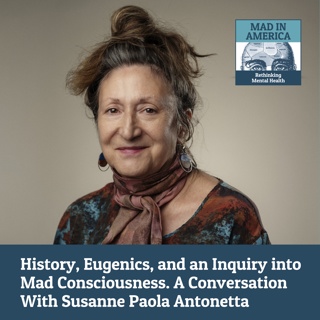
History, Eugenics, and an Inquiry into Mad Consciousness: A Conversation With Susanne Paola Antonetta

History, Eugenics, and an Inquiry into Mad Consciousness: A Conversation With Susanne Paola Antonetta

Susanne Paola Antonetta is an accomplished writer and poet, the author of numerous books, and in 2001 her book Body Toxic: An Environmental Memoir, won a prestigious American Book Award. Her latest bo...

11 Maalis 49min

How Our Blindness to Context Harms Patients and Breaks Practitioners: A Conversation With Kamaldeep Bhui

How Our Blindness to Context Harms Patients and Breaks Practitioners: A Conversation With Kamaldeep Bhui

Kamaldeep Bhui is Professor of Psychiatry at the University of Oxford and Honorary Professor at Queen Mary University of London. He is internationally recognized for his groundbreaking work on cultura...

4 Maalis 51min

UberTherapy and the Enshittification of our Relational Lives: Part 2 of our Interview with Elizabeth Cotton

UberTherapy and the Enshittification of our Relational Lives: Part 2 of our Interview with Elizabeth Cotton

Elizabeth Cotton is Associate Professor of Responsible Business at the University of Leicester and the founder of Surviving Work, which carries out socially engaged research on mental health and work....

18 Helmi 39min

UberTherapy and the Enshittification of our Relational Lives: Part 1 of our Interview with Elizabeth Cotton

UberTherapy and the Enshittification of our Relational Lives: Part 1 of our Interview with Elizabeth Cotton

Elizabeth Cotton is Associate Professor of Responsible Business at the University of Leicester and the founder of Surviving Work, which carries out socially engaged research on mental health and work....

11 Helmi 46min
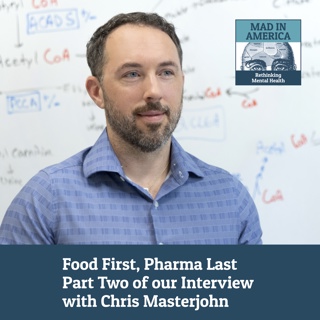
Food First, Pharma Last - Part Two of our Interview with Chris Masterjohn

Food First, Pharma Last - Part Two of our Interview with Chris Masterjohn

This week, we are joined by Chris Masterjohn, PhD. Chris is a nutritional scientist, a former professor, and the founder of Mitome. With a PhD in nutritional science and years of research in mitochond...

28 Tammi 44min

Suosittua kategoriassa Terveys ja hyvinvointi

unicast
psykopodiaa-podcast
voi-hyvin-meditaatiot-2
tiedenaiset-podcast
rss-pitaisko-erota
vakeva-elama-viisaampi-mieli-vahvempi-keho
meditaatiot-suomeksi
rss-narsisti
puhu-muru
junnut-pelissa
terapiassa
aamukahvilla
mielen-puolikkaat
rss-mighty-finland-podcast
rss-kuumilla-aalloilla
paritellen
rss-pt-paahtio
rss-adama-mindful-hetki
rss-en-saa-unta
rss-vapaudu-voimaasi