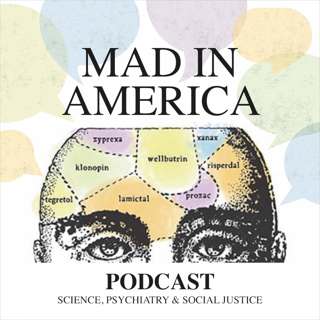
Irving Kirsch - The Placebo Effect and What It Tells Us About Antidepressant Efficacy

Irving Kirsch - The Placebo Effect and What It Tells Us About Antidepressant Efficacy

This week I have had the honour of interviewing Dr Irving Kirsch.

Dr Kirsch is Associate Director of the Program in Placebo Studies and lecturer in medicine at the Harvard Medical School and Beth Israel Deaconess Medical Center. He is also Professor Emeritus of Psychology at the University of Plymouth and the University of Hull in the UK and University of Connecticut in the US. He has published 10 books and more than 250 scientific journal articles and book chapters on placebo effects, antidepressant medication, hypnosis, and suggestion. He originated the concept of response expectancy. His meta-analyses on the efficacy of antidepressants were covered extensively in the international media and influenced official guidelines for the treatment of depression in the United Kingdom. His 2009 book, The Emperor's New Drugs: Exploding the Antidepressant Myth, was shortlisted for the prestigious Mind Book of the Year award and was the topic of 60 Minutes segment on CBS and a 5-page cover story in Newsweek.

In this interview, we discuss Dr Kirsch's research into the placebo effect and the efficacy of drugs used for depression.

In this episode we discuss:

  • How, as an undergraduate student, Dr Kirsch became interested in behavioural therapy but that he doubted the rationale behind these approaches
  • That this led to an interest in beliefs that people had and research into the placebo effect
  • How, while working at the University of Connecticut, his research into the placebo led to an interest in the efficacy of antidepressant drugs when compared to placebo
  • How his work led to the surprising conclusion that, were antidepressant drugs were concerned, the placebo effect was so large that there was very little room for a meaningful drug effect
  • How this changed Dr Kirsch's views on antidepressant drugs entirely, causing him to ask whether the risks were worth the small benefit for depressed patients
  • That a belief that a person has can affect their response to a drug either in a positive way (placebo) or in a negative way (nocebo)
  • Dr Kirsch found that there are many conditions that can show a profound placebo effect including depression, anxiety, irritable bowel syndrome, pain, Parkinson's disease and asthma
  • That the placebo tends to have a greater effect in conditions that have a large psychological component when compared to functional disorders such as diabetes
  • That placebo can have an effect even if the patient knows that they are taking an inactive tablet and that part of this response is down to classical conditioning
  • That Dr Kirsch is working on 'open-label placebo' which is being able to prescribe placebo to patients without deception
  • That Dr Kirsch used to refer depressed patients for antidepressant treatments, but that his research made him a disbeliever when looking at the evidence of efficacy when compared to placebo
  • How, when you give someone a new treatment, that often will counter feelings of hopelessness that characterise depressive experiences
  • That in looking at this size of this effect, it made clear that the difference between placebo response and antidepressant response was so small that it was not clinically significant
  • That even drugs with very different modes of action resulted in virtually identical responses in patients, for example, Tianeptine, which is an SSRE (selective serotonin reuptake enhancer) and decreases serotonin levels between neurons, this drug should make depressed people worse but instead, it showed the same efficacy as SSRI antidepressants
  • How, when looking at the clinical trials used to demonstrate antidepressant efficacy, it became clear that the obvious nature of antidepressant adverse effects meant that trial participants would often "break blind" and they would know if they were in the active drug group or the placebo group, this would naturally influence the results of the trial
  • That, in a small number of studies, an active placebo was used, which was a substance that mimicked the side effects of the active drug while having no clinical effect itself
  • That in these active placebo studies, you were much less likely to get a significant difference between drug and placebo when compared to trials that used an intern placebo
  • That the trials conducted by pharmaceutical manufacturers are designed to show their drug in the best possible light and so they do not use active placebo in their studies
  • That Dr Kirsch feels that when conducting trials for drugs used for depression, patients should be asked early on in the trial whether they think they are in the active group or the placebo group and that this question would help ensure the trials were reliable
  • How, when using the data from unpublished trials, the difference between placebo effect and drug effect was even smaller
  • How Dr Kirsch was pleased that other researchers found his conclusions controversial because it meant that they were paying attention to the study and that others who have replicated the approach have found similar results
  • That influencing clinicians to better balance risk vs benefit will take time and that we need to share the data and discuss the conclusions as much as we can to allow change to happen
  • That people do need help with depression and that there are many different interventions that are at least as effective as antidepressants but without the associated risk
  • How we can't infer that 'off-label' prescribing is effective until the studies have been undertaken for a particular disorder

Relevant Links:

Dr Irving Kirsch

The Emperor's New Drugs: Exploding the Antidepressant Myth

The Emperor's New Drugs: Exploding the Antidepressant Myth (video)

60 Minutes: Treating Depression: Is there a placebo effect? (video)

Antidepressants and the Placebo Effect

Initial Severity and Antidepressant Benefits: A Meta-Analysis of Data Submitted to the Food and Drug Administration

To get in touch with us email: podcasts@madinamerica.com

© Mad in America 2017

Jaksot(293)

UberTherapy and the Enshittification of our Relational Lives: Part 2 of our Interview with Elizabeth Cotton

UberTherapy and the Enshittification of our Relational Lives: Part 2 of our Interview with Elizabeth Cotton

Elizabeth Cotton is Associate Professor of Responsible Business at the University of Leicester and the founder of Surviving Work, which carries out socially engaged research on mental health and work....

18 Helmi 39min
UberTherapy and the Enshittification of our Relational Lives: Part 1 of our Interview with Elizabeth Cotton

UberTherapy and the Enshittification of our Relational Lives: Part 1 of our Interview with Elizabeth Cotton

Elizabeth Cotton is Associate Professor of Responsible Business at the University of Leicester and the founder of Surviving Work, which carries out socially engaged research on mental health and work....

11 Helmi 46min
Food First, Pharma Last - Part Two of our Interview with Chris Masterjohn

Food First, Pharma Last - Part Two of our Interview with Chris Masterjohn

This week, we are joined by Chris Masterjohn, PhD. Chris is a nutritional scientist, a former professor, and the founder of Mitome. With a PhD in nutritional science and years of research in mitochond...

28 Tammi 44min
Mitochondria and Energetic Failures - A New Understanding of Antidepressant Withdrawal? An Interview with Chris Masterjohn

Mitochondria and Energetic Failures - A New Understanding of Antidepressant Withdrawal? An Interview with Chris Masterjohn

This week, we are joined by Chris Masterjohn, PhD. Chris is a nutritional scientist, a former professor, and the founder of Mitome. With a PhD in nutritional science and years of research in mitochond...

21 Tammi 43min
Why Critical Mental Health Knowledge Is Essential for Ethical Practice: An Interview with Jan DeFehr

Why Critical Mental Health Knowledge Is Essential for Ethical Practice: An Interview with Jan DeFehr

Jan N. DeFehr is an associate professor in the Faculty of Education at the University of Winnipeg and an associate of The Taos Institute and a member of the Faculty for Palestine, Manitoba. She is als...

14 Tammi 47min
ADHD Diagnoses, Examining the Psyche, Withdrawal and PSSD Risks, ECT Harms and More: Robert Whitaker Answers Reader Questions

ADHD Diagnoses, Examining the Psyche, Withdrawal and PSSD Risks, ECT Harms and More: Robert Whitaker Answers Reader Questions

In our first podcast of 2026, Robert Whitaker joins us to answer questions submitted by Mad in America readers and listeners. We discuss the validity of ADHD diagnoses, withdrawal and sexual dysfuncti...

7 Tammi 48min
Learning to Soar: A Conversation With Artist Kev G Mor

Learning to Soar: A Conversation With Artist Kev G Mor

Musician and artist Kev G Mor joins us to discuss his experience of psychosis, his daily support strategies, and the pros and cons of having a hundred-pound pit bull terrier for emotional support. Kev...

17 Joulu 202543min
Antidepressant Withdrawal: Finding an Astronomical Perspective - A Conversation with Safa Askeri

Antidepressant Withdrawal: Finding an Astronomical Perspective - A Conversation with Safa Askeri

Safa Askeri joins us to discuss his experience of antidepressant withdrawal and the gaslighting he was subjected to as he raised concerns with his doctors. "After this happened to me, I know that I ca...

19 Marras 202537min

Suosittua kategoriassa Terveys ja hyvinvointi

unicast
psykopodiaa-podcast
voi-hyvin-meditaatiot-2
vakeva-elama-viisaampi-mieli-vahvempi-keho
tiedenaiset-podcast
katilon-kahvitunti
puhu-muru
rss-pt-paahtio
meditaatiot-suomeksi
rss-kuumilla-aalloilla
rss-pitaisko-erota
audio-sport-juoksu
junnut-pelissa
fitnessvastaanotto
terapiassa
rss-nautinto
paritellen
kehorauhaa
rss-mighty-finland-podcast
rss-kyykkya-ja-kuoharia