Peter Gordon - Addressing the Divide Between the Arts and Medical Sciences

Peter Gordon - Addressing the Divide Between the Arts and Medical Sciences

This week, we interview Dr Peter Gordon. Dr Gordon describes himself as a gardener with an interest in medicine. He trained in both medicine and landscape architecture before specialising in psychiatry and now works with older adults in Scotland. In addition, he is an activist and campaigner and has a range of creative interests including filmmaking, photography, writing and poetry.

In this interview, we walk about Peter's own experiences of psychiatric treatment and how we need to address the divide that exists between the arts and the medical sciences.

In this episode we discuss:

  • What led Dr Gordon to have combined interests in the arts and the sciences, training both in architecture and medicine.
  • How Peter was interested in the plurality of thinking required for psychiatry as opposed to general medicine.
  • How he feels that his training in both the arts and the sciences led to a more rounded appreciation of why purely biological approach might miss opportunities to help people.
  • How Peter became an activist, partly in response to the commonly taught subjective/objective diagnostic approach.
  • How we should be focussed on the potential of any medical intervention to cause harm and should consider this carefully alongside any potential benefit.
  • How we need to take account of all experiences to ensure we provide the maximum benefit and minimum harm to people.
  • Peter's own experiences with the mental health system, taking antidepressant drugs and experiencing treatment within a psychiatric hospital.
  • How stopping his antidepressant drug resulted in withdrawal effects and led to Peter's only episode of severe depression.
  • Why Peter is concerned that we seem to be downplaying the experiences of people who have struggled with psychiatric drugs.
  • How Peter's experiences have influenced his approach to prescribing.
  • The dominance of the biological approach and why it should not dictate how we respond to individual experiences.
  • How the evidence is starting to show that diagnosis can often disempower and bring about 'otherness'.
  • Peter's plea for people to be kind to one another and work together to maximise well-being.

Relevant links:

Peter's blog: Hole Ouisa

The caption is wrong

Paroxetine tablets [Film-coated]

Peter's films on Vimeo

Mary Midgley

Nathan Filer, The Shock of the Fall

Raymond Tallis

To get in touch with us email: podcasts@madinamerica.com

© Mad in America 2018

Jaksot(291)

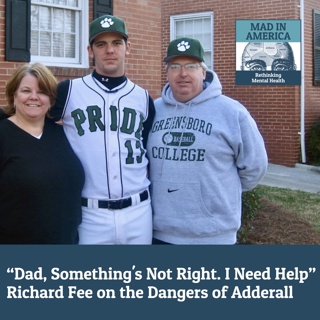
"Dad, Something's Not Right. I Need Help"- Richard Fee on the Dangers of Adderall

"Dad, Something's Not Right. I Need Help"- Richard Fee on the Dangers of Adderall

Welcome to the Mad in America podcast. My name is Brooke Siem, and I'm the author of May Cause Side Effects. Today, I'm here with Rick Fee, president of the Richard Fee Foundation. Rick joins us to ta...

5 Maalis 202547min
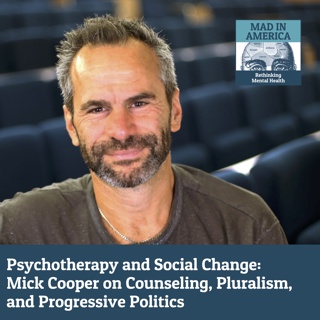
Psychotherapy and Social Change: Mick Cooper on Counseling, Pluralism, and Progressive Politics

Psychotherapy and Social Change: Mick Cooper on Counseling, Pluralism, and Progressive Politics

Mick Cooper is a leading voice in contemporary counseling psychology, known for his work at the intersection of psychotherapy and social change. A Professor of Counseling Psychology at the University ...

19 Helmi 202545min
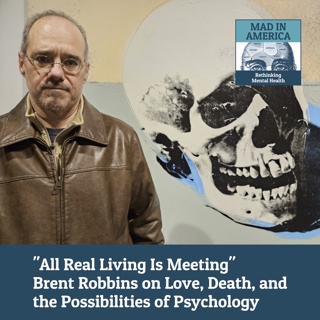
All Real Living Is Meeting - In Conversation With Brent Robbins - Part 2

All Real Living Is Meeting - In Conversation With Brent Robbins - Part 2

Brent Dean Robbins is a psychologist, scholar, and all-around thoughtful human whose work has profoundly shaped existential and humanistic psychology. He is one of those rare thinkers who makes psych...

12 Helmi 202552min

All Real Living Is Meeting - In Conversation With Brent Robbins - Part 1

All Real Living Is Meeting - In Conversation With Brent Robbins - Part 1

Brent Dean Robbins is a psychologist, scholar, and all-around thoughtful human whose work has profoundly shaped existential and humanistic psychology. He is one of those rare thinkers who makes psych...

12 Helmi 202553min
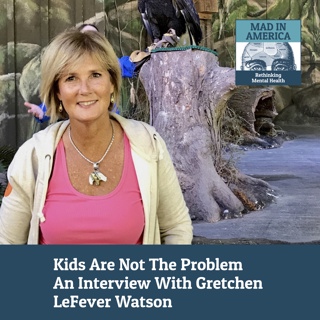
Kids Are Not The Problem: An Interview With Gretchen LeFever Watson

Kids Are Not The Problem: An Interview With Gretchen LeFever Watson

In this interview, Brooke Siem, who is the author of a memoir on antidepressant withdrawal, May Cause Side Effects, interviews Gretchen LeFever Watson, PhD. Gretchen is a developmental and clinical ps...

22 Tammi 202546min
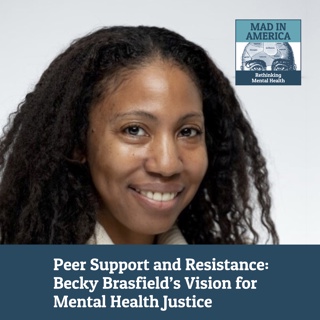
Peer Support and Resistance - Becky Brasfield's Vision for Mental Health Justice

Peer Support and Resistance - Becky Brasfield's Vision for Mental Health Justice

Becky Brasfield has emerged as a formidable advocate for change in the complex landscape of mental health care. A certified recovery support specialist and policy researcher at the Human Services Rese...

8 Tammi 202540min
Mad Sisters: An Interview With Susan Grundy

Mad Sisters: An Interview With Susan Grundy

Susan Grundy is an author who writes about the weight of emotional distress and an easier way of being. Her book, Mad Sisters, is a highly personal account of her caregiving journey for an older siste...

11 Joulu 202448min

The Anatomy of Anxiety: An Interview With Ellen Vora

The Anatomy of Anxiety: An Interview With Ellen Vora

Ellen Vora is a board-certified psychiatrist, acupuncturist, and yoga teacher. She's the author of The Anatomy of Anxiety and takes a functional medicine approach to mental health. She considers the w...

20 Marras 202444min

Suosittua kategoriassa Terveys ja hyvinvointi

unicast
psykopodiaa-podcast
voi-hyvin-meditaatiot-2
vakeva-elama-viisaampi-mieli-vahvempi-keho
tiedenaiset-podcast
rss-pitaisko-erota
rss-narsisti
puhu-muru
rss-kuumilla-aalloilla
rss-pt-paahtio
meditaatiot-suomeksi
selviytyjat-tarinoita-elamasta
terapiassa
fitnesskulmapodcast
junnut-pelissa
rss-nautinto
audio-sport-juoksu
fitnessvastaanotto
rss-addiktit
rss-seuraava-potilas